Born To Be Wild: MP's Kuno 3rd-Generation Cheetahs To Roam Free Without Radio Collars
Bhopal (Madhya Pradesh): After two to three years, the third generation of cheetahs will be moving in the forests of Kuno National Park and its nearby regions. However, only a few of them will be radio-collared for monitoring purposes and rest of them will move in the jungles without the devices. At present, 30 cheetahs are radio-collared in Kuno and of them 18 are in the wild. Field director of…
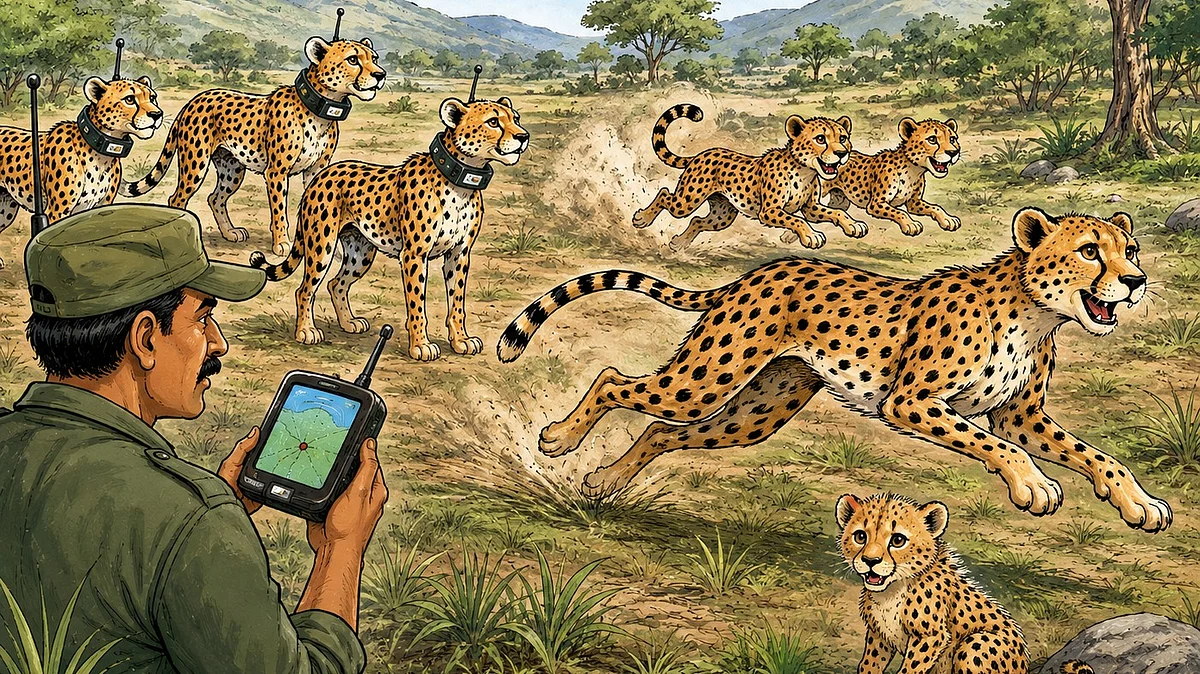
Bhopal, Madhya Pradesh - In the near future, the third generation of cheetahs will roam free in the forests of Kuno National Park without the need for radio collars to monitor their movements. Currently, 30 cheetahs in Kuno are equipped with radio collars, but only 18 of them are free-ranging in the wild. According to Uttam Sharma, the field director of Kuno National Park, this practice is already outlined in the Cheetah Action Plan, and will continue in the future.
Sharma further stated that by the time the Cheetah Project enters its seventh year, the cheetahs will have adapted to their environment and will be able to move freely without the devices. He also pointed out that the process of tracking a single radio-collared cheetah is expensive, with each collar costing Rs 4 lakh and a lifespan of only one year.
After one year, the collars need to be replaced, and tracking devices costing Rs 3 lakh are used to monitor the collared cheetahs. Additionally, nine forest personnel are assigned to track each radio-collared cheetah, and a vehicle is provided to them. However, by March 2027, 19 cheetah cubs will be one year old in Kuno, and a significant number of female cheetahs will reach reproductive age.
This means that it will not be feasible to continue radio-collaring the entire growing population of cheetahs in the future.
Written by urgent.news from Free Press Journal's reporting — not their text. Machine-written — may contain errors; check the original before relying on it.