Why was China’s response to North Korea’s latest missile launches so muted?
China’s muted response to North Korea’s latest missile launch, which came soon after top diplomat Wang Yi’s visit to Seoul, underscores how Beijing is prioritising Pyongyang’s stability over near‑term denuclearisation, according to analysts. North Korea started launching more than 10 short-range ballistic missiles just hours after Wang concluded his two-day visit on Thursday, the foreign…
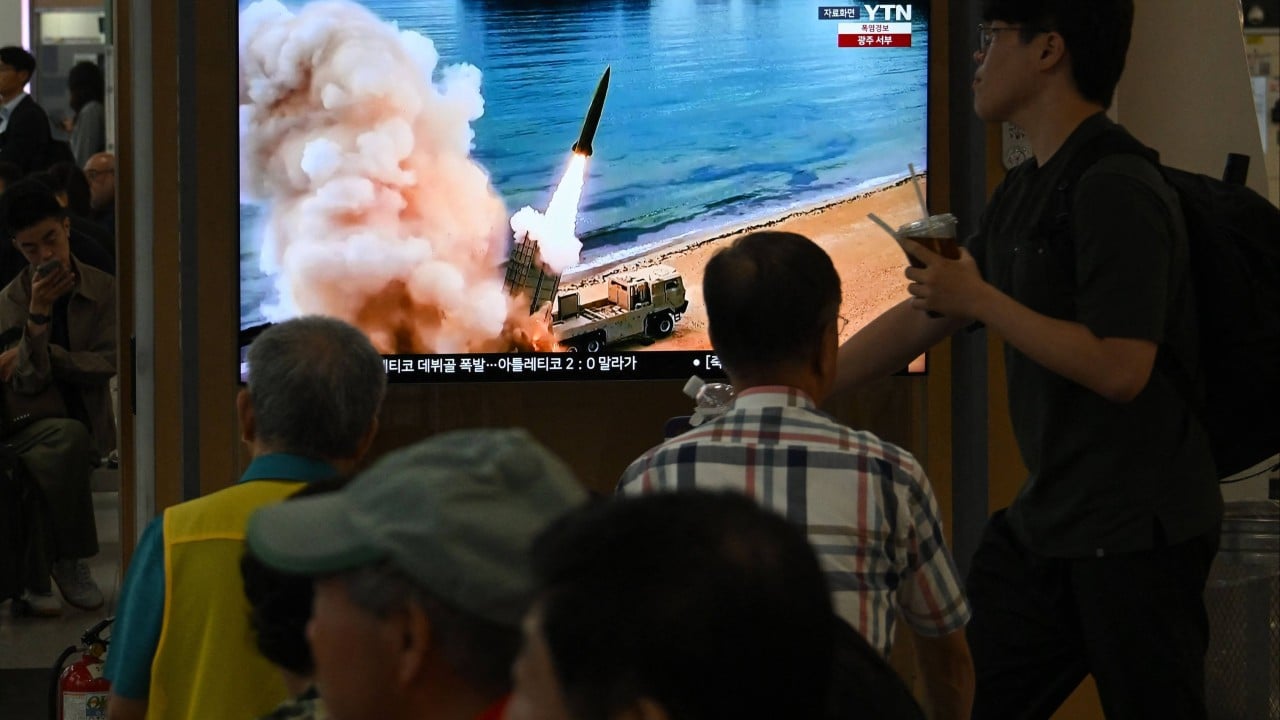
China's response to North Korea's recent missile launches, which occurred shortly after high-ranking diplomat Wang Yi visited Seoul, has been notably restrained. This muted reaction highlights Beijing's emphasis on maintaining stability in Pyongyang over immediate efforts to denuclearize the region, according to experts. North Korea initiated the launch of more than ten short-range ballistic missiles in the hours following Wang's two-day visit to Seoul, which marked the diplomat's first official trip to South Korea in nearly five years. Both South Korea and Japan denounced the missile launch as a provocative act.
Beijing did not criticize the barrage, which was fired into the sea east of the peninsula. Instead, China's foreign ministry stated that they had "noted the reports" and had no "new comment" to make. Analysts argue that this response highlights the disconnect between Beijing's diplomatic engagement with both the Korean regimes and its capacity, or willingness, to curb North Korea's actions.
Lee Seong‑hyeon, a senior fellow at the George H.W. Bush Foundation for US-China Relations, noted that while Wang Yi's visit aimed to stabilize diplomacy and manage risks, it fell short of providing a robust deterrence. He emphasized that Seoul's ongoing dialogue with Beijing was crucial for regional stability and economic continuity, but it cannot replace strong, sovereign defense measures.
Moreover, this incident brought attention to China's frequent omission of "denuclearization" in its official statements regarding North Korea. This pattern was also evident during Chinese President Xi Jinping's visit to Pyongyang in June, the first in seven years. During Xi's and North Korean leader Kim Jong-un's meeting, discussions focused on closer strategic coordination and economic cooperation without mentioning Pyongyang's nuclear program.
Lee described China's new strategy as a shift towards managing North Korea's nuclear reality, prioritizing regime stability and broader strategic interests over near-term disarmament. This approach, termed "structural acquiescence," aims to maintain a secure strategic "rear" for North Korea, enabling it to engage selectively with Seoul, Washington, and Tokyo while decreasing China's incentive to push for denuclearization.
However, this shift does not imply that China approves of North Korea's reckless escalation. Beijing remains wary of regime collapse or a potential refugee crisis along its border, as well as the possibility of increased military cooperation among the United States, South Korea, and Japan. Nonetheless, China has attempted to prevent South Korea's alliance commitments with the United States from automatically extending to broader containment measures, such as advanced semiconductor restrictions, supply-chain restructuring, or Taiwan-related issues.
The dilemma for Seoul is to maintain engagement with Beijing without making an either/or decision or presuming that Beijing can resolve the security challenges posed by Pyongyang, according to Lee.
Written by urgent.news from South China Morning Post's reporting — not their text. Machine-written — may contain errors; check the original before relying on it.
This story
This is one outlet's version. Read the fullest account.
- North Korea denuclearization missing from US readout as Trump pushes for Kim talks koreatimes.co.kr
- Why was China’s response to North Korea’s latest missile launches so muted? scmp.com
- Jeju missing people update: Fourth body in 3 days spark serial killer, human trafficking fears in South Korea island hindustantimes.com
- S. Korea, U.S. remain committed to N.K. denuclearization despite omission from call readouts: Seoul en.yna.co.kr