Why was China’s response to North Korea’s latest missile launches so muted?
China’s muted response to North Korea’s latest missile launch, which came soon after top diplomat Wang Yi’s visit to Seoul, underscores how Beijing is prioritising Pyongyang’s stability over near‑term denuclearisation, according to analysts. North Korea started launching more than 10 short-range ballistic missiles just hours after Wang concluded his two-day visit on Thursday, the foreign…
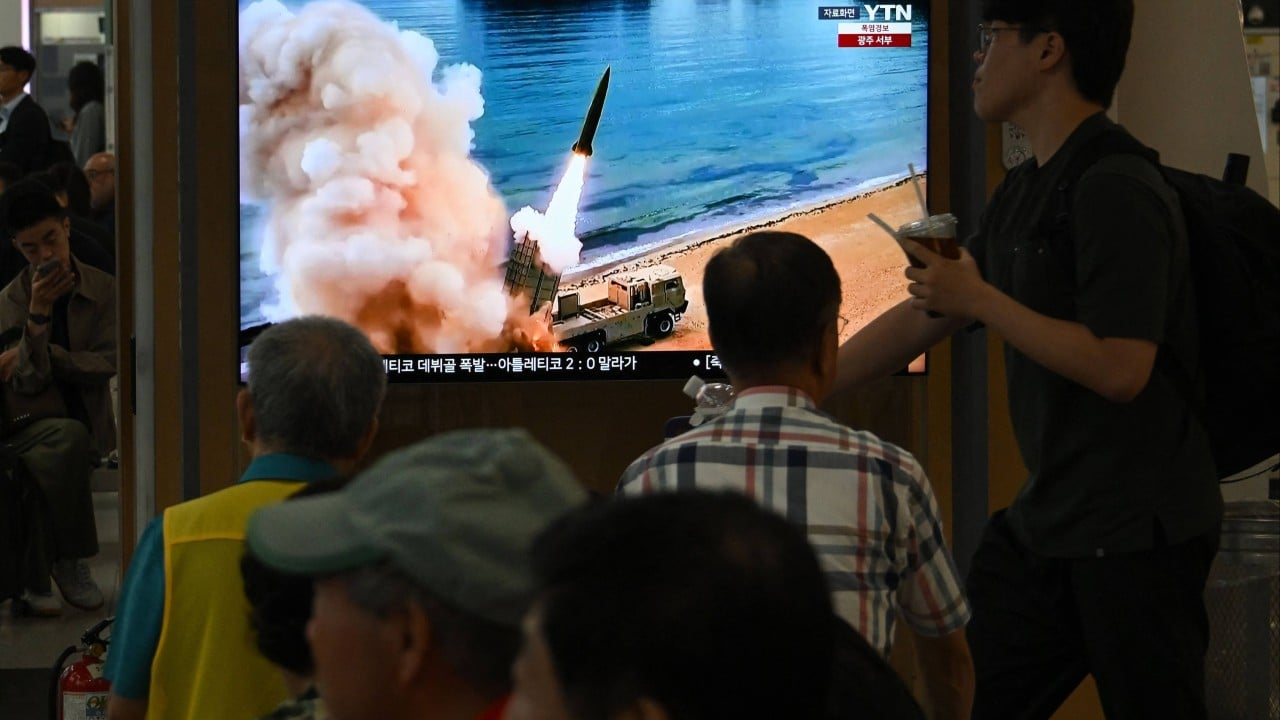
China’s reaction to North Korea’s latest series of missile launches, which took place shortly after Wang Yi’s visit to Seoul, was notably restrained, according to experts. These launches, which comprised more than ten short-range ballistic missiles, occurred only hours after Wang concluded his two-day visit to South Korea, marking his first official trip to the country in nearly five years.
Both South Korea and Japan denounced the missile launches as provocative acts. Despite this, Beijing refrained from criticizing the missile barrage, stating that they had "noted the reports" but had no specific comment to make. Analysts interpret this muted response as indicative of Beijing's current priority towards maintaining stability in Pyongyang rather than pursuing immediate denuclearisation.
Wang Yi, during his meetings with South Korea, had advocated for "genuine strategic autonomy" by Seoul and urged Washington to abandon what China perceives as a hostile stance toward Pyongyang, although he did not back Seoul's call for multilateral talks involving North Korea. Lee Seong‑hyon, a senior fellow at the George H.W. Bush Foundation for US-China Relations, noted that while Wang Yi's visit was crucial for diplomatic stabilisation and risk management, the immediate response to the missile launches highlighted the limits of China's diplomatic engagement.
Beijing's approach seems to prioritize regime stability in North Korea and its broader strategic interests over pressing for near-term disarmament. This strategic shift towards managing North Korea's nuclear reality has been evident throughout, including during Xi Jinping's visit to Pyongyang in June, where North Korea and China focused on strategic coordination and economic cooperation without mentioning Pyongyang's nuclear program.
Lee described this as a manifestation of "structural acquiescence," where China prioritizes stability and bilateral ties over pushing for denuclearisation. Analysts like Zhao Tong from the Carnegie Endowment for International Peace suggest that China views North Korea's nuclear issue primarily as a problem for the US and South Korea rather than for itself.
Nonetheless, China's cautious approach does not imply endorsement of North Korea's reckless escalation; Beijing remains cautious about regime collapse or a refugee crisis on its border, as well as the potential for heightened military cooperation among the US, South Korea, and Japan. Nevertheless, China has actively sought to prevent South Korea's alliance commitments with the US from automatically extending to comprise broader containment measures, such as semiconductor restrictions, supply-chain restructuring, or Taiwan-related contingencies.
This complex dynamic presents a challenge for Seoul, which must balance engagement with Beijing without making an either/or decision, recognizing that Beijing might not resolve the security challenges posed by Pyongyang.
Written by urgent.news from Reuters Business via SCMP's reporting — not their text. Machine-written — may contain errors; check the original before relying on it.
This story
This is one outlet's version. Read the fullest account.
- North Korea denuclearization missing from US readout as Trump pushes for Kim talks koreatimes.co.kr
- Why was China’s response to North Korea’s latest missile launches so muted? scmp.com
- Jeju missing people update: Fourth body in 3 days spark serial killer, human trafficking fears in South Korea island hindustantimes.com
- S. Korea, U.S. remain committed to N.K. denuclearization despite omission from call readouts: Seoul en.yna.co.kr