Thousands of Rohingya refugees protest camp conditions and plead to return home
The United Nations has warned the already dire human rights situation in Myanmar has plunged to a "new low" as tens of thousands of refugees protest to return home.
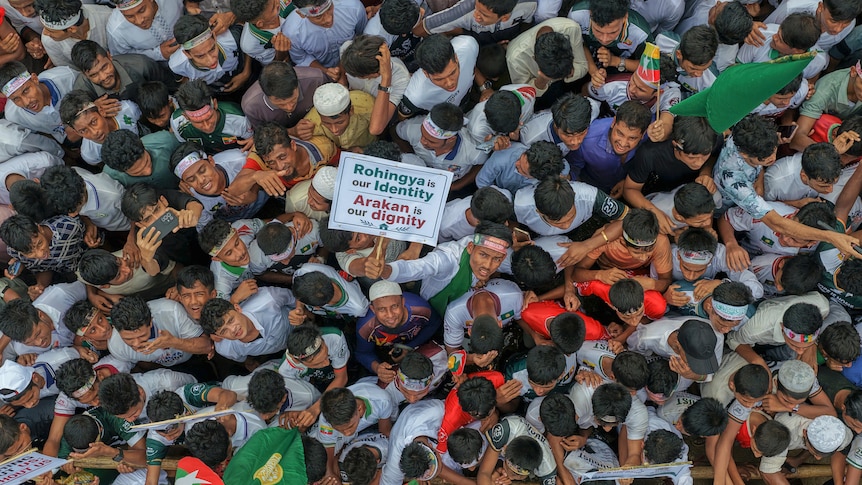
Overcrowded refugee camps in Bangladesh are facing dire conditions as tens of thousands of Rohingya refugees protest their living situation. Over 1.2 million Rohingya refugees have fled Myanmar and currently reside in about 30 camps in Cox's Bazar, the world's largest refugee settlement. Many of these refugees are desperate to return home, but the United Nations warns that the situation in Myanmar has reached a new low, with brutal treatment of Rohingya people worsening.
Save the Children's Golam Mostafa notes that an entire generation of children is growing up in exile, with conditions deteriorating and food rations becoming scarce. One in three refugees is expected to face crisis hunger levels or worse between September and December. The United Council of Rohingya's president, Sayed Ullah, emphasized the urgent need for a safe return home, stating that they will do whatever it takes to ensure their safe return.
The 2017 crackdown in Myanmar, which resulted in the burning of Rohingya villages and the killing of civilians, is being considered by the UN's top court in The Hague as a genocide case. The UN rights chief, Volker Turk, described the situation as heartbreaking, calling on states, companies, and investors to reflect on their actions or inaction, questioning the fairness and justice for the people of Myanmar.
Despite the hardships, some Rohingya have attempted dangerous sea journeys in desperation to flee the camps, with 41-year-old Moulovi Abdus Salam expressing his family's hardships, stating that life in Bangladesh has brought new challenges, with food supplies lasting only 20 days. Bangladesh's authorities are already overwhelmed and have called for the dignified return of Rohingya to their homeland, but diplomatic missions in the country acknowledge that conditions in Myanmar do not allow for safe repatriation, with conflict escalating and humanitarian needs rising.
Written by urgent.news from ABC News AU's reporting — not their text. Machine-written — may contain errors; check the original before relying on it.