Londoners find ‘horrendous’ cracks in their homes after successive heat waves
Hot, dry weather shrinking soil and destabilizing building foundations is now part of a long list of heat-related challenges to which the U.K. is now struggling to adapt.
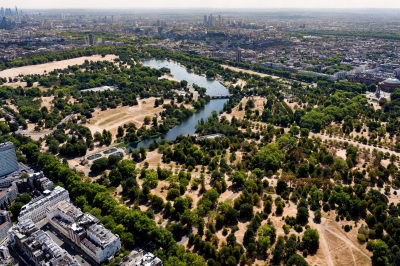
Londoners are grappling with historic levels of subsidence risk after experiencing five consecutive heat waves that have dried out the clay soil on which much of the city is built. Insurance claims tied to subsidence, a phenomenon associated with hot, dry weather that shrinks the soil and destabilizes building foundations, reached a record high in the last quarter, according to data from the Association of British Insurers (ABI).
On average, households faced claims of £20,000 ($27,200), a 15% increase from the same period in 2025.
Laura Hughes, head of general insurance at the ABI, predicts the trend will continue, as hot weather is expected to lead to more subsidence cases. Social media has been filled with reports of "horrendous cracking" and "doors sticking" in affected homes, with many describing the situation as "scary."
Otso Lahtinen, CEO of Geobear, an engineering firm often called in to repair subsidence damage, notes that the issue has become the new norm, with the number of affected properties expected to rise over the next 20-30 years. The areas of London most at risk include Westminster, Kensington, and Chelsea.
Climate change is exacerbating the problem, as London clay is particularly sensitive to moisture fluctuations. Insurance payouts for subsidence damage have surged roughly 90% to £297 million over the past four years, with Victorian and Edwardian homes being the most vulnerable. Modern office buildings, with deeper foundations, are less exposed to such risks.
Heat-related challenges, including schools closing, bus driver strikes, and banks relaxing in-office work requirements, are adding to the strain. London Mayor Sadiq Khan warns that the city may need to turn to private investors to fund the cost of adapting to rising temperatures.
Subsidence can devalue a property by 20%-25%, with traditional underpinning fixes costing between £20,000 and £100,000. The rising number of subsidence claims poses a significant challenge for U.K. home insurers, with Deloitte predicting potential losses in 2026 due to the trend. The British Geological Survey estimates that under the RCP 4.5 emissions scenario, 1.8 million properties, or about 5% of the U.K. total, are likely to be susceptible to shrink-swell subsidence by 2070, rising to 4.2 million, or 11%, under a higher emissions scenario.
Written by urgent.news from Japan Times's reporting — not their text. Machine-written — may contain errors; check the original before relying on it.
This story
This is one outlet's version. Read the fullest account.
- Londoners Find ‘Horrendous’ Cracks in Their Homes After Successive Heat Waves insurancejournal.com