Could Mecca defence pact be first step to new Middle East order?
The Mecca security pact between Saudi Arabia, Turkey and Pakistan stipulates that an armed attack against one shall count as an attack against all three. Yet the real message is directed at the United States: if being an American ally offers no immunity against attack, there is little point in waiting for Washington to honour its security guarantees. That there has been no official White House…
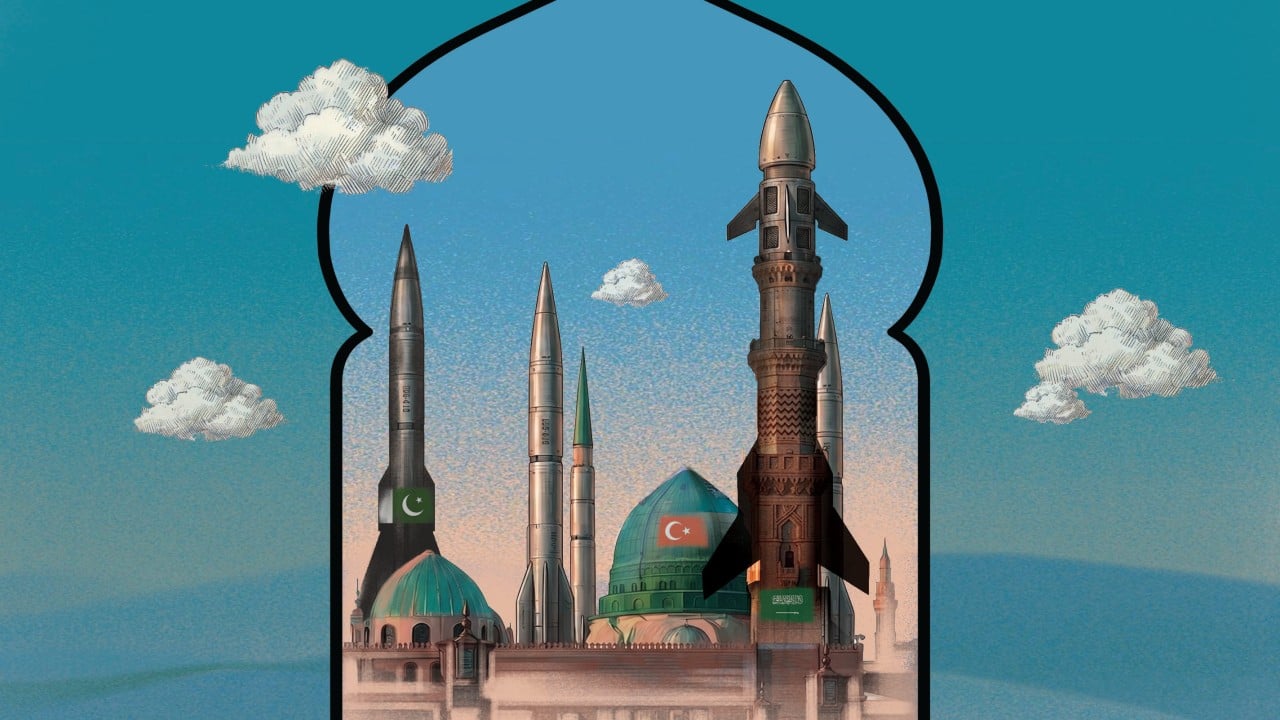
The Mecca security pact, a defense agreement between Saudi Arabia, Turkey, and Pakistan, could mark the beginning of a new Middle Eastern order. The pact stipulates that an armed attack against one country is considered an attack against all three. However, the pact's true intention is directed at the United States, as the three nations highlight that being an American ally does not guarantee immunity from attack.
Trump's social media comment about the pact's happiness suggests that the Middle East is uniting. The three nations have complementary needs - wealthy Saudi Arabia lacks military capacity, Turkey seeks to influence Eurasia, and nuclear-armed Pakistan requires financial support. Although some argue that a Middle Eastern unity is emerging, it is too early to conclude.
Neither Turkey nor Pakistan is strictly Middle Eastern, and the major powers, including the United States, are unlikely to withdraw from the region. The European Union, meanwhile, has long sought strategic autonomy, but its efforts have been undermined by the Ukraine conflict. China, a major power with friendly ties to all regional nations, including Israel, views the pact with cautious approval and may step in as a security guarantor.
Russia's role in the Middle East, however, remains limited due to its conflict in Ukraine. The Mecca pact is unlikely to provoke an armed invasion from any of the three nations, as Israel functions as a shared threat, and Iran is unlikely to initiate a direct military conflict with any member due to its doctrine of asymmetric leverage.
India, Pakistan's primary regional threat, will likely oppose the pact due to its strained relations with Pakistan. The pact may signal the start of a significant shift in the Middle East, where regional states could form the basis of a new security architecture.
Written by urgent.news from South China Morning Post's reporting — not their text. Machine-written — may contain errors; check the original before relying on it.
This story
This is one outlet's version. Read the fullest account.
- US starts returning staff to Middle East missions after Iran war evacuations, sources say scmp.com
- Middle East tensions put pressure on Ghana’s reserves – BoG Governor gbcghanaonline.com
- Middle East: Pakistan sees progress in US-Iran mediation dw.com
- Montreal council passes amended Middle East motion after cutting call to break Israel ties jpost.com
- Multibillion-dollar Tanzania LNG project more attractive due to Middle East war, Equinor says seekingalpha.com