Ancient Genes May Help Wildlife Adapt to Survive the Climate Crisis — and a Tiny Rodent May Reveal Why
Learn why a bank vole may hold clues as to how some animals can adapt and survive as climate change shifts habitats and food sources.
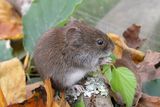
The bank vole, a small rodent with chestnut fur and a hairy tail, is found in wooded areas and hedges. Recent research suggests that this unassuming creature may hold the key to understanding how animals will adapt to climate change. According to the study published in Communications Biology, the bank vole's ancient DNA plays a crucial role in its ability to adapt to a warming world.
Some animals are developing larger limbs and ears to increase surface area for heat loss, while others, like parrots, may grow larger bills or beaks to regulate body temperature. However, the bank vole's adaptation strategy is different. Rather than focusing on physical changes, this species relies on its ancient genetic variations. These variations were passed down from isolated glacial populations that reunited during the Last Ice Age.
Hayley Lanier, an associate curator at the Sam Noble Museum and one of the study's authors, explains that maintaining these gene variants is essential for a mammal population's success in adapting to future climate conditions. These findings hold broader implications for animal conservation, as climate change is rapidly altering ecosystems worldwide. The study suggests that genetic diversity and past variation may be more important than mutations in shaping an organism's ability to adapt to changing environments.
This research also highlights the ongoing nature of evolution, even in the modern age. Bacteria can rapidly adapt to antibiotics, urban lizard populations have evolved stickier toes to navigate city environments, and raccoons may be developing shorter snouts as they adapt to human food sources. Human-induced climate change is causing significant shifts in weather patterns, migration times, and precipitation levels, impacting organisms worldwide.
For many animals, these changes could affect vital processes like breeding and migration, as well as the availability of resources such as food and shelter.
Written by urgent.news from Discover Magazine's reporting — not their text. Machine-written — may contain errors; check the original before relying on it.