A tiny drop of water is all that's needed to find threatened frogs
New James Cook University research has used highly sensitive environmental DNA (e-DNA) techniques to find two species of threatened frogs in places they've never been seen before—and find another still struggling to recover from past disease outbreaks. The research is published in the journal Conservation Science and Practice.

A groundbreaking study conducted by researchers at James Cook University has discovered that a single drop of water could be the key to locating threatened frog species that were previously elusive. The research, published in the journal Conservation Science and Practice, utilized highly sensitive environmental DNA (e-DNA) techniques to locate two species of at-risk frogs in areas where they had never been seen before.
This method also revealed another frog species that is still struggling to recover from past disease outbreaks.
Chytrid fungus, an aquatic pathogen, devastated Queensland's rainforest frogs in the 1980s and 1990s, leading to the likely extinction of six species and significant declines in others. This fungus, introduced to Australia through the international trade in frogs, caused the most significant impact on frogs in cool, wet areas, particularly upland frogs around streams.
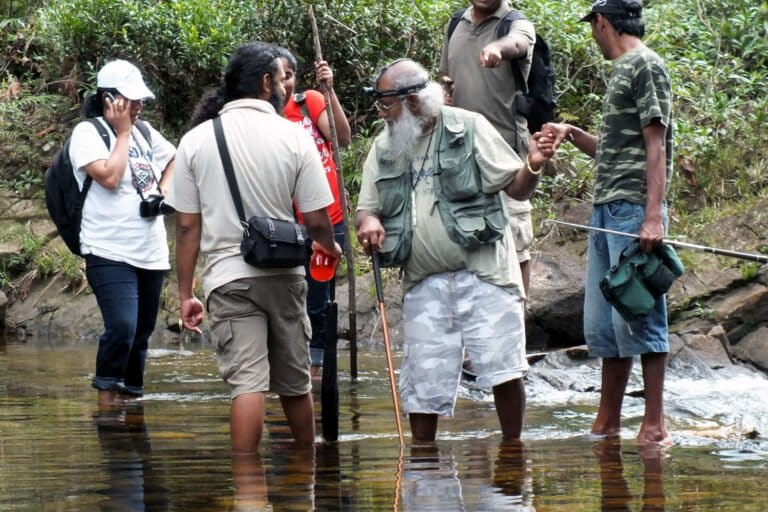
The study, led by JCU Professor Conrad Hoskin and Dr. Cecilia Villacorta-Rath, utilized e-DNA sampling in accessible lowland locations of creeks and streams in the Daintree Rainforest before analyzing genetic traces of the three endangered frog species. The eDNA technique successfully detected frog populations using water samples collected up to 22 km downstream from where they live. This method allows for the discovery of endangered populations without the need to physically check every river and stream.
The findings suggest that waterfall and lacelid frogs have occurred on more creeks than previously documented, indicating recovery after chytrid outbreaks. However, armored mistfrog DNA was detected only at its known surviving site. The eDNA field sampling protocol is user-friendly, but guidance on interpreting the results is needed due to various factors that affect eDNA detectability.
The researchers are now collaborating with citizen scientists to collect eDNA samples of waterways in Far North Queensland to better understand fish diversity.
Written by urgent.news from Phys.org's reporting — not their text. Machine-written — may contain errors; check the original before relying on it.