Inspiring young herpetologists in Sri Lanka: Interview with Anslem de Silva
COLOMBO — Sri Lankan-born conservation biologist and National Geographic explorer Ruchira Somaweera is internationally recognized for his award-winning wildlife research, photography and storytelling. Despite his global achievements, Somaweera treasures an old journal copy containing a prophecy. When he was 13 years old, Somaweera received a copy of the research journal Lyriocephalus with a…
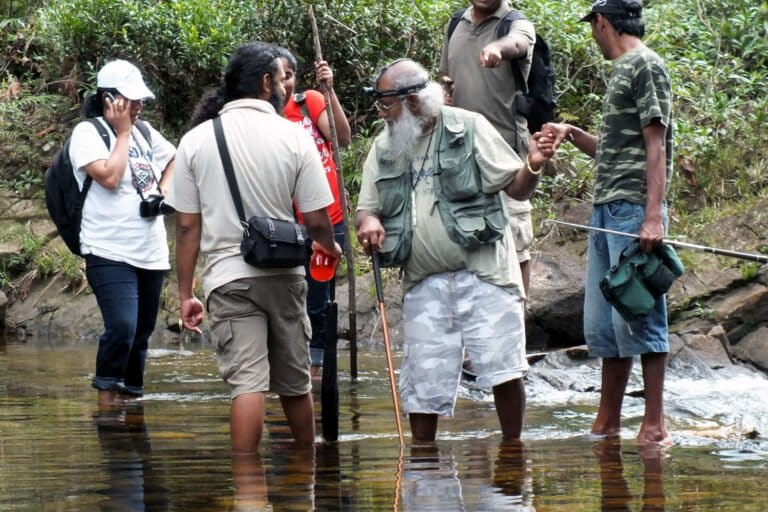
In Sri Lanka, conservation biologist and National Geographic explorer Ruchira Somaweera has made significant contributions to wildlife research, photography, and storytelling. Despite his international acclaim, he holds a special place in his heart for a prophecy contained in an old journal. When Somaweera was just 13 years old, he received a copy of the research journal Lyriocephalus, alongside a handwritten note that read, "One day you will be a great herpetologist," signed by Anslem de Silva.
This encounter sparked Somaweera's interest in herpetology, leading him to create a small booklet on snakes as a school science project.
De Silva, widely regarded as the father of modern herpetology in Sri Lanka, has devoted over half a century to studying the island's reptiles and amphibians. His groundbreaking research, publications, and conservation efforts have greatly advanced the scientific understanding of Sri Lanka's diverse herpetofauna, which includes snakes, lizards, turtles, crocodiles, frogs, toads, and caecilians.
Many of the herpetologists of Somaweera's generation were nurtured by de Silva, and his influence has inspired countless students, as the conservation biologist himself has acknowledged.
Written by urgent.news from Mongabay's reporting — not their text. Machine-written — may contain errors; check the original before relying on it.