A Golden Chance to Protect the Pacific’s ‘Blue Corridors’
If Albanese is serious about a Pacific COP, he must heed the region’s call on oceans.
In the coming months, Pacific Island leaders will convene for significant climate diplomacy, with ocean protection as a key focus. The Pacific Islands Forum, set to take place in Palau, will highlight the importance of safeguarding the oceans. As the world turns its attention to Fiji and Tuvalu for the pre-COP meeting in early October, and Australia hosts COP31 in Antalya, Turkiye by November, there is a rare opportunity for Australia to use its presidency to help create connected protection across the Pacific and the high seas.
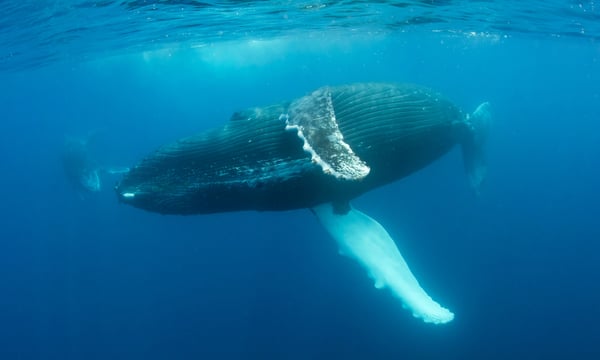
Central to this vision are the Blue Corridors, vital migratory pathways used by whales, sharks, and other marine species. These corridors span thousands of kilometers and cross multiple jurisdictions, making protection essential for the health of marine life. Humpback whales, for example, migrate from Queensland to Antarctic feeding grounds, passing through the Cook Islands, Niue, and New Zealand along the way.
This shared journey highlights the need for connected networks of marine protected areas, both on land and in the high seas, to ensure the resilience of these species.
Science, international law, and political leadership have all aligned to support this cause. The High Seas Treaty, which entered into force in January, now allows governments to protect two-thirds of the ocean beyond any single nation's control. Thanks to decades of migration tracking and Indigenous knowledge, the routes these species take have been mapped, giving governments the tools they need to protect these critical pathways.
Pacific nations have been at the forefront of ocean conservation, translating ambitious policies into real action. In May, Papua New Guinea, Fiji, and Vanuatu signed the Melanesian Ocean Corridor of Reserves, a pioneering declaration that links national waters into a shared corridor of protection. Tonga has also pledged a National Ocean Policy with a vision for 30 percent protection, signaling further steps towards safeguarding the Pacific Blue Corridor that humpbacks travel, from their breeding waters south through the Cook Islands, Niue, and New Zealand to the Antarctic feeding grounds.
This leadership demonstrates that protecting the ocean is not just a local issue but a global one, grounded in the ancient Pacific understanding that the ocean is a shared path, not a barrier. By connecting marine protected areas and the high seas through the Blue Corridors concept, solutions can be locally led, informed by both science and Indigenous knowledge, regionally connected, and globally scalable.
At COP31, Australia has the opportunity to turn Pacific leadership into concrete outcomes, fulfilling three key actions: strengthening protections in its own waters, enhancing marine sanctuaries, and committing to a just transition away from fossil fuels.
The urgency of this challenge cannot be overstated. Humpback whale populations, once a conservation success story, could be significantly impacted by climate change by 2050. A warming ocean is already altering the conditions that support these migrations, and the decisions made at COP31 will determine whether Blue Corridors become a defining achievement of the decade or another missed opportunity.
Written by urgent.news from The Diplomat's reporting — not their text. Machine-written — may contain errors; check the original before relying on it.