9,000-year-old arrowheads covered in strange markings leave archaeologists puzzled
Unearthed from the depths of Turkey, ancient arrowheads reveal enigmatic hand-carved symbols. These Neolithic treasures showcase intentional incisions rather than random scratches, prompting researchers to ponder their origins. Despite thorough investigations, the specific purpose behind these markings remains unknown. Observations indicate that this intriguing practice was limited to select…
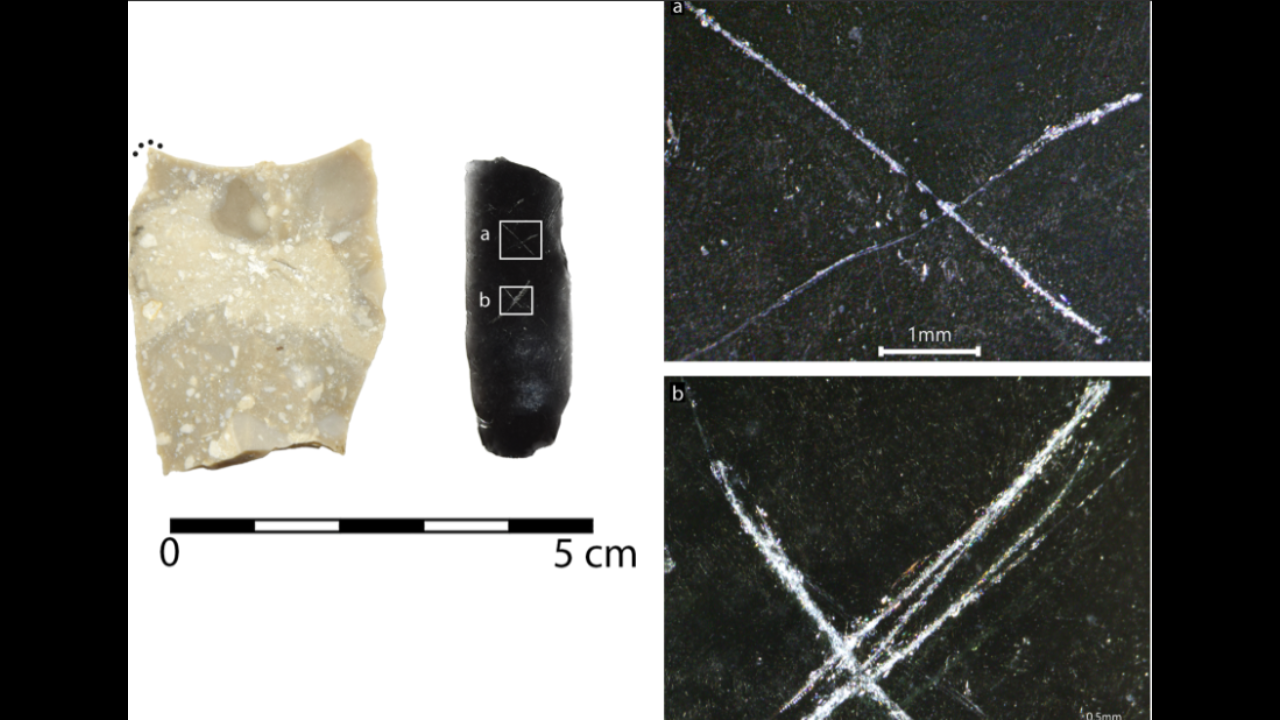
Neolithic arrowheads discovered in Cappadocia, Turkey, have baffled archaeologists for nearly 9,000 years. These obsidian points, found at Tepecik-Ciftlik, bear hand-cut incisions in various patterns, including crosses, chevrons, and wavy lines. Eleven such arrowheads have been identified, bringing the total to 12 for the site and 54 in the wider region.
According to a study published in PLOS One, these markings were made intentionally, not accidentally during manufacture or burial. However, despite microscopic analysis and comparisons with similar finds, the meaning behind these incisions remains unclear. Were they hunters' signatures, decorative elements, or something more ritualistic?
No two designs are identical, and the number of strokes required varies widely, from a single cut to twenty on the most intricate piece. The researchers established criteria for genuine incisions, but no correlation exists between these markings and the arrowheads' manufacturing, use, or material. Flint tools were used to carve the symbols, and the practice appears confined to a specific Neolithic community, as similar incisions have been found at other Cappadocian and Konya Plain sites.
While one arrowhead shows signs of being struck, the rest lack evidence of use as projectiles, leaving the purpose of these mysterious markings open to interpretation - hunters' signatures, decoration, or ritual practice.
Written by urgent.news from Times of India's reporting — not their text. Machine-written — may contain errors; check the original before relying on it.