These Microbes Could Turn Plastic and Plant Waste into Ingredients for Protein-Rich Cookies
Learn how microbes can be used to produce edible ingredients from plastic and biomaterial waste, a clever upcycling strategy that could be used in extreme environments and deep-space missions.
The global population is expected to increase by up to 50% between 2010 and 2050, according to a study published in Nature in 2021. This surge in population, coupled with the worsening issue of plastic pollution, presents a significant challenge for food security. A team from Southern Illinois University (SIU) Carbondale has developed a novel solution to address both issues simultaneously.
The researchers at SIU created a technology using reprogrammed yeasts to transform plastic compounds and agricultural waste into proteins, vitamins, and flavorings, all incorporated into an edible cookie. This process, which was presented at the annual American Chemical Society (ACS) meeting, has the potential to produce sustenance in disaster zones or on human deep-space missions.
Lahiru Jayakody, a member of the research team and professor at SIU, highlighted the cleverness of microbes in solving problems created by humans. The team aimed to explore the possibility of programming microbes to convert plastic waste into edible compounds for human consumption. This idea aligns with NASA's Deep Space Food Challenge, which seeks innovative ways to produce food in space.
As part of their research, the team focused on transforming polyethylene terephthalate (PET), a common form of plastic, which contains a significant amount of carbon. This carbon is also a crucial building block for protein, one of the most essential macronutrients for human nutrition. Instead of using complex chemical solvents and reactions in a laboratory setting, the researchers opted for a more eco-friendly approach involving microbes.
The researchers programmed various strains of yeast, including baker's yeast, to convert plastic molecules into proteins, vitamins, and flavorings. They employed an in-house-made process called oxidative hydrothermal dissolution, which breaks down solid organic compounds into smaller fragments. This mixture of PET, corn stalks and leaves, and other biomaterials was then transformed into microbe-bite-sized pieces that the programmed yeast metabolized into food ingredients.
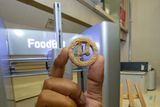
These ingredients, combined with fiber, starch, and sweeteners, were shaped into protein-rich cookies called "µBites." The cookies were found to be safe for consumption, although institutional approval is still pending before official taste tests. The participants in the cookie-making process appreciated the cookies' smell and showed interest in eating them in dire situations.
The research team emphasized the importance of perceiving the cookies as a consumer-friendly product. For example, the programmed baker's yeast can create vanilla flavoring from plant biomass, while other strains can produce beta-carotene, the precursor to vitamin A, from PET compounds. The next steps involve optimizing the technology so that the microbe-produced ingredients constitute the main component of the µBite cookie.
The team hopes to make this engineered cookie ready for production in the coming years, potentially providing a sustainable solution for food security in extreme environments here on Earth and during human deep-space exploration.
Written by urgent.news from Discover Magazine's reporting — not their text. Machine-written — may contain errors; check the original before relying on it.
This story
This is one outlet's version. Read the fullest account.