Meet Flock, the $8 billion startup backed by a16z and Tiger facing growing backlash against surveillance capitalism
Cities are canceling contracts, cameras are getting vandalized, and lawyers who've reviewed the company's contracts say data ownership is not clearly definied.
On December 13 last year, a stranger in a Brown University bathroom observed a man dressed entirely in black, arriving hours before the same individual carried out a shooting on the university campus, resulting in two fatalities and eight injuries. The investigators had minimal information, merely a tip about a gray Nissan with Florida license plates.
Nevertheless, Providence police utilized Flock Safety cameras, which covered 30 days of history, to identify the car after it had passed the cameras 14 times since December 1st. Chief of Providence police declared, "We were able to find the vehicle on Flocks, actually get the actual plate, learn that it was a car rental." The car was subsequently traced to a storage unit in New Hampshire seven days after the incident.
In a parallel case, another individual in Florida was also using Flock-collected data, but for a different purpose; a police officer named Christopher Goodson was not looking for a stranger but rather for his estranged wife. Through his department's access to Flock, he made over 700 unauthorized inquiries about her vehicle between September 2024 and June 2026, leading to his arrest last week.
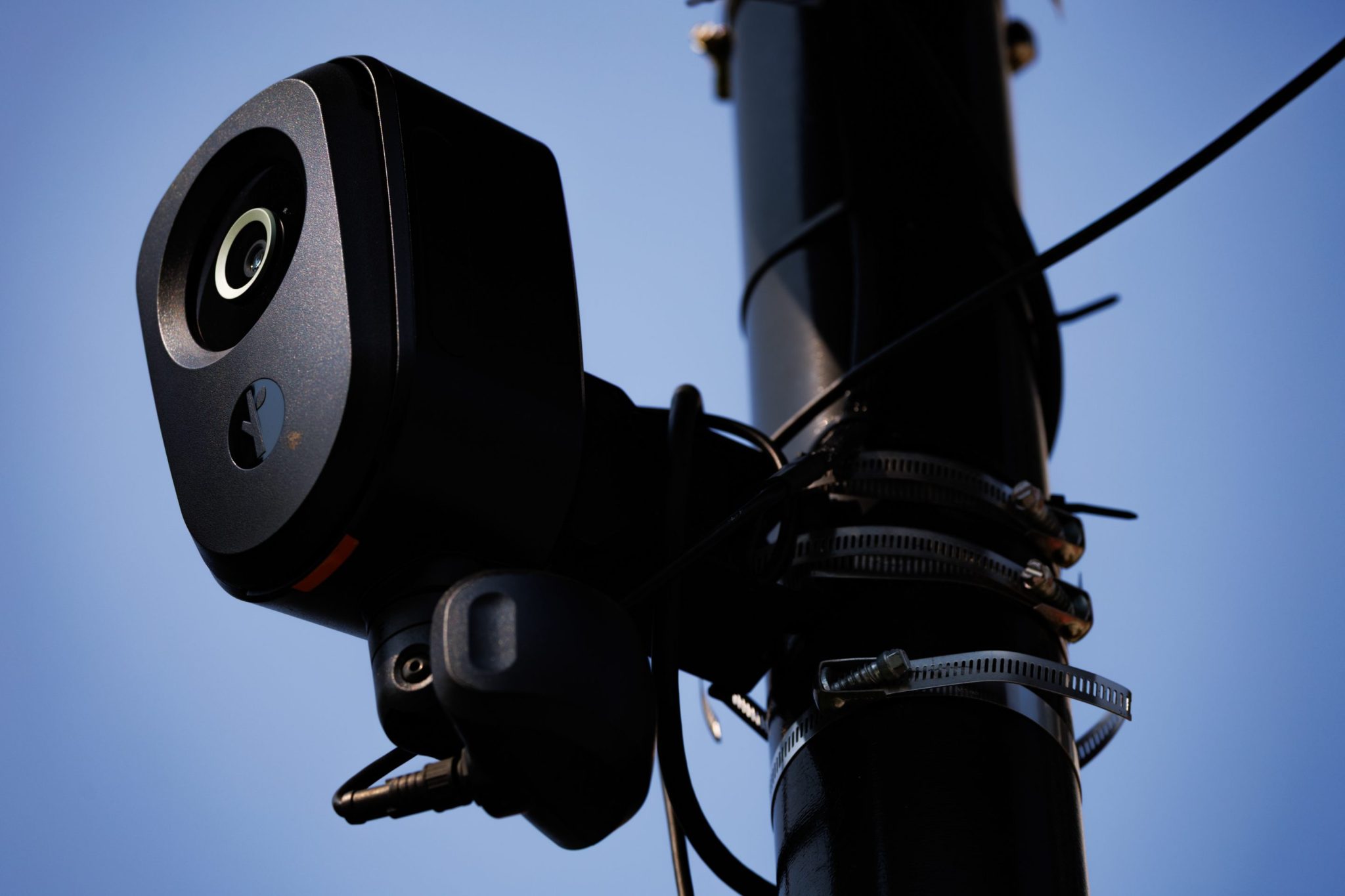
Flock Safety, established nine years ago, has been claiming to solve crimes. Simultaneously, it has amassed an extensive surveillance network, potentially the most pervasive in American history. The system captures more than 5,000 communities across 49 states, recording not just license plates, but also the make, model, color, and identifying details of every vehicle passing by.
Law enforcement agencies can then search this data employing natural-language descriptions, such as vehicle color or bumper stickers, across thousands of jurisdictions at once. In theory, any police department with a Flock contract can reconstruct where you drove, when, and how often. While Flock asserts that the data belongs to its customers and is typically deleted within 30 days, Fortune discovered that at least one Flock contract allows the company to retain data for five years and utilize it for any purpose at its discretion.
The backlash against the technology has been significant and growing: in 36 states, residents have vandalized or destroyed automated license plate recognition (ALPR) cameras, 82 contracts have been terminated since 2021, and city council hearings in places like Boston and Santa Clara have become battlegrounds over a technology many residents were unaware was watching them.
Anne Toomey McKenna, a privacy attorney and visiting law professor at the University of Richmond, argues, "Our Fourth Amendment was not designed for the persistent and pervasive surveillance environment which we live" in. She labels it a "Catch 22"—the Supreme Court has ruled that accessing someone's location data requires a warrant, yet when police simply purchase the data instead of demanding it, they find themselves in a gray area.
When asked about the controversy, Flock CEO Garrett Langley informed Fortune that the company was founded to solve crimes. "Every day, Flock helps solve crimes that would otherwise go unsolved," Langley stated. "From finding missing children, to solving murders, violent crime, and recovering stolen vehicles, Flock gives investigators leads they didn't have before."
"That impact is why we started Flock, and it drives every decision we make about how this technology should be built and governed." Flock has proven to be a lucrative enterprise thus far. Backed by prominent venture capitalists such as a16z and Tiger Global, the nine-year-old startup disclosed in April that it had raised $500 million at an $8.3 billion valuation, had taken in $1.2 billion in total, and achieved $500 million in annual recurring revenue in the first half of 2026.
The company has since expanded into video, gunshot detection, drones, and AI-powered search software. Langley confirmed to Fortune that over half of their new revenue now comes from sources beyond license plate readers. "We are setting a baseline that we believe the industry should follow with our recent privacy enhancements and measures to proactively address officer abuse," Langley added.
"Local communities, not Flock, decide their sharing rules, offense filters, and retention windows," the CEO continued. "Our job is to give them better tools that reflect their needs and values of their communities and to help hold individuals accountable when someone misuses the system." However, it is clear that the technology that has made Flock a billion-dollar business is also transforming it into a villain in the eyes of some.
Written by urgent.news from Fortune's reporting — not their text. Machine-written — may contain errors; check the original before relying on it.