From doorstep to supply depot, this EV truck maker aims to tackle both
The Army wants ammunition delivered to a company formation with nobody in the cab. Harbinger is supplying the platform, and American Rheinmetall is holding the contract. The post From doorstep to supply depot, this EV truck maker aims to tackle both appeared first on FreightWaves .
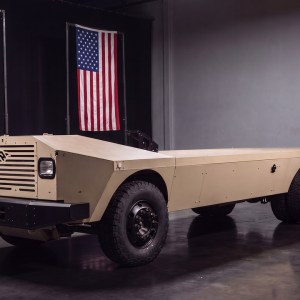
Harbinger, a manufacturer of electric and hybrid medium-duty chassis in Garden Grove, California, has secured a prototype contract with the U.S. Army for supplying autonomous ground vehicles (AGVs) to tackle the last tactical mile of resupply. This new project, Project Sustainment, aims to develop hybrid-powered unmanned ground vehicles that can move supplies to and from the forward line of troops.
Harbinger is the tier-one supplier building the platform, having recently earned its first defense contract, awarded by American Rheinmetall, the prime contractor for this endeavor.
Unlike conventional trucks used in the Army's resupply network, Harbinger's AGVs lack a cab, steering wheel, and pedals, rendering them unmanned. Adam Horton, director of business development at American Rheinmetall, explained that the goal is to minimize the exposure of Soldiers to a dangerous mission and automate the errand traditionally performed by a five-ton or deuce-and-a-half vehicle.
The military supply network has looked to the civilian world for inspiration, adopting similar strategies employed by companies like Amazon, UPS, and FedEx, which deploy smaller trucks for last-mile deliveries in urban areas.
Harbinger's hybrid drivetrain is a series hybrid that can operate in either electric or hybrid mode, depending on the situation. The vehicle is rated for up to 500 miles commercially and is designed to run as an electric vehicle within the drone kill zone, which spans 20 to 30 miles in front of the frontline. This mode of operation provides both concealment and reduced noise and thermal signatures, making it an attractive option for military sustainment purposes.
The system's by-wire technology, which includes steer-by-wire and brake-by-wire, allows for redundancy and robust autonomy, ensuring the vehicle can function effectively in challenging environments.
Written by urgent.news from FreightWaves's reporting — not their text. Machine-written — may contain errors; check the original before relying on it.