Can infrastructure spending create jobs and skills for South Africa's youth?
As South Africa positions itself to invest massively in infrastructure, how can such spending redefine the futures of millions of young people. Is it merely about constructing physical assets, or can it simultaneously weave hope, opportunity, and skills into the fabric of society? The time to address these urgent questions is now.
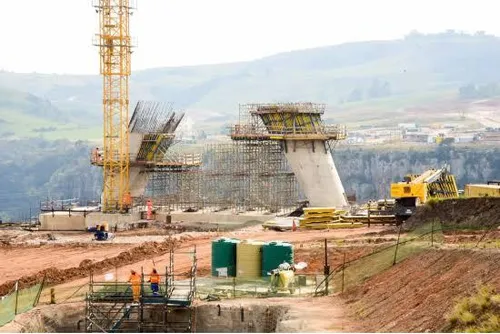
South Africa plans to invest over a trillion rand in infrastructure projects, yet millions of young people remain excluded from the formal economy. This presents a dilemma: should government focus on spending enough on infrastructure, or consider whether the construction of roads, schools, hospitals, and other facilities is truly transforming society?
Lieutenant General Nhlanhla Mkhwanazi, head of the National Organised Crime Task Team in KwaZulu-Natal, has brought fresh attention to this issue. Speaking at a Parliamentary Summit on Gangs and Violent Crime, he argued that government should rethink its approach to tenders for public works, using infrastructure spending to create employment opportunities directly, rather than solely outsourcing work to contractors.
For example, a simple gravel road project could involve scraping, with engineering graduates supervising, and young people without formal qualifications being trained and employed for practical tasks like mixing cement and laying bricks. This approach could simultaneously generate employment, build skills, strengthen local enterprises, and address the economic vacuum that fuels organized criminal networks.
South Africa's unemployment crisis is dire: the unemployment rate in the first quarter of 2026 was 32.7%, with youth unemployment (ages 15-24) at 60.9% and ages 25-34 at 40.6%. The problem is not just an infrastructure deficit, but an opportunity deficit. Young people cannot find work, communities remain economically excluded, graduates possess qualifications that are disconnected from the job market, and young people with potential to become technicians, electricians, artisans, and engineers are left outside the productive economy.
The state has a unique policy opportunity to address this crisis: its largest expenditure commitments could be designed to create employment and skills as part of infrastructure projects. However, instead of focusing on the developmental impact of infrastructure, the conversation often revolves around procurement processes. A project is identified, specifications are prepared, a tender is advertised, a contractor is appointed, money flows, construction begins, and government declares the project completed.
Yet, the question remains: what happened to the young person living beside that project? Did they gain an apprenticeship, qualify as an artisan, establish a business, or find sustainable employment because of that infrastructure? Did the surrounding community become economically stronger, or did it simply become better paved? These questions should be at the center of infrastructure policy, not on the margins.
Infrastructure must become an economic platform. Every major infrastructure project should carry a measurable developmental employment architecture from the start, tracking how many young people are employed, trained, and remain economically active after the project ends. A R500 million road project should report not just the kilometers constructed, but also the number of young people employed, trained, and the amount of procurement expenditure that stays within the local economy.
Similarly, a water project should measure household connections and the number of plumbers qualified, while other projects should track similar developmental outcomes. By treating infrastructure as more than just a construction endeavor, South Africa could transform its approach to economic development and employment creation simultaneously.
Written by urgent.news from IOL's reporting — not their text. Machine-written — may contain errors; check the original before relying on it.
This story
This is one outlet's version. Read the fullest account.