Why Bollywood live tours no longer grace South Africa
Discover the reasons behind the decline of electrifying Bollywood live shows in South Africa, as political history, economic pressures, and shifting entertainment paradigms create a cultural chasm that resonates with fans longing for the joy those performances once brought.
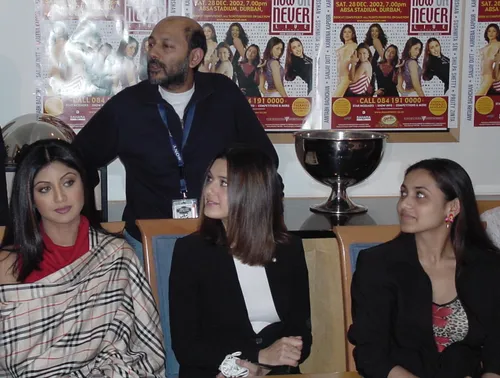
Bollywood live performances in South Africa ceased to exist, and a multitude of factors contributed to this cessation. For generations, cinema and music formed the language that connected India and South Africa, including these grand events. From Durban to Johannesburg and beyond, the arrival of a Bollywood show was a significant occasion, featuring dazzling costumes, dynamic dance routines, and the rare opportunity to witness renowned actors step off the screen and into reality.
However, those grand productions have largely disappeared from South African stages. To comprehend why South African audiences no longer feel the vibrations of playback singers and megastars, one must delve into a complex tapestry of political isolation, economic challenges, and a transforming global entertainment scene. The tale of Bollywood in South Africa cannot be fully recounted without recognizing the significant influence of India's resistance to apartheid.
Decades before the world united against institutionalized racism, India severed all diplomatic, economic, and cultural connections with South Africa in the 1940s and 1950s, vehemently opposing the system. Consequently, South Africa's thriving Indian community faced a profound cultural estrangement from the epicenter of Indian cinema.
Even though pirated tapes and vinyl records managed to trickle through, live performances by Bollywood film stars were entirely out of reach. As South Africa transitioned to democracy in the early 1990s, the cultural ban was lifted, and the return was met with jubilant enthusiasm. The post-apartheid era ushered in a wave of massive Bollywood tours, with packed stadiums and iconic performers, symbolizing a newly democratic South Africa reuniting with its cultural roots.
Yet, the subsequent years were marked by financial strain. Organizing a contemporary Bollywood extravaganza has become a monumental financial risk, and South Africa has increasingly found itself unable to afford such extravagance. The economics are harsh. Bringing A-list Bollywood artists, elaborate dance troupes, state-of-the-art production, and security necessitates multi-million-rand investments.
Promoters grapple with immense financial risks, exacerbated by fluctuating exchange rates between the South African Rand and US dollars, the currency in which artists are paid. Furthermore, corporate sponsorship, which once played a crucial role in funding major international cultural events, has dried up. Coupled with these economic pressures are exorbitant ticket prices.
In a struggling local economy where disposable income is severely limited, fans must decide between the high cost of admission and their daily living expenses. Promoters find themselves in a precarious position: ticket prices must be set prohibitively high to cover costs, yet those prices render the shows inaccessible to the very working- and middle-class audiences that form the core of Bollywood's fanbase in South Africa.
This financial barrier is compounded by a fundamental change in how global audiences consume celebrity culture. In the pre-social media and streaming era, a live concert was often the only avenue for fans to bridge the vast physical and emotional distance between themselves and their idols. Today, Bollywood stars maintain constant, personal contact with their international fan base through social media, YouTube, and global streaming platforms.
Movie releases are synchronized worldwide, and promotional tours are concentrated in regions with lucrative corporate markets, such as North America, the UK, and the Gulf states. For major production houses, the return on investment for transporting a large physical tour to the Southern Hemisphere no longer matches the digital impact achievable through a smartphone screen.
The absence of live Bollywood performances in South Africa signifies the end of a unique cultural chapter in the country's history. Though the deep affection for Indian cinema continues unabated among South African audiences, the combination of high logistical costs, economic headwinds, and shifting entertainment paradigms has silenced the stadium tours.
The era that began with such jubilant celebrations following the fall of apartheid has evolved into a more subdued digital connection, leaving fans to cherish the memories of when the stars of Mumbai illuminated South African nights in person. Fakir Hassen, a seasoned Bollywood critic and author of four books on the subject, has witnessed the transformation firsthand.
Written by urgent.news from IOL's reporting — not their text. Machine-written — may contain errors; check the original before relying on it.
This story
This is one outlet's version. Read the fullest account.