Apollo Economist Says AI Affecting Wages More Than Employment
Artificial intelligence is affecting the labor market, though not in the way people might think. That’s according to Torsten Slok, Apollo Global Management’s chief economist, who told Bloomberg News on Saturday (Aug. 22) that the impact of AI can be seen on weaker wage growth rather than overall employment. Slok and fellow research Sania Edlich […] The post Apollo Economist Says AI Affecting…
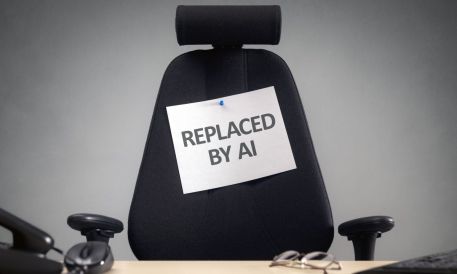
Artificial intelligence is reshaping the labor market, according to Torsten Slok, chief economist at Apollo Global Management. In his view, AI's impact is more evident in wage growth rather than overall employment. Slok and his colleague Sania Edlich analyzed data from approximately 300 occupations, dividing them into groups with high and low exposure to AI.
Their findings revealed that the wages of workers with high AI exposure grew 6.7% more slowly compared to those with lower AI exposure. This disparity was particularly significant among lower-income workers, as stated in the report.
Moreover, Slok highlighted that AI has contributed to an increase in business formation, which is currently at a record high. He explained that AI has fostered a more dynamic economy, enabling people to generate ideas, utilize agents, and create innovative solutions through loops, graphs, and other advanced tools. This development has led to the emergence of more businesses, he noted.
The report serves as an additional data point in the ongoing debate about the future of the job market in the face of AI advancements. It differs from other studies, such as a recent report by the Bureau of Labor Statistics, which found a slight decline in jobs (0.2%) for 18 occupations with AI exposure between May 2024 and May 2025, while overall job growth increased by 0.8%.
Similarly, Goldman Sachs economists reported in May that industries "highly exposed to AI substitution" experienced a faster decline in job openings compared to others.
Additionally, recent PYMNTS Intelligence research, titled "The Resilience Deficit: Labor Workers in an Automated Economy," examined the impact of AI on lower-income workers or those earning up to $25 an hour, typically earning less than $50,000 per year. The study revealed that AI is infiltrating various types of workplaces, with 37% of these workers reporting that their employer had introduced AI or automation tools in the past 12 months.
However, the research also uncovered that lower-income workers receive less training, express less confidence in the face of disruption, and have fewer financial resources to cope with job loss or changes. The findings suggest that AI's impact is extending beyond Silicon Valley and corporate offices into sectors like warehousing, restaurants, hospitality, logistics, and caregiving jobs, which constitute a substantial portion of everyday consumer spending.
Written by urgent.news from PYMNTS's reporting — not their text. Machine-written — may contain errors; check the original before relying on it.