Why South Korea wants to rebuild a DMZ railway despite Kim’s cold shoulder
Near the heavily fortified frontier dividing the Korean peninsula, the abandoned Woljeong-ri station is being recast as a symbol of South Korea’s hopes to reconcile with the North. But plans to reconnect South Korea’s northernmost station to the rail network come at an awkward moment, as Pyongyang ignores Seoul’s overtures while the South’s old ally Washington pursues its own talks with…
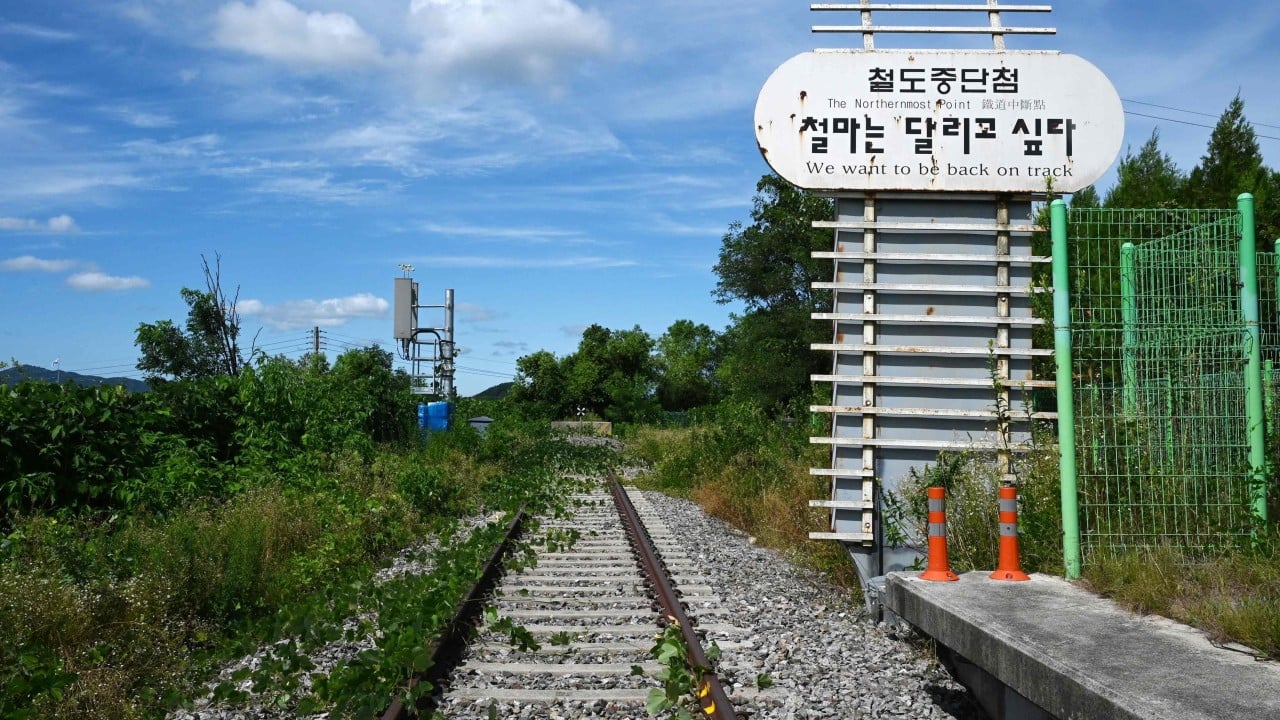
The abandoned Woljeong-ri station in the Demilitarised Zone (DMZ) between South and North Korea is being rebuilt as a symbol of South Korea's efforts to reconcile with the North. However, plans to reconnect the northernmost station of South Korea to the rail network are occurring at a challenging time, as North Korea continues to ignore South Korea's overtures while the United States pursues its own talks with Pyongyang.
Recent tensions have raised doubts about South Korea's role in any diplomatic push, despite President Lee Jae Myung's more conciliatory stance towards the North since taking power in 2019.
President Donald Trump recently scaled back annual military drills with Seoul, calling them "inappropriate and hostile" towards the nuclear-armed North. He also criticized South Korea for not aiding his war against Iran and announced plans to meet with North Korea's leader, Kim Jong-un, this year. North Korea responded by firing around 10 short-range ballistic missiles and mocking Seoul's relationship with Washington as that of a "master-servant."
The history of the Woljeong-ri station highlights the vulnerability of such hopes to the politics of the peninsula. Work on the station began in 2015 but halted a year later following North Korea's fourth nuclear test. Despite these setbacks, the station remains an attraction for visitors to the DMZ, and the former line terminus in Wonsan, which lies within North Korea, underscores the potential for future reconciliation.
South Korea's reconciliation program aims to restore rail links with the North, including the Woljeong-ri project, though some residents in Cheorwon remain skeptical about the practicality of such efforts. The project, which aims to eventually restore links to the North, could save time if inter-Korean ties were to be restored in the future. However, given the current political climate, many experts believe that such a reunion is virtually impossible.
The project also aims to boost tourism along the border, which currently faces frequent disruptions and security risks. North Korea has previously sent trash-filled balloons and broadcast unsettling noises across the border during the administration of South Korea's hawkish predecessor, Yoon Suk-yeol. The current situation leaves the rail project as a symbol of South Korea's lonely push for peace, with Seoul feeling increasingly isolated as China, Russia, and the United States engage with North Korea in various ways, leaving Seoul with few options.
Written by urgent.news from South China Morning Post's reporting — not their text. Machine-written — may contain errors; check the original before relying on it.
This story
This is one outlet's version. Read the fullest account.
- Why Chinese foreign minister’s trip to South Korea ‘dealt a low blow’ to Seoul scmp.com
- South Korea to send 1st container ship through Arctic route koreatimes.co.kr
- Blacklisted Chinese firm CGN runs power stations in South Korea asiatimes.com
- South Korea preparing to send its first trial container ship through Arctic route dailytimes.com.pk
- South Korea to send 1st container ship through Arctic route hellenicshippingnews.com
- South Korea ship to test alternative Arctic route as Mideast conflict disrupts shipping france24.com
- Train to nowhere? South Korea’s lonely frontier station strains for peace as Pyongyang fires back malaymail.com
- South Korea container ship sets sail to test Arctic commercial route amid Western concerns channelnewsasia.com