What’s so bad about a planned Hong Kong economy? Just look at Singapore
Why is the idea of a planned economy anathema to so many people despite China’s success? And why do so many retain faith in market economies given the economic chaos much of the Western world is descending into? These questions have acquired a particular piquancy as Hong Kong embraces long-term planning for the first time, attracting criticism from some that it is falling into Chinese-style…
Many view the notion of a planned economy as abhorrent, despite China's achievements in this area. Conversely, a large portion of the population remains supportive of market economies, even as Western nations grapple with economic turmoil. This divide has been heightened by Hong Kong's recent decision to implement long-term planning for the first time, sparking criticism from some who fear it is veering towards Chinese-style error.
With 50 years of experience in Asia, having lived in Singapore, Hong Kong, Japan, and the United States, I have come to several conclusions. Firstly, individuals who adhere to extreme stances on either side of the market versus planned economy debate are often misinformed or naive. Secondly, those who fervently champion the merits of market economies must scrutinize the recent performance of these uncontrolled systems, both economically and financially.
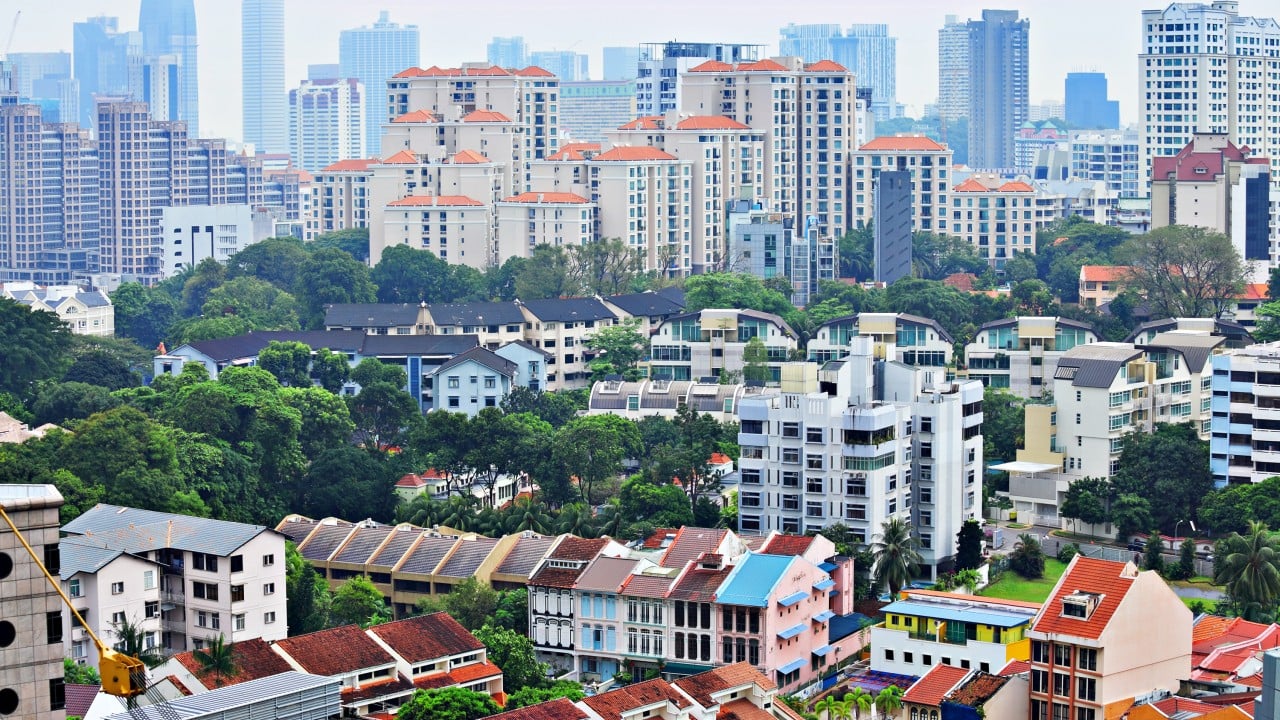
It is preposterous to claim that economic planning is inherently undesirable. While I have traditionally held a somewhat leftist perspective on these matters, my conviction was strengthened upon arriving in Singapore in 1976 to join the Business Times as a founding writer. Singapore's then-leader, Lee Kuan Yew, was implementing a plan to establish an industrial nation-state and free it from colonial dependency as a trade hub between the East and West.
Lee's approach was widely praised, even by former British Prime Minister Margaret Thatcher, who acknowledged the viability of a partially planned or state-cum-market economy like Singapore's compared to solely relying on private sector decisions. Subsequently, I moved to Hong Kong in 1979 to become the business editor of the defunct Far Eastern Economic Review.
There, I encountered a starkly different economic and social landscape. Promoting a planned economy in Hong Kong at that time was deemed heretical. I was regarded as an advocate for Singapore-style economic planning, someone who needed to comprehend the nuances of Hong Kong. At the time, Hong Kong was an ideal destination for expatriates such as myself, yet one only needed to glance at poverty and squalor in areas like The Peak and Mid-Levels to realize the city's underlying issues.
Hong Kong had long been a shining example of a modern market economy, benefiting certain individuals, yet failing to address long-term structural problems. Economist Heiwai Tang of the University of Hong Kong's Business School concurred, stating that the government's lack of overarching planning had exacerbated housing shortages, income inequality, and limited upward mobility.
"We should not be the last defenders of laissez-faire, which has generated prosperity for many but also generated long-term structural problems that cannot be easily resolved by market forces," he asserted. This situation may soon change. By the end of next month, Hong Kong will launch its inaugural five-year plan to guide the city's economic and social development in alignment with national strategy.
While untested territory for Hong Kong, Singapore has thrived without Lee Kuan Yew's pragmatic and economically dirigiste approach. Hong Kong conducted a two-month public consultation before finalizing its five-year plan, though cynics argue that this is insufficient for true democratic debate. While both governance through ballots and state direction have their flaws, having a "plan" is preferable to a laissez-faire approach.
More importantly, critics of Hong Kong's attempt to incorporate rationalism into governance and economic planning should examine the current state of leading democracies. The United States, the UK, Japan, and the European Union exhibit erratic or corrupt leadership, revolving-door governments, and perpetual squabbling. Deng Xiaoping's 1992 remarks that both planning and markets allocate resources underscore the importance of a balanced approach. Therefore, incorporating a planned economy into Hong Kong's framework may prove beneficial.
Written by urgent.news from South China Morning Post - Hong Kong's reporting — not their text. Machine-written — may contain errors; check the original before relying on it.
This story
This is one outlet's version. Read the fullest account.