What’s so bad about a planned Hong Kong economy? Just look at Singapore
Why is the idea of a planned economy anathema to so many people despite China’s success? And why do so many retain faith in market economies given the economic chaos much of the Western world is descending into? These questions have acquired a particular piquancy as Hong Kong embraces long-term planning for the first time, attracting criticism from some that it is falling into Chinese-style…
Critics argue that the idea of a planned economy is inherently problematic, yet China's success in this area continues to perplex many. Conversely, many remain confident in market economies despite witnessing economic instability in the Western world. Hong Kong's recent decision to embark on long-term planning has sparked criticism, with some claiming it is adopting Chinese-style error.
Having spent five decades in Asia, including stints in Singapore and Hong Kong, the author offers his perspective. He asserts that extreme views on either side of the market vs. planned economy debate are often misguided. Moreover, proponents of market economies should closely examine the recent performance of such systems, both economically and financially.
The author argues that economic planning is not inherently undesirable, and he personally embraced a somewhat leftist viewpoint upon moving to Singapore in 1976. Under Lee Kuan Yew's guidance, Singapore implemented a plan to establish a small nation-state with industry as its backbone and to break free from colonial dependencies.
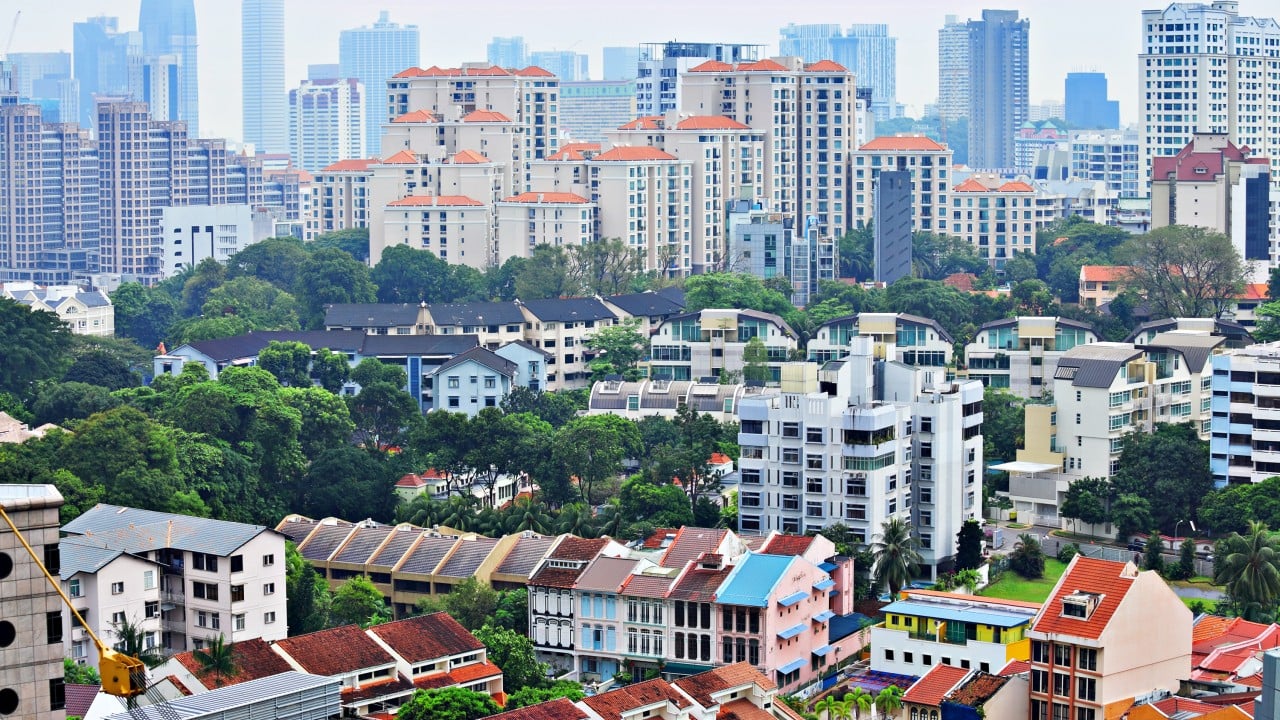
This plan, praised by former British Prime Minister Margaret Thatcher, showcased the viability of a partially planned or state-cum-market economy. The author's move to Hong Kong in 1979 exposed him to a markedly different economic and social landscape. Despite Singapore's success, Hong Kong was plagued by poverty and squalor, particularly in areas like The Peak and Mid-Levels.
Economists, such as Heiwai Tang from the University of Hong Kong's Business School, contend that the absence of a comprehensive plan has resulted in housing shortages, widening inequality, and limited social mobility. Tang also warns that blindly defending laissez-faire capitalism has led to long-term structural issues that cannot be easily rectified by market forces alone.
The situation may soon evolve, as Hong Kong is set to introduce its inaugural five-year plan by month-end. This plan will guide the city's economic and social development in alignment with national strategy. While Hong Kong's transition may appear unprecedented, Singapore has already embraced this approach with success. The author emphasizes that critics of Hong Kong's plan may underestimate the value of a structured approach to governance and economic planning.
He cites the erratic leadership in Western democracies, including the US, UK, Japan, and the EU, as further evidence of the merits of a well-planned economy. Deng Xiaoping's teachings on the essential role of both planning and market forces in resource allocation reinforce the potential benefits of a planned economy for Hong Kong.
Written by urgent.news from South China Morning Post's reporting — not their text. Machine-written — may contain errors; check the original before relying on it.