Schauspiel am Himmel: Fast totale Mondfinsternis - aber was kann man sehen?
Am kommenden Freitag tritt der Mond in den Kernschatten der Erde. Teile der Verfinsterung kann man auch in Deutschland sehen.
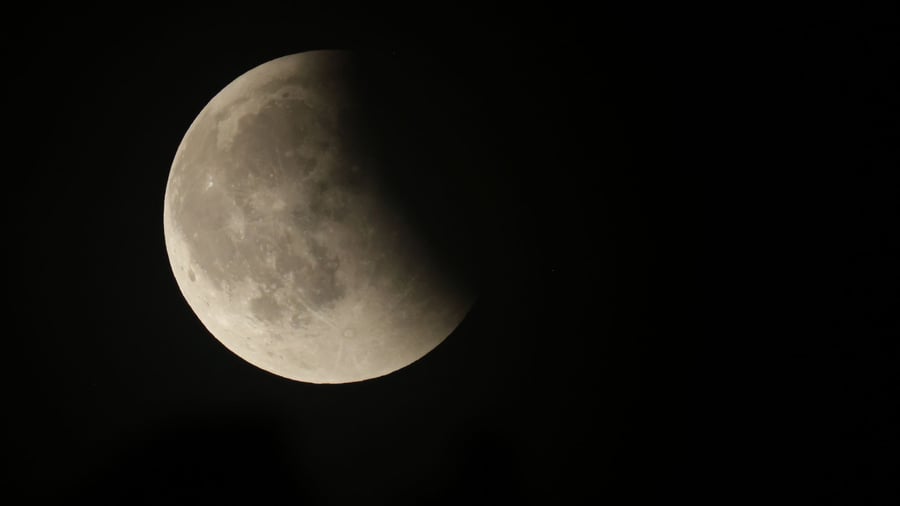
The upcoming August has plenty to offer in the night sky, including yet another celestial event: a near-total lunar eclipse. At 4:34 am on August 28th, the Earth's shadow will begin to engulf the Moon. According to Uwe Pilz, chairman of the Association of Stargazers based in Bensheim, southern Hesse, the partial phase of the eclipse will be easily visible shortly after 5:30 am. The Moon will be high in the sky and the night will still be dark, making it an ideal time to observe.
However, as the eclipse progresses and more of the Moon is covered, it will become increasingly difficult to see, especially when dawn approaches. The full eclipse will occur around 6 am, but this moment will be almost impossible to observe due to the rising sun and the Moon setting. Pilz reassures that despite these limitations, this lunar eclipse is worth witnessing.
The Moon will exit the Earth's shadow at 7:52 am, by which time it will have already set in Germany. Despite these challenges, Pilz believes this upcoming lunar eclipse on Friday morning is a rewarding spectacle. With a telephoto lens or even a smartphone, photos of the event can be taken easily. He notes that even during minor partial eclipses, the shadow of the Moon can be faint. A total lunar eclipse is expected on December 31st, 2028.
Written by urgent.news from Handelsblatt's reporting — not their text. Machine-written — may contain errors; check the original before relying on it.