NASAs Roman telescope is built to find what Hubble and Webb miss
NASA’s Nancy Grace Roman Space Telescope, scheduled to launch Aug. 30, will scout targets for Hubble and James Webb Space Telescope.
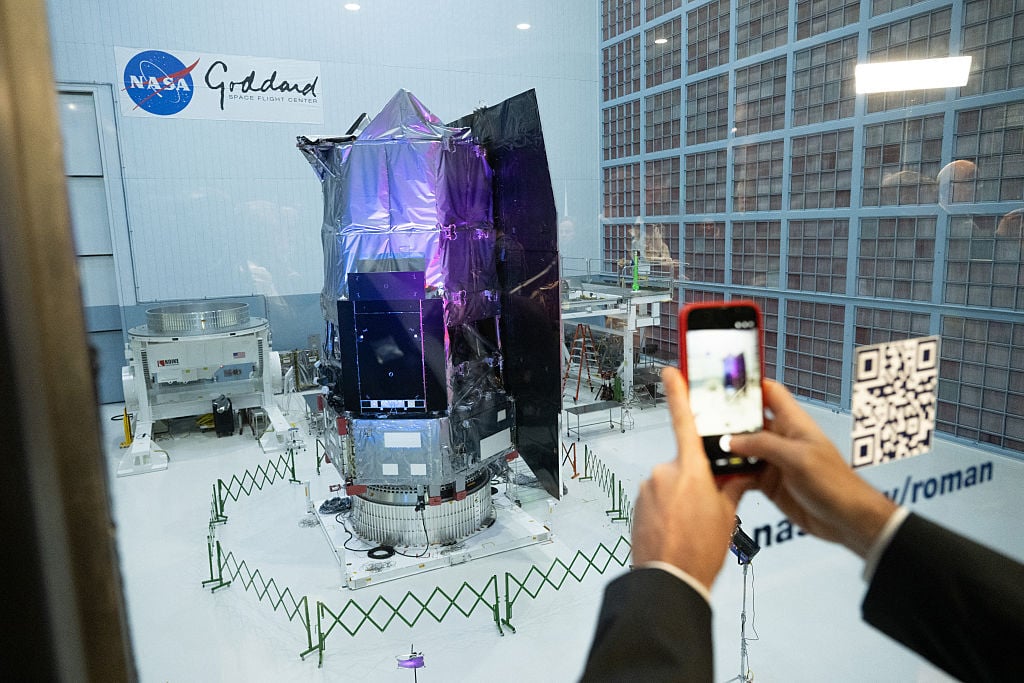
The Nancy Grace Roman Space Telescope, set to launch as early as August 30, serves as NASA's next flagship observatory with the goal of discovering objects that Hubble and Webb telescopes might miss. The telescope, capable of surveying vast areas of the sky quickly, will help astronomers find rare cosmic phenomena and map the distribution of galaxies and galaxy clusters, providing insights into the nature of dark matter and dark energy.
By capturing images with Hubble-like resolution in infrared light, Roman will image up to 50 times more sky than Hubble has mapped in three decades. This wide-field capability allows Roman to act as a scout, identifying potential targets for further detailed study by Hubble, Webb, and other observatories. Additionally, Roman's coronagraph, an innovative instrument designed to block a star's light and reveal the planets orbiting it, promises to push the boundaries of exoplanet detection and characterization.
With its diverse capabilities and complementary role alongside Hubble, Webb, and other telescopes, the Roman Space Telescope is poised to revolutionize our understanding of the universe, offering a wealth of data to fuel groundbreaking discoveries and scientific advancements.
Written by urgent.news from Mashable's reporting — not their text. Machine-written — may contain errors; check the original before relying on it.