Why Recycling Old Artificial Turf Fields Is So Difficult — and How Denmark Is Doing It
Artificial turf fields have transformed sports facilities across the United States and around the world, allowing athletes to play year-round with less water and maintenance than natural grass. But once those plastic fields wear out, a difficult question remains: What happens to all that artificial grass? The answer is complicated. Recycling worn-out artificial turf remains […]
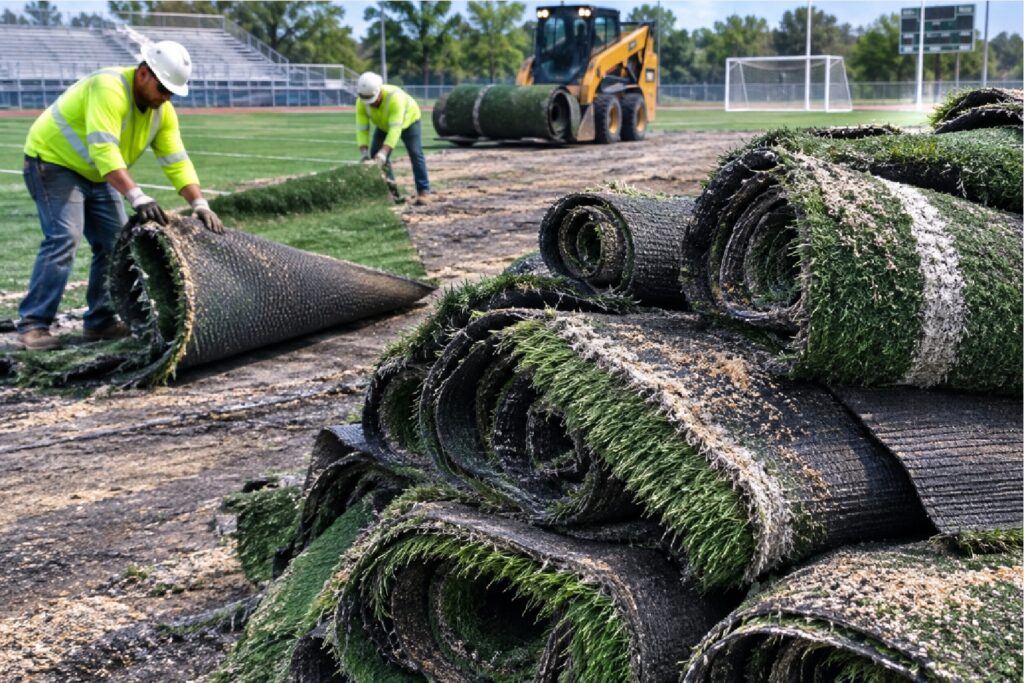
Artificial turf fields have revolutionized sports facilities by providing year-round play with less water and maintenance. However, when these plastic fields wear out, recycling them poses significant challenges. The complexity lies in separating the various materials, such as polyethylene or polypropylene fibers, backing materials, polyurethane, latex, sand, rubber, and other infill.
A 2026 study in the Journal of Environmental Management highlighted the need for high-tech and economically viable processes to separate the carpet, performance infill, and stabilizing infill. The issue is further exacerbated by the scale of disposal; approximately 50 million square meters of sports turf were discarded worldwide in 2017, with the figure expected to surge.
In the United States, the recycling of complete synthetic turf systems remains a costly and technically challenging endeavor due to the difficulty in separating its components. Only a few facilities exist nationally, and many old fields are still disposed of in landfills or energy recovery. Denmark, however, demonstrates an advanced approach to artificial turf recycling.
Specialized facilities in the country can separate the different components of synthetic turf and return them to the materials market. The process involves downsizing, drying, separating, and cleaning the turf without using water, resulting in materials like recovered sand, rubber, backing, and plastic fibers with high cleanliness.
Denmark's recycling capacity is expanding, with European facilities processing over 4.3 million square meters of synthetic turf annually. The ultimate solution may lie in designing artificial turf for recycling from the beginning, with newer systems focusing on a single polymer, such as GreenFields' ONE-DNA system using polyethylene in its fibers and backing.
Written by urgent.news from Colombia One's reporting — not their text. Machine-written — may contain errors; check the original before relying on it.