New Solar System Models Show Earth Is No Fluke
Astrobiologists use new starting points to produce ‘organic’ models of our solar system’s formation.
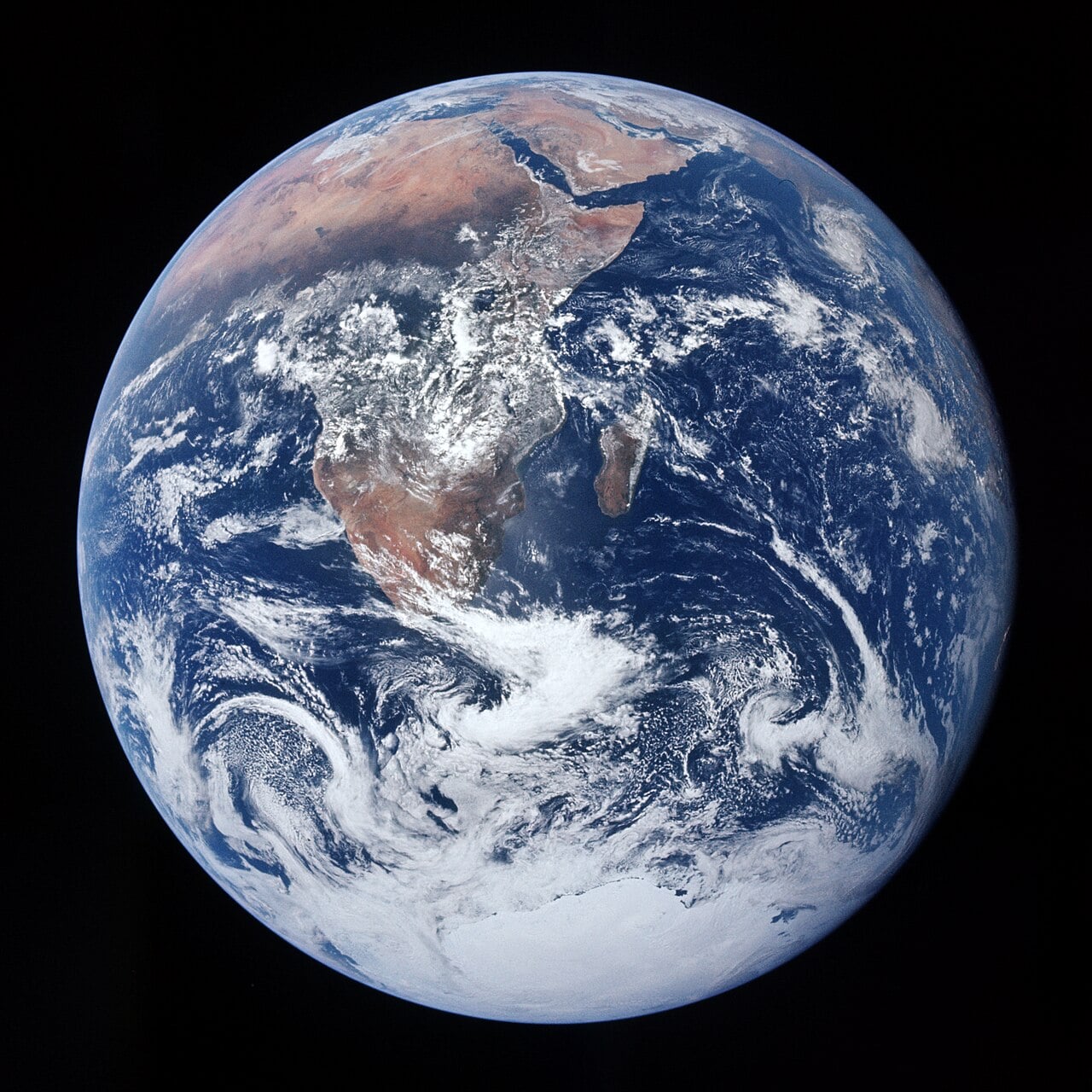
For the past three decades, computer models simulating planetary system formation have evolved from basic to intricate simulations utilizing thousands of distinct initial configurations. At the recent Origins 2026 conference in Paris, Nader Haghighipour, a planetary scientist at the University of Hawaii in Manoa, unveiled a new model that diverges from traditional assumptions about familiar planetary arrangements.
Unlike earlier models, Haghighipour's simulation incorporates numerous random starting points, allowing physics to guide the ultimate evolution of the system. Haghighipour's paper emphasizes that after three decades of focused terrestrial planet formation modeling, limitations have become apparent, and further refinement is no longer feasible.
The most promising environment for habitable planet formation, according to Haghighipour, arises from an organic protoplanetary disk with an uneven distribution of solid material. To address the uncertainty surrounding our solar system's initial conditions, Haghighipour and his team conducted over 1,000 simulations of late-stage terrestrial planet formation for various planetesimal and planetary embryo distributions.
They reached the conclusion that Earth's formation at a one-Earth-Sun distance, or one astronomical unit, is a natural outcome of the solar system's evolution. In their simulations, Venus appeared approximately 28 percent of the time and retained its orbit, sometimes within the habitable zone of the star or slightly beyond. Mars was also observed at various times as a small object near Mars' current orbit.
Haghighipour and his colleagues' models further examined the interactions between hypothetical planetary bodies. While earlier simulations could take up to six to eight months, the current models can be executed within six to eight weeks on modern laptops. Haghighipour highlights that even minor variations in initial conditions can significantly influence the final outcome of a particular solar system.
He also alludes to the fact that life, once it emerges, tends to synchronize with Earth's evolution. Although Earth-sized planets, including smaller super-Earths, are prevalent in the habitable zones of solar-type stars, the detection of life on other planets remains an extremely challenging task due to current technological limitations.
However, this research will contribute to a deeper understanding of Earth-like planets, the physical processes that led to their formation, and how they became habitable. Haghighipour concludes that there is no reason to believe that Earth is a unique occurrence.
Written by urgent.news from Universe Today's reporting — not their text. Machine-written — may contain errors; check the original before relying on it.