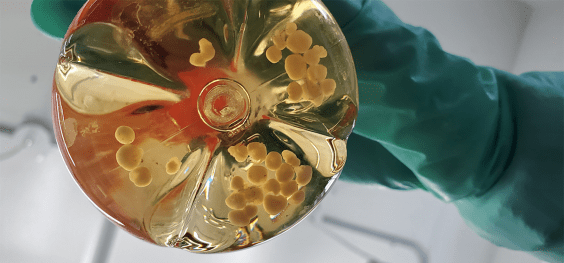
Hydrogel platform uses vitamin B2 and blue light to simplify living tissue models
Researchers at Tampere University have developed a versatile hydrogel platform that makes it easier to create customized biomaterials for tissue engineering, disease modeling, drug discovery and regenerative medicine. Their plug-and-play crosslinking technology enables the design of a wide range of hydrogels in which biological molecules, such as proteins, peptides and nucleic acids, can be…

Researchers at Tampere University have unveiled a groundbreaking hydrogel platform that simplifies the creation of customized biomaterials for tissue engineering, disease modeling, drug discovery, and regenerative medicine. This innovative platform utilizes a gentle, cell-friendly crosslinking process that enables the incorporation of a diverse range of biological molecules, such as proteins, peptides, and nucleic acids, without the need for chemical modification.
The core of the platform hinges on a gallic acid-modified biopolymer that, when exposed to blue light in the presence of riboflavin (vitamin B2), rapidly forms hydrogels. These hydrogels simultaneously bind proteins, DNA, and RNA, making customization straightforward and preserving the functionality of incorporated biomolecules. This method significantly reduces the complexity and toxicity associated with current hydrogel systems, which often rely on harsh chemicals and multiple preparation steps.
Lead author Austin Donnelly Evans emphasizes the platform's simplicity, flexibility, and cell-friendliness, highlighting that the functionality of biomolecules remains intact post-gelation. The hydrogels maintain the dynamic, partially self-healing, viscoelastic, and flexible properties of natural tissues, making them ideal for creating tissue-specific environments.
The platform demonstrates exceptional adaptability, allowing researchers to tailor the physical properties of the hydrogel and select which biological components to incorporate. This versatility enables the creation of tissue-specific models for a wide array of applications, including advanced three-dimensional cell culture systems, personalized tissue models, and drug testing platforms.
Professor Oommen P. Oommen, who led the study, notes that the technology could revolutionize biomaterial development, making the design of custom biomaterials as simple as assembling LEGO blocks. This advancement could pave the way for more realistic models of human tissues and diseases, ultimately contributing to the development of next-generation biomaterial-based therapies.
Written by urgent.news from Phys.org's reporting — not their text. Machine-written — may contain errors; check the original before relying on it.