BJP | Revamp for big tests ahead
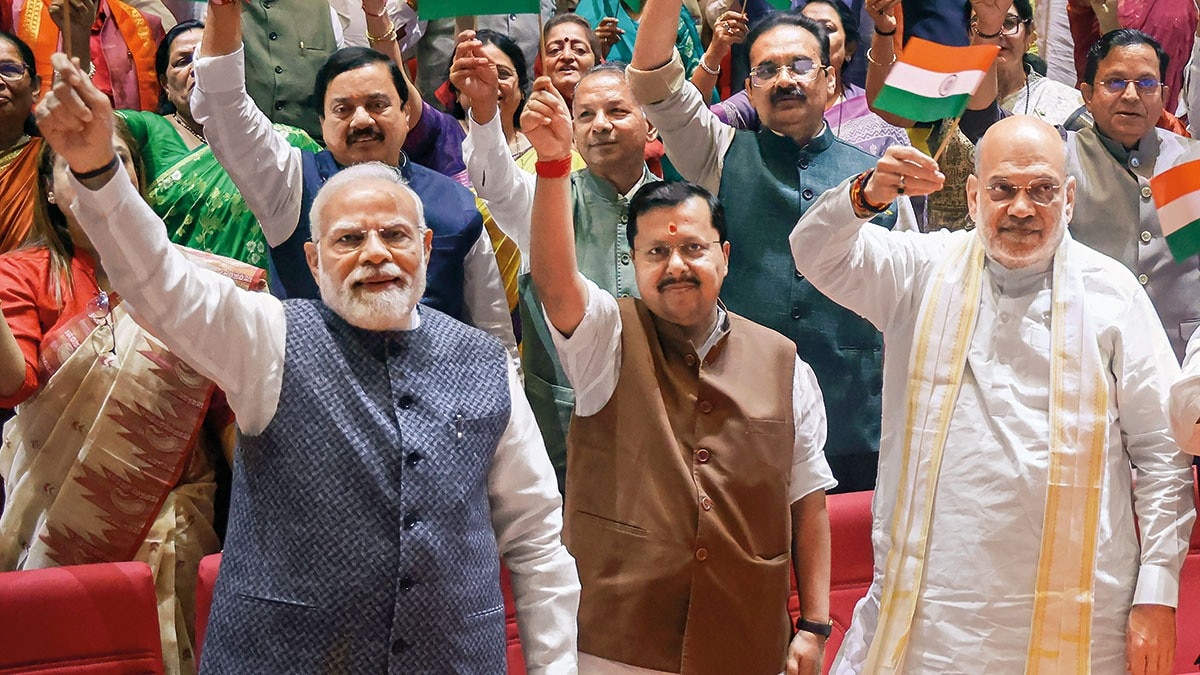
Two days before the Sangh Parivar gathered at Gudilova in Visakhapatnam district, the Bharatiya Janata Party initiated its organizational overhaul. The Akhil Bharatiya Samanvay Baithak, spanning August 19 to 21, convened 32 Sangh organisations to discuss matters of national significance. Nitin Nabin assumed the role of BJP president for the first time during the summit.
At the meeting, Nabin focused on strengthening the party's network. He made it clear that there would be no television faces among senior leaders, nor celebrity imports. Amit Malviya, who had managed the party's IT and social media operations for 11 years, had left the organization. Tejasvi Surya, a prominent young leader, was also removed from the Yuva Morcha. Sambit Patra, a well-known figure in prime-time television, was appointed as the Northeast coordinator.
In place of these departures, Nabin established a 64-member team, comprising many newcomers and individuals from state units rather than Parliament's front benches. The party had faced challenges in recent months, and this revamp aimed to promote individuals who understand the organization's structure rather than those who could articulate it on air.
However, some familiar faces returned, including Ram Madhav, who was reinstated as national vice-president after spending time in the political wilderness, and Smriti Irani, who was appointed as a national general secretary after losing in the 2024 Amethi constituency.
Nabin's predecessors had previously implemented new teams upon assuming leadership positions, but the 2026 revamp was more extensive. Only two of the eight general secretaries from former party president J.P. Nadda's tenure remained in place, while nine of the 13 vice-presidents and 15 of the 16 secretaries were new. All seven morcha chiefs also had fresh faces.
Additionally, Tarun Chugh was appointed as central office in-charge, a position previously held by Arun Singh. The party's most important state, Gujarat, was assigned to another long-standing member, Nabin. Tawde was given Uttar Pradesh, Satish Poonia took up the vacancy in Punjab, which had gone without a state in-charge since Vijay Rupani's death in the Ahmedabad plane crash of June 2025.
The organizational changes aimed to address specific areas. The posts with new names primarily focused on constituencies, while the ones retained were responsible for building the cadre. The BJP had won 240 Lok Sabha seats in 2024 but lost its majority. Three lessons emerged from this setback, all of which were evident in the organizational changes.
The first lesson was about repairing ties with the Sangh, which had broken in May 2024 when Nadda claimed the party was self-sufficient and no longer needed the RSS. The second lesson focused on the party's base, particularly the OBC, Dalit, and farmer constituencies that the Opposition had targeted more effectively. The third lesson concerned narrative, a challenge the party had struggled to overcome, particularly with the student protests over NEET exam paper leaks and the questioning of the party's digital operations.
Written by urgent.news from India Today's reporting — not their text. Machine-written — may contain errors; check the original before relying on it.