La UEFA, la AFC y la CONCACAF estudian una moción de censura para apartar de la presidencia de la FIFA a Gianni Infantino
No hay precedentes en los 122 años de historia de la Federación Internacional de que el Congreso haya celebrado una moción de censura contra un presidente en ejercicio
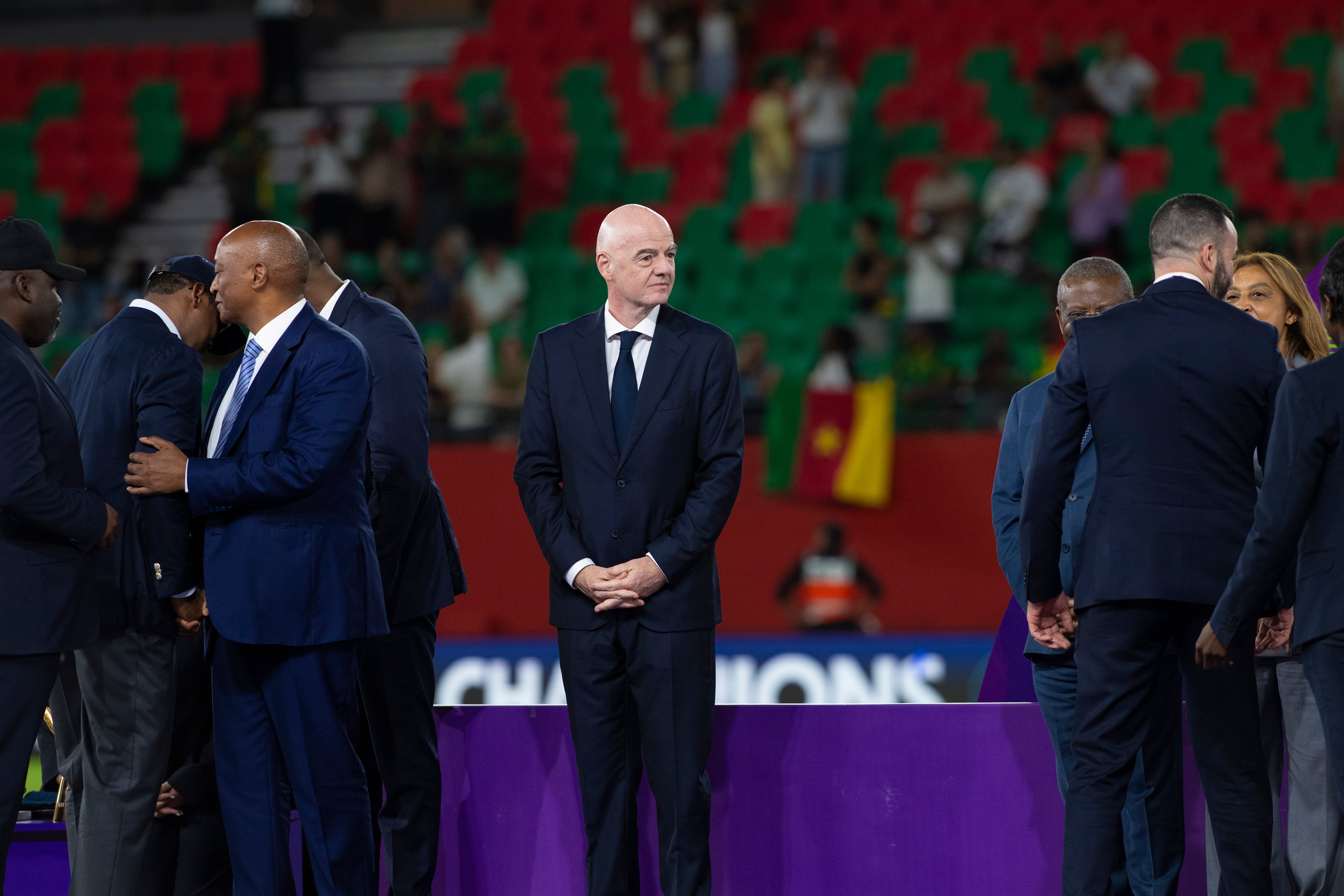
The major regional confederations of world football, UEFA, AFC, and CONCACAF, are debating the possibility of launching a motion of censure to compel FIFA President Gianni Infantino to step down, following his proposal to sell shares in the World Cup to private investors, according to Reuters' conversations with high-ranking sources.
The UEFA, the Asian Football Confederation (AFC), and CONCACAF, which includes North America, Central America, and the Caribbean, are considering this option. Reuters has not found any precedents in the 122-year history of FIFA for the Congress to have voted a motion of censure against an incumbent president. According to a source, there is no other option if a motion of censure is launched, either Infantino withdraws voluntarily before the March 2027 election or faces a vote of no confidence.
The FIFA statutes allow for an Extraordinary Congress to be convened at any time if at least one-fifth of the 211 member federations submit a written request outlining the issues to be discussed. The Congress must be held within three months, and each participating federation has one vote. The FIFA statutes do not explicitly provide for a motion of censure against the president.
FIFA did not respond to Reuters' request for comment. Neither did UEFA directly comment on whether the motion is on the table, referring Reuters to a previous statement where it called for a "deep and fundamental" review of the leadership and governance of FIFA, adding that "no option should be ruled out." CONCACAF avoided directly addressing the issue and referred to a previous joint statement with UEFA and AFC in which they accused FIFA leadership of a fundamental breach of trust.
AFC did not respond immediately. Infantino has stated his intention to run for re-election at the FIFA Congress in March 2027 and maintains significant support among member federations, particularly within the African Confederation (CAF). FIFA has apologized to the federations for the errors in managing the proposal to sell shares in the World Cup.
Last week, six Arab associations, including Qatar and Morocco, which co-sponsored the 2030 World Cup, publicly expressed their support for Infantino. FIFA leadership reiterated their full support following a crisis meeting in Morocco earlier this month. A senior source told Reuters that while the three confederations support a motion of censure, they fear a failure would strengthen Infantino by demonstrating he still holds a solid electoral base for the upcoming presidential elections.
Infantino is under intense pressure following the collapse of his proposal to sell a minority stake in a new commercial entity of FIFA to private investors. The entity would have controlled commercial rights for the World Cup, the primary asset of world football. FIFA estimates its revenues for the 2023-2026 cycle will exceed $15 billion, with the majority generated during the 2026 World Cup year.
Three of the six continental confederations of FIFA, UEFA, AFC, and CONCACAF, opposed the project and have since harshly criticized Infantino's management for lack of transparency, consultation, and good governance. The crisis escalated this week with the departure of FIFA's Director of Operations, Kevin Lamour, who criticized the investment proposal and claimed personnel had been "duped" by what he called "a one-person project."
FIFA did not explain the reasons for Lamour's departure. Also this week, FIFA Vice-President Sándor Csányi withdrew his support for Infantino, stating the departure of Lamour had been "the straw that broke the camel's back." However, Infantino's supporters face significant obstacles. No alternative candidate has publicly stepped forward before the November 18 deadline for candidate nominations, and Infantino still has backing within the organization.
CAF President Patrice Motsepe stated last week that Infantino maintains the support of Africa and that his future must be decided by FIFA elections. According to the abandoned investment proposal, federations could have accessed up to $20 million in emergency funding for infrastructure, coaching development, national teams, competitions, grassroots football, and women's football.
The proposed investment would have allowed federations to access up to $20 million in emergency funding for infrastructure, coaching development, national teams, competitions, grassroots football, and women's football. "Those willing to challenge Infantino at the ballot box should step forward and tell us what they can offer," said Malawi Football Federation President Fleetwood Haiya.
"As the Malawi Football Federation, I need to know what you will bring to Malawi." The pressure for change does not come solely from those with voting rights in FIFA. The European Football Clubs' Association (EFC), headed by Paris Saint-Germain CEO Nasser Al-Khelaifi, and representing over 800 clubs, has aligned with UEFA and other stakeholders seeking changes in FIFA, according to a source familiar with the conversations.
The EFC has warned FIFA that its members may refuse to participate in future World Cup editions if their concerns about governance and the relationship between FIFA and clubs are not addressed. While clubs do not vote in FIFA, they possess considerable athletic and commercial influence. Michael Payne, former marketing director of the International Olympic Committee, noted that even if clubs do not vote in FIFA, they hold considerable influence.
Written by urgent.news from El Pais's reporting — not their text. Machine-written — may contain errors; check the original before relying on it.
This story
This is one outlet's version. Read the fullest account.