Samuel Kim
NASA Ames Research Center Contact email: sam.kim@nasa.gov phone: 650-604-4384 The post Samuel Kim appeared first on NASA Science .
We haven't written up this one. NASA Science has the full story — the link below goes straight to it.
What's breaking now, across thousands of outlets.
NASA Ames Research Center Contact email: sam.kim@nasa.gov phone: 650-604-4384 The post Samuel Kim appeared first on NASA Science .
We haven't written up this one. NASA Science has the full story — the link below goes straight to it.
The Swift space telescope, which studies the most powerful explosions in the universe, was unable to be saved and will now likely plunge back to earth and disintegrate along the way later this year.
Scientific Reports, Published online: 20 August 2026; doi:10.1038/s41598-026-52336-7 Mitigating environmental pollution by methyl orange via effective adsorption using modified layered double…
Nature provides resources to society, and the diversity of species (think of pollinators, for example) is expected to underpin human economies.
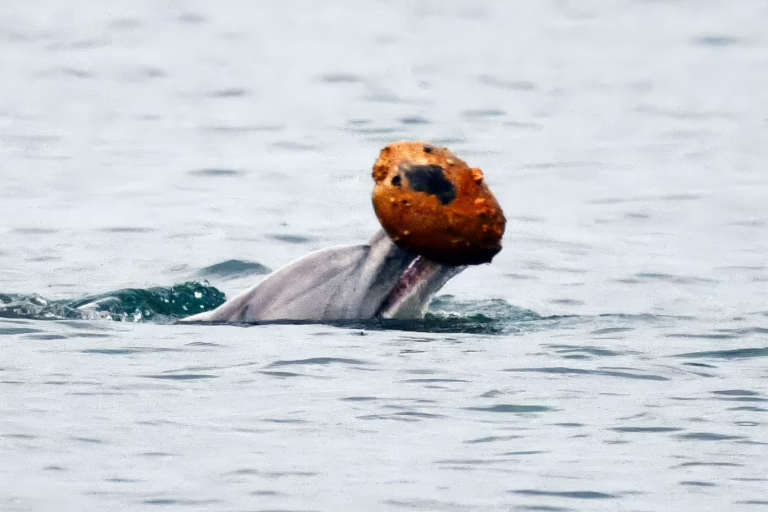
A small population of dolphins in Shark Bay in Western Australia have a documented history of using an unusual tool to help them catch fish: Large, empty snail shells. For the first time, scientists have now observed the same behavior in a different dolphin population on Australia’s east coast. Researchers even filmed a baby dolphin […]
KARACHI: Sindh’s coastal communities live on the front line of climate change and other natural disasters, and remain among the least protected and least connected populations. These people face combination disasters like cyclones, sea erosion, seawater rise, mangrove degradation, migration nightmares, and declining livelihoods.
A new study finds that one side effect of Trump-era trade wars has been cheaper whiskey in much of the United States. But if you live in whiskey hubs Kentucky or Tennessee, your prices actually went up.