Player builds working AI chatbot in vanilla Minecraft using 445K command blocks — clever approach shrank initial block count from over 1 million, requires no mods, plugins, or datapacks to work
Building neural networks in Minecraft using redstone is a relatively common pursuit, but a clever creator has worked around the limitations of command blocks' available math operations to implement an LLM in just 445,782 blocks, down from over a million in the initial implementation.
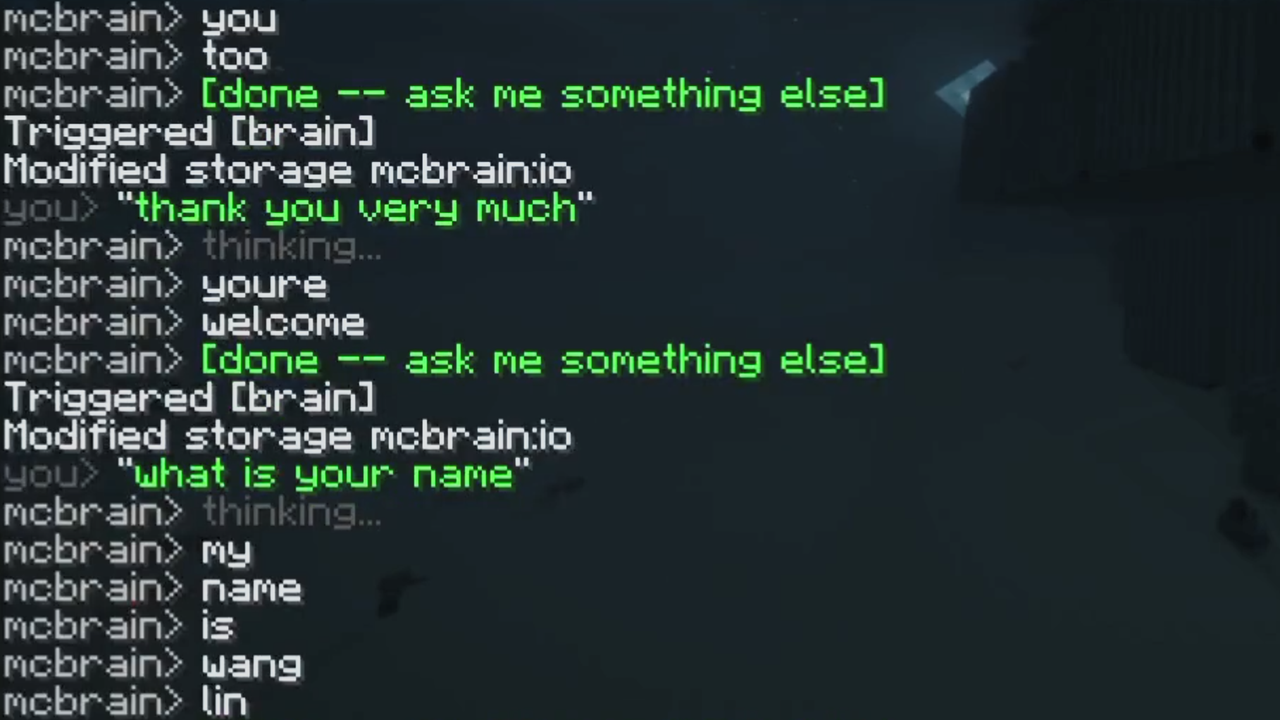
Minecraft players often create in-game calculators, QR code generators, and Tetris games using command blocks, but Reddit user Objz took it a step further by building an artificial intelligence chatbot within the game using only 445,782 command blocks. The project, described as a headache, utilized a small LLM with a 64-dimensional embedding space, a 256-neuron hidden layer, and a vocabulary of 2,048 words.
Trained on 11,118 DailyDialog conversations, the chatbot can be interacted with through the game's /dialog functionality, producing responses one word at a time. Despite its limited capabilities - it cannot perform math or possess broad knowledge - the project demonstrates impressive creativity in optimizing resource usage. The original version required nearly 2 million blocks, but Objz reduced this count by representing LLM weights as ternary values (-1, 0, and +1) instead of using floating-point values.
This quantization process, combined with the use of Minecraft's scoreboard command for multiplication and division, helped reduce the number of commands needed to generate each word in a response from an average of 1.43 to 0.67. The LLM is executed in smaller groups due to Minecraft's limits on command execution, and it takes approximately 1.8 seconds per word on a server with 35 ticks per second.
While making the LLM larger and more intelligent would require significant computational resources, this project showcases how constraints can inspire innovative solutions.
Written by urgent.news from Tom's Hardware's reporting — not their text. Machine-written — may contain errors; check the original before relying on it.