Out-of-control SpaceX rocket carved a 60-foot crater into the moon, NASA images reveal
NASA has finally revealed the enormous crater left on the moon after a SpaceX Falcon 9 upper stage smashed into its surface on Aug. 5.
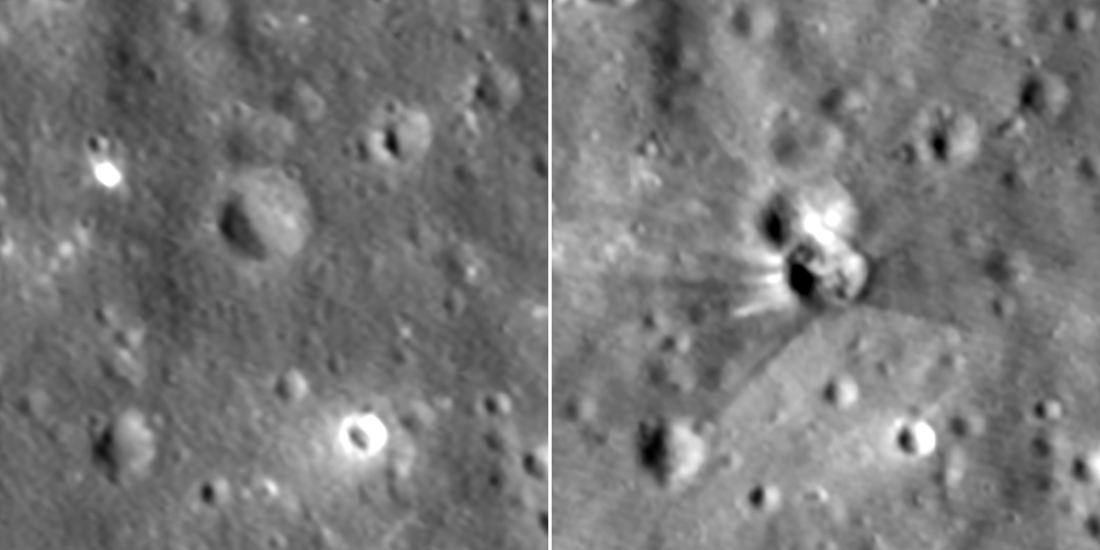
NASA has unveiled initial images of a crater created by a SpaceX Falcon 9 upper stage rocket that slammed into the Moon on August 5. The photographs, obtained by the agency's Lunar Reconnaissance Orbiter (LRO) between August 11 and 12, depict a 60-foot-wide (18 meters) crater surrounded by streaks of lunar rock ejected by the rocket's impact.
The new crater was formed by the upper stage of a SpaceX Falcon 9 rocket, originally launched on January 15, 2025, to transport two lunar landers to the Moon. Unlike the lower stage, which can return to Earth for reuse, the upper stage is abandoned in orbit, ultimately drifting towards the Moon after spending nearly a year in orbit.
The crash site was discovered through a collaborative effort between space enthusiasts and experts, as locating the impact location posed a considerable challenge. The collision occurred near Einstein crater on the Moon's northwestern limb, which was illuminated by the Sun at the time of the impact, making the initial flare invisible from Earth.
The high speed of the collision (5,400 mph or 8,700 km/h), while faster than typical meteoroids that hit the Moon (45,000 mph to 160,000 mph), resulted in a relatively small crater, making it even more challenging to observe from our planet. Independent astronomer Bill Gray first predicted the crash in May, and NASA's Center for Near Earth Object Studies subsequently refined these predictions.
The first spacecraft to reach the impact site was South Korea's Danuri lunar orbiter, which captured the first images on August 6. NASA's LRO photographed the same location six days later. The images reveal a small, blackened crater approximately 60 feet wide (18 meters) and less than 10 feet (3 meters) deep, with light and dark streaks radiating from the crater, indicating the distribution of dust and rocks thrown up during the impact.
Written by urgent.news from Live Science's reporting — not their text. Machine-written — may contain errors; check the original before relying on it.
Also reported by 1 other outlet
- New Images Show the 60-Foot Crater a SpaceX Rocket Left on the Moon discovermagazine.com