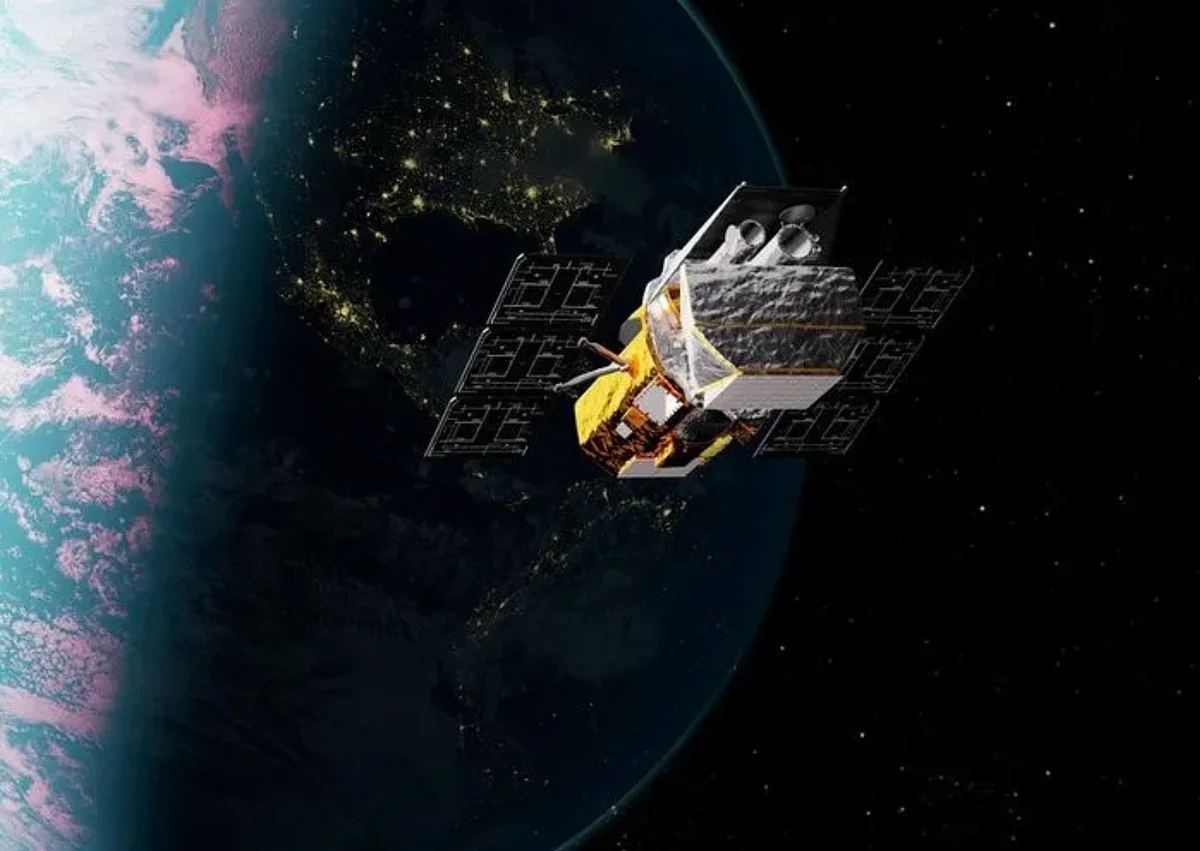
New Images Show the 60-Foot Crater a SpaceX Rocket Left on the Moon
Learn more about the impact left by the SpaceX Falcon 9 rocket and the global collaboration that helped experts capture detailed iamges of it.
A SpaceX Falcon 9 rocket impact created a 60-foot-wide crater on the moon, revealed in recent images captured by NASA's Lunar Reconnaissance Orbiter (LRO). The moon, already known for its numerous craters from asteroid, comet, and meteoroid strikes, now boasts an additional one due to the August 5, 2026 incident.
Capturing the crater's details was no easy task. The LRO orbits the moon at a distance of approximately 60 miles above its surface. Due to its speed and orbit, it takes about two hours for the LRO to travel from pole to pole and pass over the moon's surface, requiring it to wait for the crater to reappear in its field of view before taking photographs.
To ensure precise images, the LRO had to combat several challenges. It had to account for the moon's rotation beneath it, as well as the delicate balance of timing. A mere 10-second deviation in the capture time could result in a 10-mile drift of the crater off-center, compromising image clarity.
The LRO's Narrow-Angle Camera, capable of identifying features as small as three feet wide, was instrumental in identifying other elements of the impact, such as bright or dark rays radiating from the crater. These rays, according to NASA, are formed by surface dust altered over time by solar wind, micrometeorite impacts, and galactic cosmic rays. The lighter streaks, conversely, are believed to be the result of moon material ejected during the collision, moving deeper into the lunar surface.
The recovery of the crater's location and size was a collaborative effort. Through public data, private astronomers, hobbyists, and experts, NASA's Jet Propulsion Laboratory (JPL) refined the rocket's trajectory leading to the predicted impact. The Republic of Korea's Korea Pathfinder Lunar Orbiter (Danuri) program further confirmed the impact's accuracy using its high-resolution LUTI camera. NASA's Center for Near Earth Object Studies also leveraged this event to test impact prediction techniques.
This event underscores the importance of global collaboration in understanding our space technology and our natural satellite, the moon.
Written by urgent.news from Discover Magazine's reporting — not their text. Machine-written — may contain errors; check the original before relying on it.
This story
This is one outlet's version. Read the fullest account.