Hong Kong needs a mission for 2049 to focus its 5-year plans
Hong Kong is formulating its first five-year plan for economic and social development. Such plans are likely to become a regular feature of governance, and will shape how the city allocates land, builds housing and infrastructure, develops industries, trains talent and improves public services. They can also give government departments a common frame for action, rather than leaving them to…
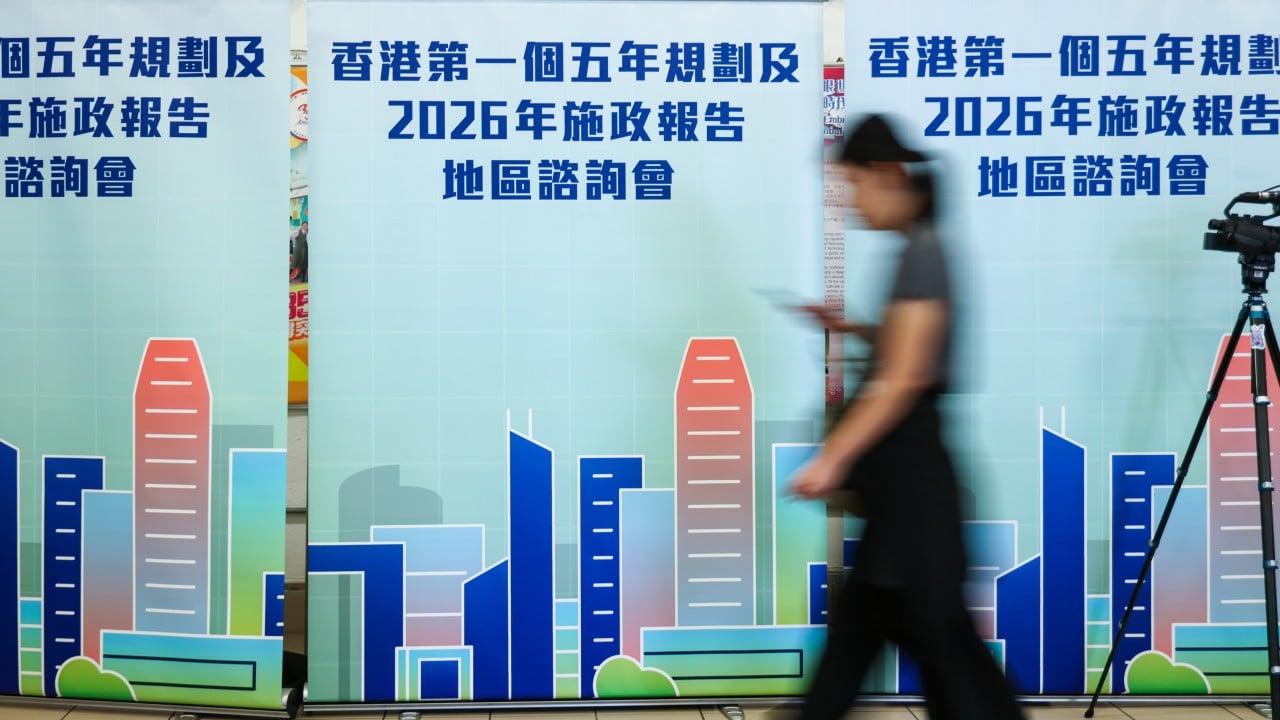
Hong Kong is drafting its inaugural five-year plan for comprehensive development, which will influence numerous facets of the city's governance, including land allocation, infrastructure development, industry growth, talent cultivation, and public service enhancement. These plans foster a unified approach among government departments, mitigating the tendency of departments to function in isolation.
However, these plans should extend beyond merely outlining medium-term objectives; they should also articulate a long-term vision, thus becoming a component of a larger journey rather than a standalone set of tasks. The critical question is not merely what Hong Kong should accomplish in the ensuing five years, but what kind of city it aspires to become within the next two decades.
Hong Kong can draw inspiration from China's methodology of long-term planning. China has articulated clear benchmarks: by the year 2035, it aspires to achieve socialist modernization; by mid-century, coinciding with the 2049 centenary of the People’s Republic, China aims to become a great modern socialist country in all aspects and realize national rejuvenation.
These objectives lend a broader purpose and a discernible trajectory to China's five-year plans. Hong Kong should similarly cultivate a strategic understanding akin to this.
This does not entail crafting another voluminous policy document teeming with targets, budgets, and performance indicators. Instead, it involves articulating a long-term mission statement that elucidates what the city ultimately seeks to become and the rationale behind it. A 2049 horizon would be a fitting one, as it aligns with a significant national milestone.
Under the framework of national planning, the city is supported in enhancing its standing as an international financial, shipping, and trade hub, an international aviation hub, an international innovation and technology center, a regional intellectual property trading center, a center for cultural exchange at the confluence of East and West, and an Asia-Pacific hub for international legal and dispute-resolution services.
These are mission objectives, not a mission statement. They delineate the economic domains in which Hong Kong endeavors to excel, but they fail to elucidate the public purpose these functions are intended to fulfill.
A city necessitates more than a mere enumeration of the roles it plays for the world; it requires a definition of what success signifies for its populace, and the type of society that prosperity is intended to nurture. Economic prosperity is vital, yet it should not be the sole metric of a city's success. Hong Kong ought to ensure that the fruits of growth are broadly distributed and translate into a future where young individuals perceive a role for themselves.
The city should be evaluated not solely by global rankings, market capitalization, cargo throughput, or the number of corporate headquarters, but also by whether prosperity enriches trust, diversity, and social cohesion.
Hong Kong previously employed comparable language in its long-term spatial strategy, Hong Kong 2030 Plus. It envisages a "liveable, competitive, and sustainable Asia’s World City," an expression that acknowledges that economic dynamism, environmental quality, and everyday life are interrelated. However, it remains primarily a framework for land, infrastructure, and urban development.
A city-wide mission would necessitate transcending this scope. This would not suggest that Hong Kong is adopting a planned economy. A city-level mission would not necessitate the government to identify winning industries or direct private capital. It would merely provide a unified framework so that businesses, investors, policymakers, and residents grasp the outcomes the city aspires to achieve: opportunity, openness, trust, innovation, and livability.
Such a mission must be anchored in Hong Kong's contribution to China's growth. Since reform and opening up, Hong Kong and the mainland have grown increasingly intertwined through trade, investment, and finance. China's ascent has expanded the market, capital base, and international reach to which Hong Kong can contribute; Hong Kong adds value through its global connectivity, professional competencies, financial depth, and institutional strengths.
Assisting China in advancing its long-term growth and international engagement is not only a matter of national contribution, but also central to Hong Kong's prosperity and pertinence.
A 2049 horizon is significant because it necessitates a longer-term perspective. Debates surrounding Hong Kong's future beyond 2047 will persist, yet a civic mission does not need to anticipate or resolve constitutional issues. Its practical purpose is to articulate the kind of city Hong Kong aspires to remain and evolve into amidst shifting circumstances: internationally connected, economically dynamic, socially assured, and capable of making substantial contributions to both China and the world.
The 30th anniversary of Hong Kong's return to the motherland next year serves as an apt occasion to commence this discourse among government entities, businesses, professionals, universities, young individuals, and community groups. The objective should not be another slogan or an exhaustive checklist of targets. Instead, it should be a collective long-term aspiration against which successive five-year plans can be evaluated. The central inquiry is straightforward: what should Hong Kong represent in 2049?
Written by urgent.news from South China Morning Post's reporting — not their text. Machine-written — may contain errors; check the original before relying on it.
This story
This is one outlet's version. Read the fullest account.