Hong Kong needs a mission for 2049 to focus its 5-year plans
Hong Kong is formulating its first five-year plan for economic and social development. Such plans are likely to become a regular feature of governance, and will shape how the city allocates land, builds housing and infrastructure, develops industries, trains talent and improves public services. They can also give government departments a common frame for action, rather than leaving them to…
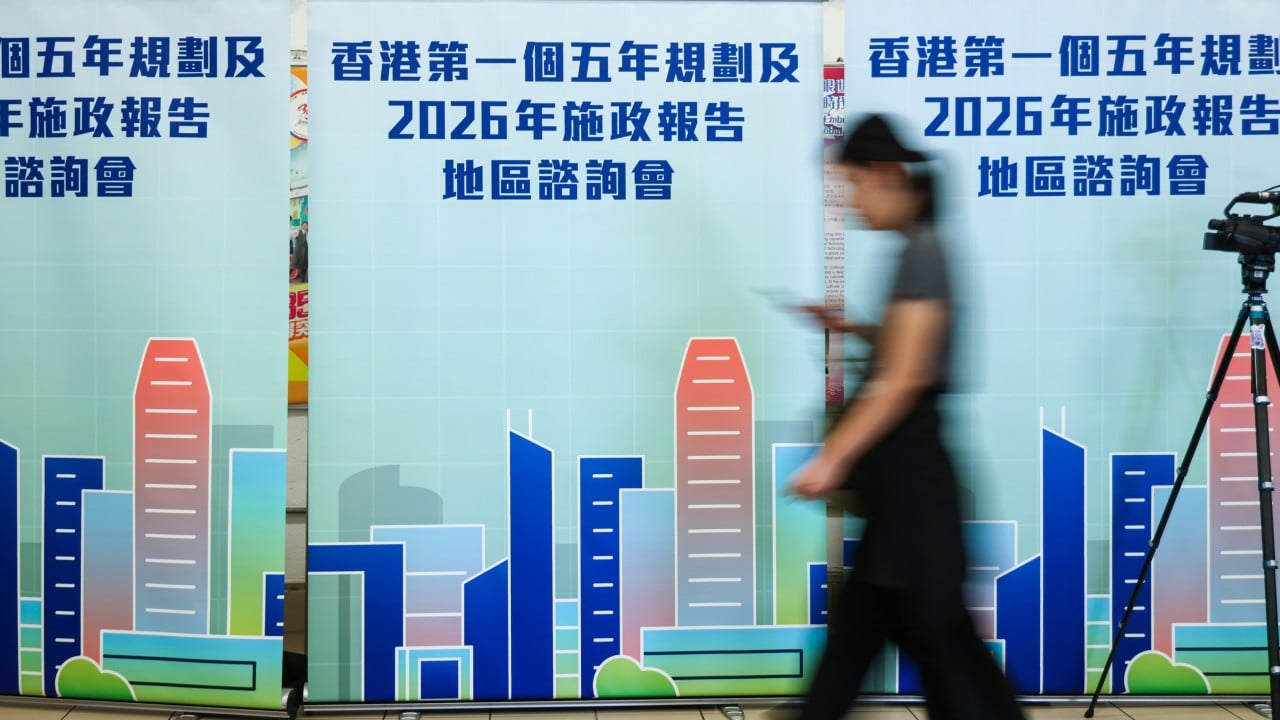
Hong Kong is drafting its inaugural five-year plan for economic and social progress, which will likely become standard practice. Such plans orchestrate the city's resource allocation, housing, infrastructure, industry development, talent training, and public service enhancement. They also provide departments with a unified approach, bypassing isolated operations.
However, these plans must transcend mere medium-term priorities; they should depict a long-term vision. The question pivots from what Hong Kong should accomplish in the next five years to the kind of city it aspires to become over the subsequent two decades. China serves as an example for long-term planning; it has set milestones such as achieving socialist modernization by 2035 and establishing a great modern socialist country by the midpoint of the century, coinciding with Hong Kong's 2049 centenary.
While a stringent plan blueprint might include targets, budgets, and metrics, a mission statement should elucidate what the city aims to become and why. The 2049 time frame is an apt milestone, aligning with a significant national event. The city's strategic goals include becoming a global finance, shipping, trade, innovation, technology, cultural exchange, and dispute resolution hub.
However, these objectives lack a definition of what 'success' implies for the populace and the envisioned society. Economic prosperity is crucial, yet it must not be the sole indicator of a city's success. The city must ensure that growth's benefits are equitably distributed and translate into a future where youngsters perceive a place for themselves.
Hong Kong's long-term spatial strategy, Hong Kong 2030 Plus, articulates a "liveable, competitive, and sustainable Asia’s World City," emphasizing the interconnectivity of economic dynamism, environmental quality, and everyday life. Nevertheless, the strategy remains primarily a blueprint for land, infrastructure, and built environment.
A citywide mission should transcend this. It would not entail the government identifying winning industries or directing private capital; instead, it would offer a shared framework for understanding the outcomes the city aspires to achieve: opportunity, openness, trust, innovation, and livability. This mission must be rooted in Hong Kong's contribution to China's development.
Post-reform and opening up, Hong Kong and Mainland China's interconnectedness through trade, investment, and finance has expanded Hong Kong's market, capital base, and international reach. Hong Kong adds value through its global connectivity, professional prowess, financial depth, and institutional strengths. Contributing to China's long-term growth and international engagement is not merely a national obligation; it's integral to Hong Kong's prosperity and relevance.
A 2049 horizon is essential as it encourages a broader perspective. While discussions about Hong Kong's future beyond 2047 will persist, a civic mission need not pre-empt or resolve constitutional issues. Its practical objective is to articulate the city's desired identity through changing circumstances: international connectivity, economic dynamism, social confidence, and the ability to contribute to both China and the world.
The 30th anniversary of Hong Kong's return to the motherland next year presents an opportune moment to initiate this discourse among government, business, professionals, universities, young people, and community groups. The central inquiry is straightforward: what should Hong Kong represent in 2049?
Written by urgent.news from South China Morning Post - Hong Kong's reporting — not their text. Machine-written — may contain errors; check the original before relying on it.