Fungie DNA reveals dolphin's mixed ancestry
A study has found that Fungie, once Ireland's best-known dolphin, had ties to both the Shannon Estuary bottlenose dolphins and a much larger offshore population.
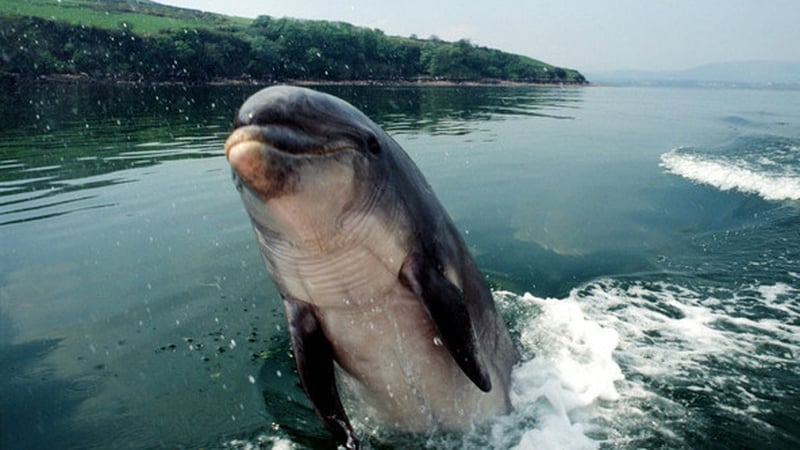
A recent study has unveiled that Fungie, Ireland's most recognizable dolphin, possessed a unique blend of genetics from both the Shannon Estuary bottlenose dolphins and a larger offshore population. The research, conducted by scientists from Atlantic Technological University in Galway, analyzed DNA found in a wetsuit worn by Fungie during his frequent swims in Daingean Uí Chúis, Co Kerry.
The dolphin resided in the harbor from 1983 until his disappearance in October 2020. The discovery was made possible after Denis O’Regan, an active member of the Irish Whale and Dolphin Group and a fellow swimmer with Fungie, donated his wetsuit for DNA sampling. The genetic material recovered from the wetsuit confirmed the presence of dolphin DNA, enabling researchers to delve into Fungie's ancestry.
Contrary to the typical genetic assignment of Irish bottlenose dolphins to one distinct population or another, Fungie's DNA indicated a mixed heritage. The study, published in the international journal Ecology and Evolution, examined five well-known solitary dolphins in Irish waters, including Fungie, Nick, Finn, Dusty, and Nimmo.
While Nick, Finn, Dusty, and Nimmo were genetically linked to the offshore population, Fungie's distinct genetic profile set him apart. The findings have sparked questions about the origin and behavior of Ireland's solitary dolphins, as well as their unusual interactions with humans. Dr. Seán O’Callaghan, a PhD candidate and co-author of the study, emphasized that the research significantly contributes to the understanding of solitary dolphins globally.
Dr. Simon Berrow, founding member of the Irish Whale and Dolphin Group and ATU lecturer, highlighted the mystery surrounding why these dolphins become solitary and interact with humans. The research is particularly significant for the ATU team, as it was led by the late Lorenzo de Bonis during his IMBRSea Master's studies. His colleagues completed the publication in his memory, ensuring the legacy of his marine research work reaches future generations.
Written by urgent.news from RTE News's reporting — not their text. Machine-written — may contain errors; check the original before relying on it.
This story
This is one outlet's version. Read the fullest account.


