Urgent.News

What's breaking now, across thousands of outlets.

Science

Fungie DNA reveals dolphin's mixed ancestry

A study has found that Fungie, once Ireland's best-known dolphin, had ties to both the Shannon Estuary bottlenose dolphins and a much larger offshore population.
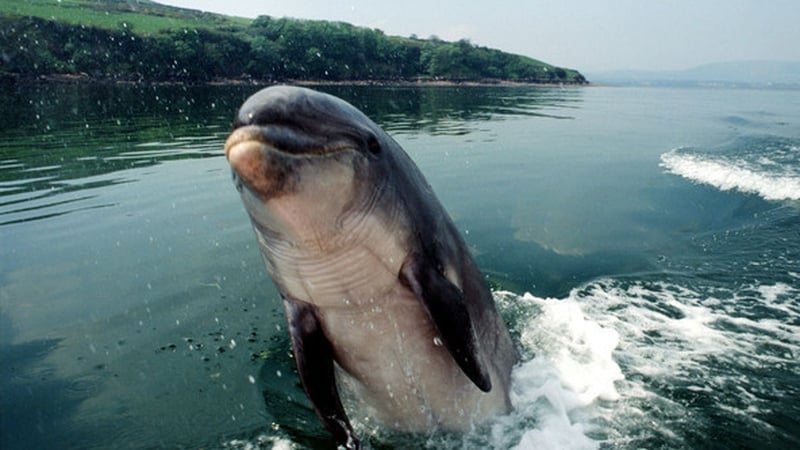
Fungie DNA reveals dolphin's mixed ancestry

Scientists at Atlantic Technological University in Galway have uncovered Fungie's mixed ancestry, blending Ireland's Shannon Estuary bottlenose dolphins with a larger offshore population. The solitary dolphin, who lived in Kerry harbor from 1983 until his disappearance in October 2020, left researchers with a genetic mystery. The study, published in the international journal Ecology and Evolution, used DNA recovered from a wetsuit swabbed by Denis O’Regan, who regularly swam with Fungie, to identify the dolphin's heritage.

Four out of the five well-known solitary dolphins in Irish waters were found to be genetically linked to the offshore population, while Fungie's unique combination of genetic traits set him apart. The study's co-author, Seán O’Callaghan, noted that this research contributes to the global understanding of solitary dolphins and their origins, while Dr Simon Berrow highlighted the mystery surrounding why these dolphins remain solitary and interact with humans.

The research, led by the late Lorenzo de Bonis, sheds new light on Ireland’s solitary dolphins and their genetic origins.

Written by urgent.news from RTE News's reporting — not their text. Machine-written — may contain errors; check the original before relying on it.

Also reported by 1 other outlet

Read the original at rte.ie →

More in Science

The world's first 'space telescope rescue mission' has failed. The US National Aeronautics and Space Administration (NASA) announced on the 24th that it had given up on the 'Servicing Mission 4' to rescue the Hubble Space Telescope. The 'Servicing Mission 4' was a spacewalk repair mission that was launched on December 19 last year. The space shuttle Endeavour carrying a crew of seven astronauts, including veteran astronaut Joe Gibbs, who had previously performed spacewalk repairs on the Hubble Space Telescope four times, was dispatched. However, on the 24th, NASA announced that due to a malfunction in the shuttle's robotic arm, the mission had failed. The robotic arm, which was crucial for capturing the Hubble Space Telescope, had malfunctioned, making it impossible to approach the telescope. As a result, the seven astronauts on board, including Joe Gibbs, were forced to return to Earth without completing the rescue mission. The Hubble Space Telescope, launched in 1990, has been in operation for 16 years, exceeding its initial planned lifespan of 15 years. NASA had planned to extend its lifespan through this rescue mission. However, with this failure, the Hubble Space Telescope's future operations have become uncertain. The European Space Agency's (ESA) 'Gaia' spacecraft and NASA's 'James Webb Space Telescope' are scheduled to be launched in 2013 and 2014, respectively. These next-generation space telescopes are expected to replace the Hubble Space Telescope. However, there is still a possibility that the Hubble Space Telescope may continue to operate. NASA plans to closely monitor the situation and make a final decision on the future of the Hubble Space Telescope.

A mother’s age can shape her offspring without changing their DNA

Scientists have found evidence that the effects of a mother’s age on her offspring may be driven by reversible changes in gene activity rather than permanent DNA damage. The discovery raises the fascinating possibility that biological information from mothers, grandmothers, and even great-grandmothers can shape the health of future…

More from Wednesday 19 August →