From spectacle to scale: why China’s robotics firms face a ‘critical juncture’
At China’s annual World Robot Conference (WRC) that kicked off on Wednesday, the hall was filled with humanoid robots wowing visitors with feats of dexterity: from playing table tennis to performing drum solos. These eye-catching displays have helped China’s robotics industry win global attention – and raise huge amounts of capital – over the past couple of years. But at this year’s summit, the…
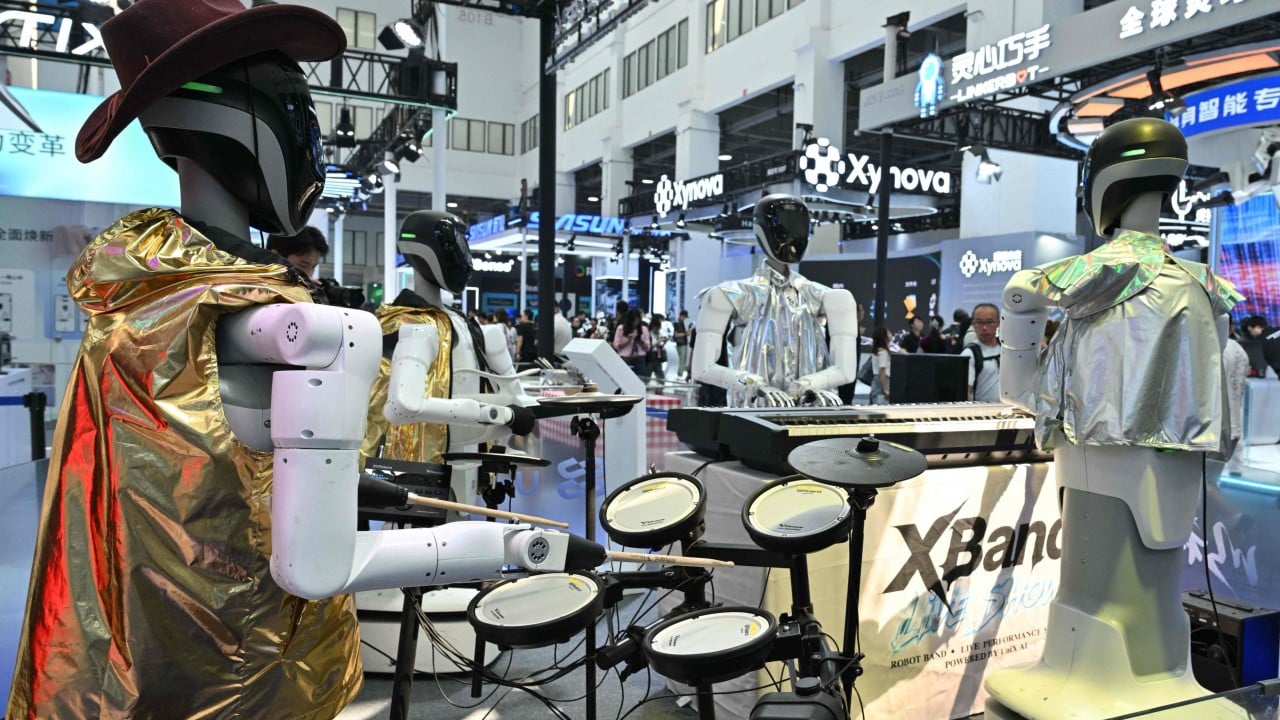
China's annual World Robot Conference (WRC) showcased humanoid robots performing dexterous feats, igniting global interest in the country's robotics industry. However, this year's summit underscored a shift from spectacle to scale, with executives, investors, and policymakers focusing on practical applications and profitability.
Xu Xiaolan, a former vice-minister, highlighted the industry's critical juncture, emphasizing the need to transition from real-world trials to large-scale deployments in sectors such as public services, logistics, manufacturing, healthcare, and emergency response.
China leads the world in manufacturing humanoid robots, accounting for 97% of global shipments in the first half of the year. Production is rapidly scaling up, with estimates projecting 12,000 units in 2023, rising to 50,000 units in 2026, and 446,000 units by 2030. This shift to mass production will redefine competition, with firms striving to deliver robots that provide reliability, autonomy, and economic value in real-world operating environments.
The conference, attended by over 300 robotics companies, marked the debut of industry leader Unitree Robotics on Shanghai's Star Market, whose shares surged 460% following its IPO.
Despite the excitement surrounding humanoid robots, their commercialization faces challenges. A Morgan Stanley survey revealed that while 62% of firms are likely to adopt humanoids between 2025 and 2027, only 23% are satisfied with current products. Reliability, functionality, and affordability are key hurdles, alongside the need to overcome high costs.
Government support is increasingly directed towards creating real operating environments for robots, with 49 state-owned enterprises participating in this year's conference across 12 sectors. The conference also introduced a "Global Robot Application Exploration Programme," aimed at fostering global cooperation and building a collaborative industry ecosystem by providing mass-produced robots to selected overseas innovation teams for trials.
Written by urgent.news from South China Morning Post's reporting — not their text. Machine-written — may contain errors; check the original before relying on it.
This story
This is one outlet's version. Read the fullest account.