Building a Quantum Computer, One Fragile Qubit at a Time
No one yet knows which technology will power the quantum computers of the future, but the race to create them has already produced some of science’s most intricate machinery. The post Building a Quantum Computer, One Fragile Qubit at a Time first appeared on Quanta Magazine
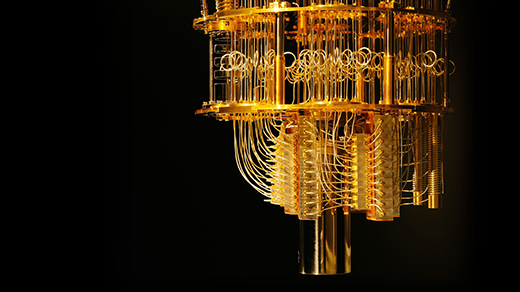
Modern computers, from household appliances to advanced artificial intelligence systems, utilize a common technology: silicon slabs with transistor patterns. These transistors can rapidly switch between "0" and "1," enabling the storage and manipulation of bits, the fundamental information units. Quantum computers, however, have the potential to process information in novel and more potent ways, solving problems that classical computers find challenging. Yet, creating a machine capable of harnessing these capabilities remains a daunting task.
Quantum computing has not yet experienced its "transistor moment," and researchers are exploring various methods to develop quantum hardware. The primary distinction among these approaches lies in the choice of physical systems as qubits, the fundamental building blocks of quantum computers. Qubits, unlike classical bits, can exhibit unique phenomena such as superposition and entanglement, granting them enhanced computational power.
However, these quantum effects are extremely fragile and easily disrupted by stray interactions between qubits and their environment.
Researchers are betting on various natural quantum systems for qubits. In trapped-ion quantum computing, individual atoms are isolated and trapped in a vacuum chamber using electric fields. Another method involves the use of optical tweezers, which are arrays of tightly focused laser beams used to trap neutral atoms. Conversely, an alternative approach known as superconducting quantum computing involves the creation of artificial qubits.
Researchers employ modified versions of microfabrication techniques used in classical computing to assemble tiny circuits made of metals like aluminum and niobium, which become superconductors when cooled to extremely low temperatures. These superconducting circuits function as qubits and are housed within cryogenic systems called dilution refrigerators.
Regardless of the chosen path, scaling up from small prototypes to much larger quantum systems presents one of the biggest challenges. While the creation of a few high-quality qubits is necessary, researchers ultimately require at least tens of thousands, if not millions, of qubits for a fully functional quantum computer. This demands not only the development of robust qubits but also the creation of extensive control and measurement systems to manage and monitor them.
Although it is too soon to predict which technology, if any, will dominate the field, the images below provide a glimpse into the ambitious efforts involved in constructing reliable quantum computers.
Written by urgent.news from Quanta Magazine's reporting — not their text. Machine-written — may contain errors; check the original before relying on it.