중국, 1달만에 두번째 로켓 회수 성공…미국 맹추격
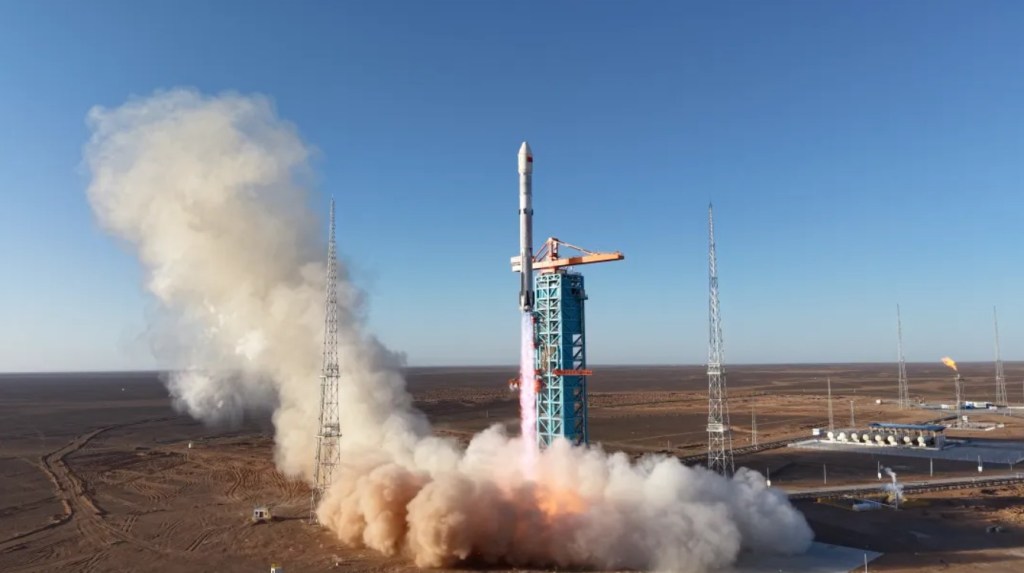
China has achieved its second successful rocket retrieval in just one month, marking a significant step forward in the reusable rocket sector. The private space company LandSpace successfully recovered the first stage engine of its LongMarch-3 (Chang Zheng 3) carrier rocket at the Jiuquan Satellite Launch Center in Gansu Province.
This marks the first time a private Chinese firm has accomplished this feat. Last July, the state-owned China Academy of Launch Vehicle Technology (CASC) achieved the first successful rocket retrieval in China. Recovering and reusing rocket stages can significantly reduce launch costs and increase the frequency of launches, boosting the competitiveness of the space industry.
According to LandSpace, the first stage engine accounts for about 70% of the total launch cost. On the 19th, the rocket was launched from the Jiuquan Satellite Launch Center at 7:35 am local time. The Chang Zheng 3 succeeded in separating the first and second stages just 137 seconds after launch. The second stage continued its orbital flight, while the first stage began its descent and returned to the launch site 390km southeast of the launch site eight minutes after launch.
The return of the first stage closely resembled SpaceX's Falcon 9 method, utilizing four grid fins for flight control and engine thrust adjustment to significantly reduce the descent speed. Compared to the previous July 10B mission, which used a net for sea recovery, this mission employed a landing platform for ground recovery. This makes China the fifth country to secure the technology for recovering first-stage rocket engines, joining the United States' SpaceX and Blue Origin, and CASC.
This success came 8 months after the company's first attempt, which failed. LandSpace explained that improvements in the engine ignition system and adjustments to the descent path reduced the stress on the body, while reinforcing the ablative material on the first stage's bottom was the key to a successful landing. The second stage engine also performed flawlessly.
LandSpace's subsidiary, Hangjing Technology, successfully deployed a test satellite for the low-Earth orbit internet constellation, Houdou 3, into its target orbit. The Chang Zheng 3, like the Falcon 9, is made of stainless steel and can deliver payloads up to 14.2 tons to low Earth orbit, slightly less than SpaceX's Falcon 9's capacity of 22.8 tons.
The first-stage engine burns methane, with no soot produced. LandSpace aims to recover its first-stage engines up to 20 times. The company plans to immediately conduct a detailed inspection of the recovered first-stage engine and analyze how quickly it can be used for the next reflight. Industry experts expect the next reflight to carry the Quequan, a low-Earth orbit internet mega-constellation satellite developed by LandSpace.
LandSpace is China's first private space launch company, established in 2015. Apart from LandSpace, other Chinese companies developing reusable launch vehicles include Galactic Energy, Orient Space, and Space Pioneer.
Written by urgent.news from Hankyoreh's reporting — not their text. Machine-written — may contain errors; check the original before relying on it.
This story
This is one outlet's version. Read the fullest account.