Colombian Scientists Seek to Hear the “Echo” of the Universe’s First Dawn
An interdisciplinary team of scientists from the University of Antioquia (UDEA), the Industrial University of Santander (UIS) and ECCI University, in Bogota, designed a new radio telescope to find the so-called 21-centimeter cosmological signal, also known as the signal of the origin of the universe. Their work constitutes a contribution to astronomy and their approaches […]
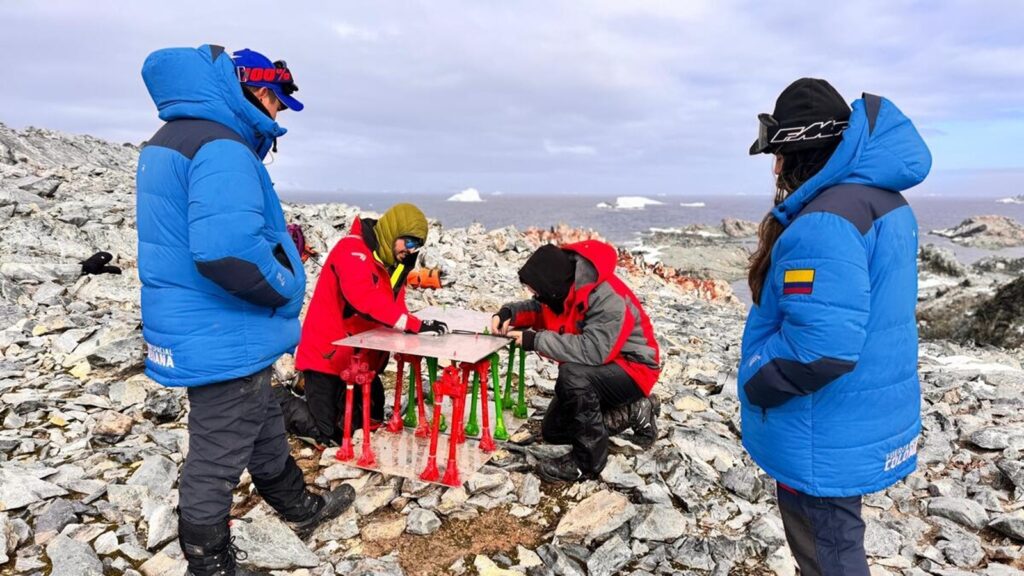
A group of Colombian scientists from the University of Antioquia, the Industrial University of Santander, and ECCI University are working on a new radio telescope in Antarctica to detect the 21-centimeter cosmological signal, which is believed to be a key component in understanding the origin of the universe. This signal, also known as the Cosmic Dawn, was first detected in 2018 by researchers from the Edges project, who claimed to have observed it 180 million years after the Big Bang.
However, a team of Colombian scientists conducted their own analysis using a different statistical method and concluded that the signal may have been caused by electronic equipment "noise" used to search for it. The Colombian team, led by Professor German Chaparro Molano, designed a compact, lightweight, and dismountable radio telescope to facilitate its transportation to the South Pole.
This telescope is made of a 1.25-meter-high metal antenna mounted on a conductive platform and has a unique shape that helps capture weak radio waves from the early universe. Despite not yet detecting the elusive 21-centimeter signal, the Colombian researchers have validated new antenna designs, characterized one of the cleanest radio environments on Earth, and developed tools to strengthen the search for the origin of the universe.
Written by urgent.news from Colombia One's reporting — not their text. Machine-written — may contain errors; check the original before relying on it.