Beyond marathons and backflips, China’s robots face a commercial test
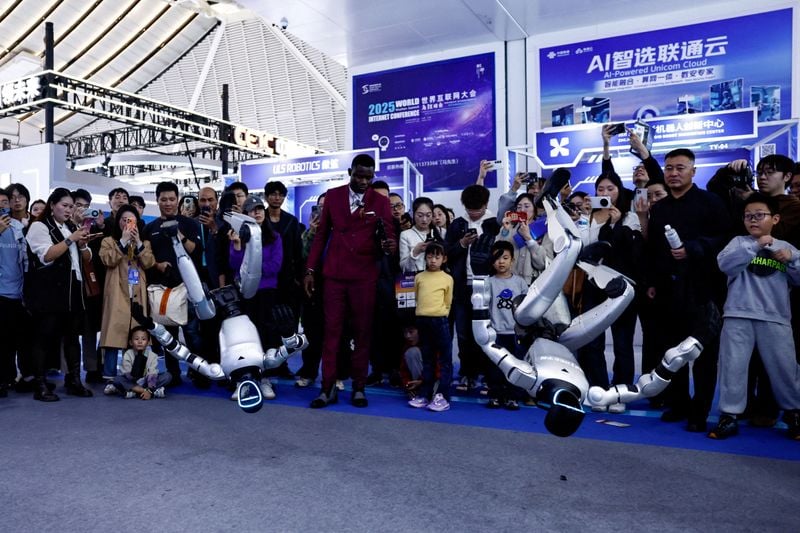
China's humanoid robot manufacturers have recently demonstrated impressive feats, from breakdancing to marathon records. This week in Beijing, however, they will face a more rigorous test as over 300 companies showcase 2,000 exhibits and launch 150 products at the World Robot Conference. The conference coincides with Unitree's successful stock market debut, following an IPO that was over 8,000 times oversubscribed. Unitree's founder, Wang Xingxing, will speak about the industry's future during the main forum on Thursday.
Investor enthusiasm has shifted from viral demonstrations to the commercial viability of these robots. Companies are now evaluating robots based on their productivity, required supervision, and potential return on investment. While robots are beginning to replace human workers in specific applications, such as hotel food deliveries and some assembly lines, widespread adoption across industries has yet to take place.
Lumos Robotics, a Mitsubishi Electric-backed startup, is focusing on industrial inspection and material handling for its industrial robot, the MOS. The company warns that those developing robot bodies, models, or data in isolation without proving their technology in real-world applications may face a shakeout. Robotics analyst Georg Stieler estimates that 50% to 70% of this year's humanoid robots will be used for data collection rather than productive work.
Industry estimates suggest that an industrial humanoid should cost around 160,000 yuan to pay for itself within two years, while actual costs typically range from 300,000 to 500,000 yuan. In the United States, regulatory restrictions on Chinese-made robots and the scarcity of skilled operators pose additional challenges for widespread adoption. China currently dominates the global humanoid market, accounting for 82% of shipments. However, geopolitical tensions could impact the industry's growth in the future.
Written by urgent.news from Investing.com's reporting — not their text. Machine-written — may contain errors; check the original before relying on it.
This story
This is one outlet's version. Read the fullest account.
- Beyond marathons and backflips, China's robots face a commercial test economictimes.indiatimes.com
- Beyond marathons and backflips, China's robots face a commercial test finance.yahoo.com