APOD: 2026 August 18 – Perseids from Perseus
The post APOD: 2026 August 18 – Perseids from Perseus appeared first on NASA Science .
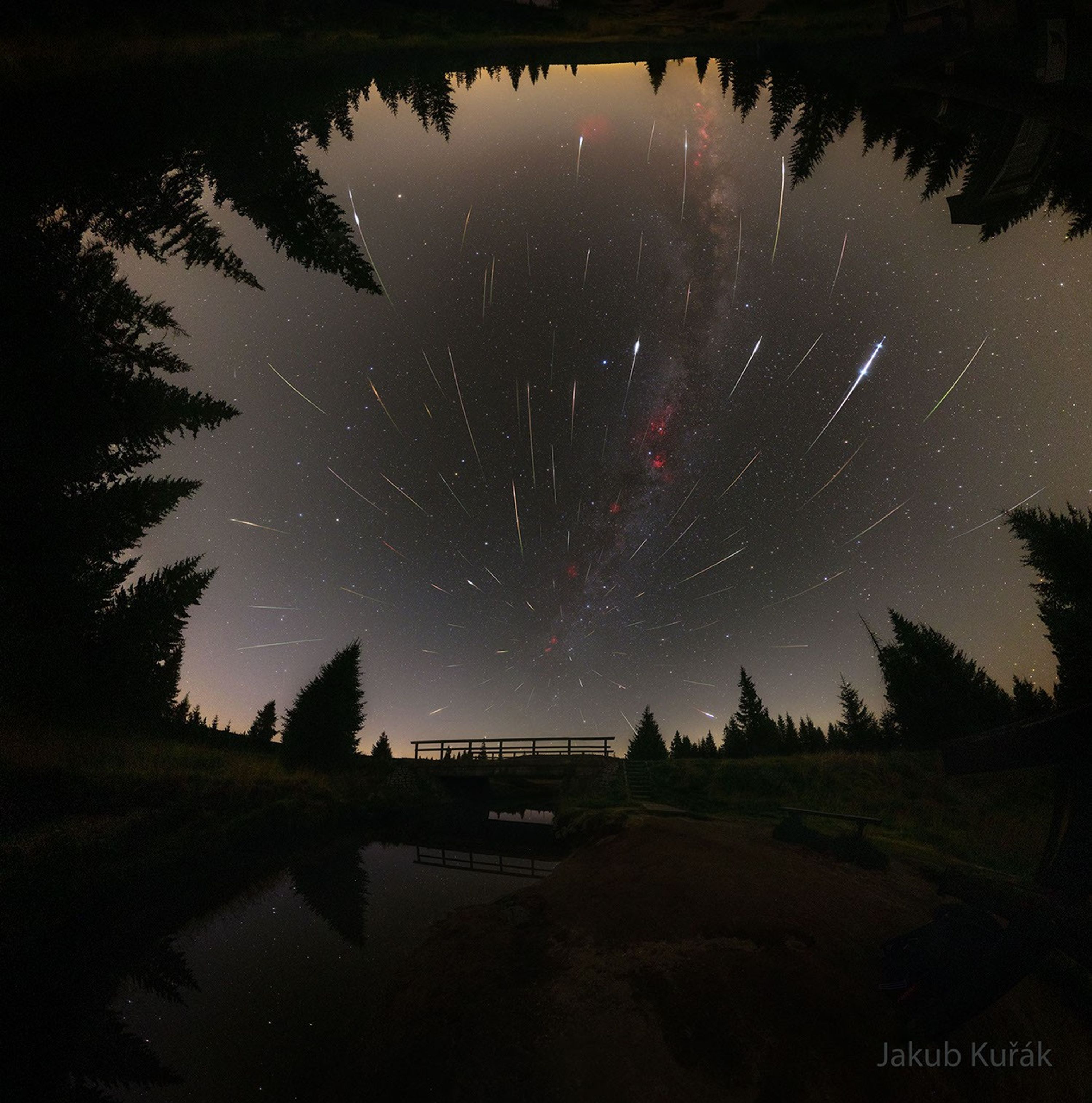
This was a successful year for the Perseids meteor shower. A major factor was the absence of the Moon, which allowed for a clearer night sky and the visibility of more meteors than usual. The Moon, instead, was engaged in a total solar eclipse that was observable from Greenland and Spain near the peak of the Perseids.
The Perseids occur when Earth passes through a stream of debris expelled by Comet Swift-Tuttle. Though individual meteors are usually as small as grains of sand, they tend to be fast and bright due to Swift-Tuttle's orbital path, which is partly counter to Earth's orbital motion. The featured image collection, taken over several nights in Jizerka, Czech Republic, shows Perseids meteor streaks originating from a single point in the sky known as its radiant in Perseus.
Written by urgent.news from NASA Science's reporting — not their text. Machine-written — may contain errors; check the original before relying on it.
Also reported by 1 other outlet
- APOD: 2026 August 18 – Perseids from Perseus science.nasa.gov