What India stands to gain by joining NASA’s Moon Base programme
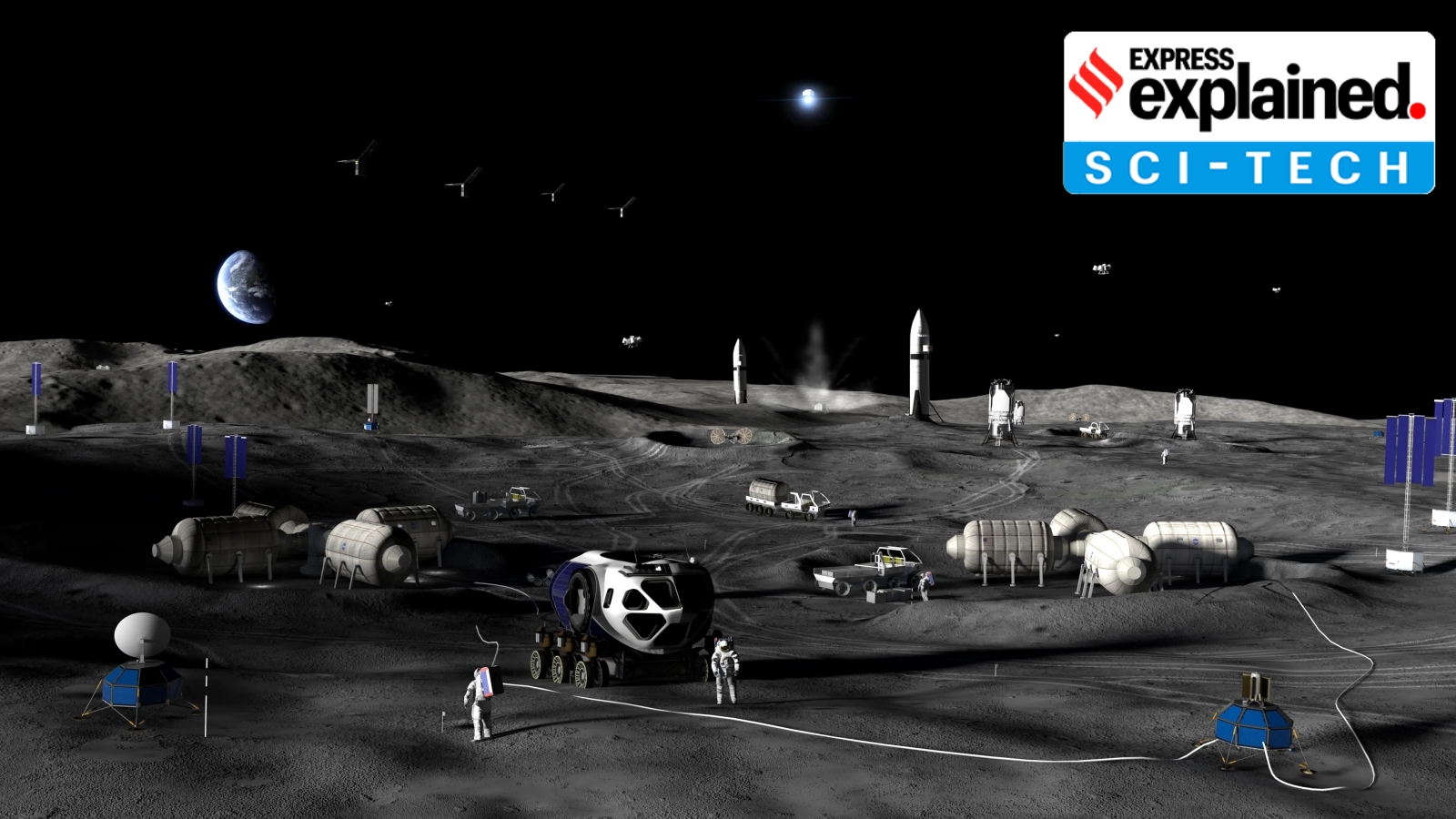
India's potential entry into NASA's Moon Base program could mark a significant strategic shift for the country's space exploration ambitions. While the invitation itself isn't surprising, given India's existing membership in the Artemis Accords and its strategic partnership with the United States on human spaceflight missions, the scale and ambition of the Moon Base program make it a truly unprecedented endeavor.
Comparisons to the Apollo missions underscore the magnitude of this opportunity. The Moon Base program aims to establish a permanent research station on the Moon, capable of hosting both astronauts and robotic explorers for extended periods. This ambitious project, set to unfold over several years through a series of staged developments, will not only drive lunar research but also enable exploration and exploitation of lunar resources.
The technical and financial challenges posed by such a venture are immense, requiring multiple crewed and robotic missions to the Moon and the most sophisticated engineering efforts yet undertaken. Recognizing its limitations, NASA itself is not planning to undertake this monumental task alone. The organization has been forced to scale back its budget under the Trump administration, with most of its hardware production now being outsourced to private industry.
Consequently, NASA is actively seeking international and private sector partners to collaborate on the Moon Base program. The Artemis Accords, now signed by 70 nations, including major space-faring countries like Japan, India, South Korea, Israel, and several European nations, provide a framework for such collaborations. While the Accords are a US-led initiative seeking to write its own rules for space exploration and resource use, the absence of major space powers like Russia and China underscores its fragmented nature.
India, while traditionally wary of joining such groups, has already shown its inclination towards collaboration. The signing of the Artemis Accords in 2023 solidifies India's commitment to these principles of cooperation. Joining the Moon Base program would not only allow ISRO to leverage valuable experience in planning and executing complex missions but also accelerate its technological advancements.
While ISRO has demonstrated its capabilities in independent human spaceflight missions, setting up a space station, and even landing humans on the Moon, the time and financial resources required for such endeavors are substantial. Space exploration is reaching a point where a decade-long gap in technological development could place a nation at a significant disadvantage.
Given India's ambitious plans for an independent human spaceflight program, a Moon landing mission, and a full-fledged space station, the economic and scientific rationale for maintaining separate programs for each initiative becomes increasingly questionable. The costs, even for a leading economy like India, would be prohibitive.
By collaborating with NASA on the Moon Base program, India could benefit from shared resources, expertise, and infrastructure, making the entire enterprise more economically feasible. Moreover, the Artemis Accords, while appearing to be a US-led bloc, do not embody adversarial dynamics. The space domain is currently non-adversarial, and the vastness of the Moon and abundance of its resources ensure that the interests of all participating nations remain aligned.
The Moon's potential as a shared resource for all parties involved further diminishes concerns about domination of supply chains or territorial control. In conclusion, India's potential partnership with NASA on the Moon Base program presents a unique opportunity to leapfrog in technological development, share costs, and collaborate with a diverse international community.
While the challenges are immense, the strategic and scientific benefits of such a venture make it a compelling proposition for India's future in space exploration.
Written by urgent.news from The Indian Express's reporting — not their text. Machine-written — may contain errors; check the original before relying on it.