Twitchers excited by sighting of rare migratory shorebird
The sighting of a redshank on the Cairns Esplanade is the talk of the birdwatching community. It is believed to be just the second time the species has been spotted in Queensland.
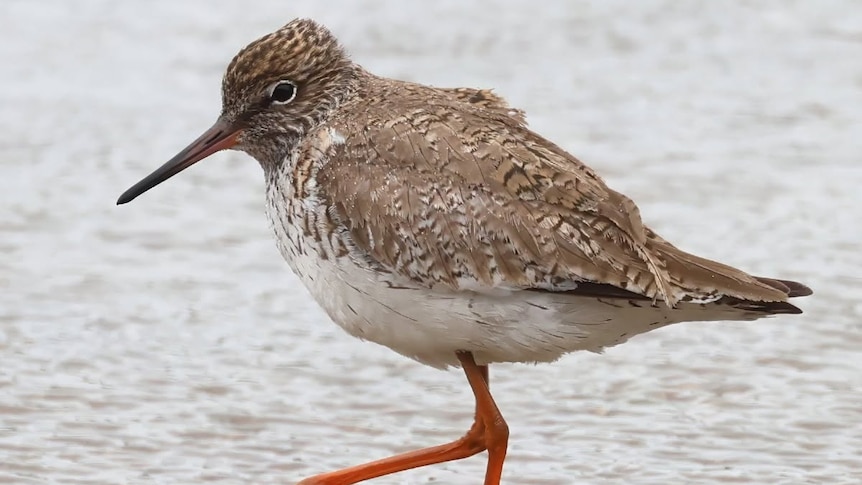
Birdwatchers in Cairns witnessed a rare migratory shorebird, the common redshank, during their regular surveys on Sunday morning. The sighting is reportedly the second known occurrence in Queensland, nearly four decades after the previous observation. A bird expert is uncertain about the bird's next steps, but enthusiasts will be closely monitoring any additional arrivals.
The common redshank is easily identifiable by its orange-red legs, despite its "common" name, as it is exceedingly rare in Queensland. Birdwatchers Sally Sheldon and Martin Cachard were taken aback when they discovered the bird during their routine monitoring at the Cairns Esplanade mudflats. Ms Sheldon, from BirdLife Australia, admitted to having conflicting emotions at the moment, acknowledging that the bird appeared somewhat disoriented.
She added that the bird's future actions remain unclear, whether it will linger or continue its journey southwards for the summer. Richard Fuller from the University of Queensland stated that there is no doubt this individual will be closely examined. If there is a pattern of more redshank sightings in Queensland, it could indicate a change in the bird's migration pattern.
Small numbers of the common redshank typically migrate to northern Western Australia and parts of the Northern Territory each year. However, it is unclear whether the bird will return to its regular migration route. Professor Fuller noted that many migratory shorebird species in Australia have experienced significant declines due to coastal habitat loss.
However, the common redshank does not appear to have suffered a severe decline, which may explain its presence in a new location. The adult redshank still possessed much of its breeding plumage, but the birdwatchers could not determine its sex. News of the rare sighting quickly spread through Australia's twitcher community, who primarily communicate via social media, causing the bird to be closely observed by at least five birdwatchers equipped with long lenses.
Written by urgent.news from ABC News AU's reporting — not their text. Machine-written — may contain errors; check the original before relying on it.