Suitcase-sized spacecraft may reveal what happened before first stars formed
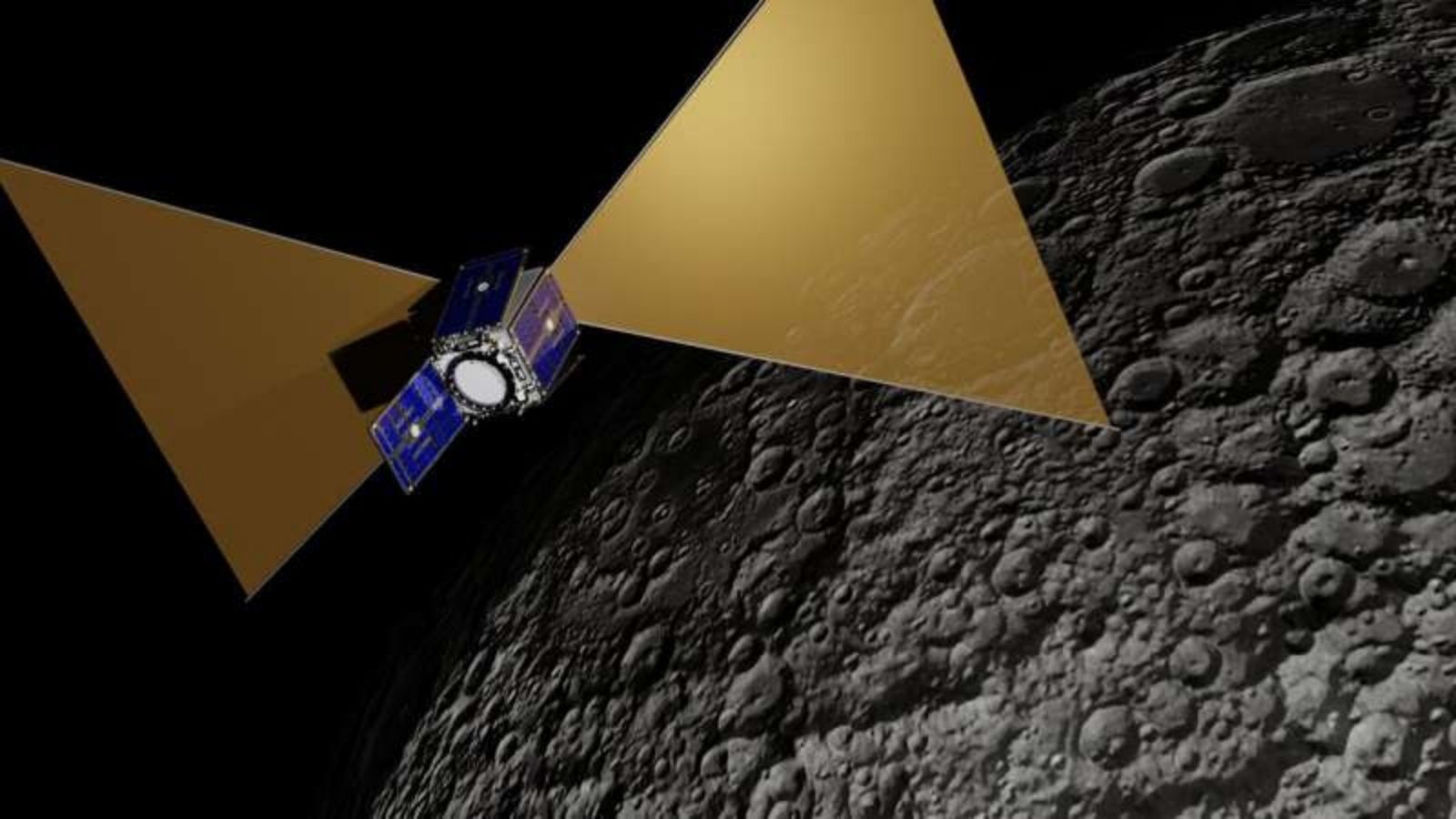
A proposed suitcase-sized satellite called CosmoCube could help astronomers study the earliest stages of the universe by listening for faint radio signals dating back over 13.5 billion years. The mission aims to operate near the Moon, utilizing the lunar far side as a natural shield against Earth's radio interference. CosmoCube would collect data at extremely low radio frequencies for approximately 40 minutes during each two-hour orbit over a proposed two-year mission.
The satellite's measurements could shed light on the cosmic dark age—the period between the Big Bang and the formation of the first stars—by providing information about the conditions in the early universe. The 21-centimeter radio signal, emitted by hydrogen atoms during this era, carries crucial data about the early universe's environment, yet detecting it from Earth is challenging due to Earth's ionosphere and human-made signals.
CosmoCube's unique position on the Moon's far side allows for a quieter environment to collect these faint cosmic signals. One key question the mission could address is the role of dark matter in the formation of the first stars and galaxies, as scientists believe its gravitational pull helped gather matter together. Despite its small size, CosmoCube would need advanced systems to distinguish the faint cosmic signal from its own noise and other sources.
Once the mission concludes, mathematical models will be employed to remove any remaining interference, including radio emissions from the Milky Way. The research team, including astronomers from the University of Cambridge, is working on developing and testing CosmoCube models, including thermal performance assessments. If supported, the satellite could be ready for launch within five years.
However, the lunar far side might become busier as other countries plan missions to the Moon's far side, potentially diminishing the quiet radio environment that makes it ideal for astronomical observations. If CosmoCube operates as planned, its small footprint could offer scientists a rare glimpse into a critical period of cosmic history.
Written by urgent.news from The Indian Express's reporting — not their text. Machine-written — may contain errors; check the original before relying on it.