Scientists explore large-scale geoengineering to slow glacier melt
At a time when the impact of climate change is undeniable, some researchers suggest we need to start work on far more ambitious approaches for tackling these problems. These proposals are often referred to as geoengineering. Science correspondent Miles O'Brien looks at one such concept to deal with the melting of glaciers and sea ice. It's for our series, Tipping Point.
As the consequences of climate change become increasingly apparent, researchers are contemplating more drastic measures to address the issue. Often termed as geoengineering, these proposals aim to tackle the melting of glaciers and sea ice. Miles O'Brien, a science correspondent, delves into one such concept in his series "Tipping Point."
David Holland, a mathematician and climate researcher from New York University, shares his experience studying Greenland's Jakobshavn Glacier, one of the fastest-moving glaciers on Earth, which retreats at a rate of 150 feet per day.
Holland's wife, Denise, serves as his logistical support during their expeditions. The couple has been conducting research for 20 years, and they are now in Greenland to better understand the glacier's rapid retreat. They are gathering synchronous data from various sources like radar, seismic sensors, drones, weather stations, and satellites to identify any patterns that could help predict the rate at which glaciers will add to sea level rise.
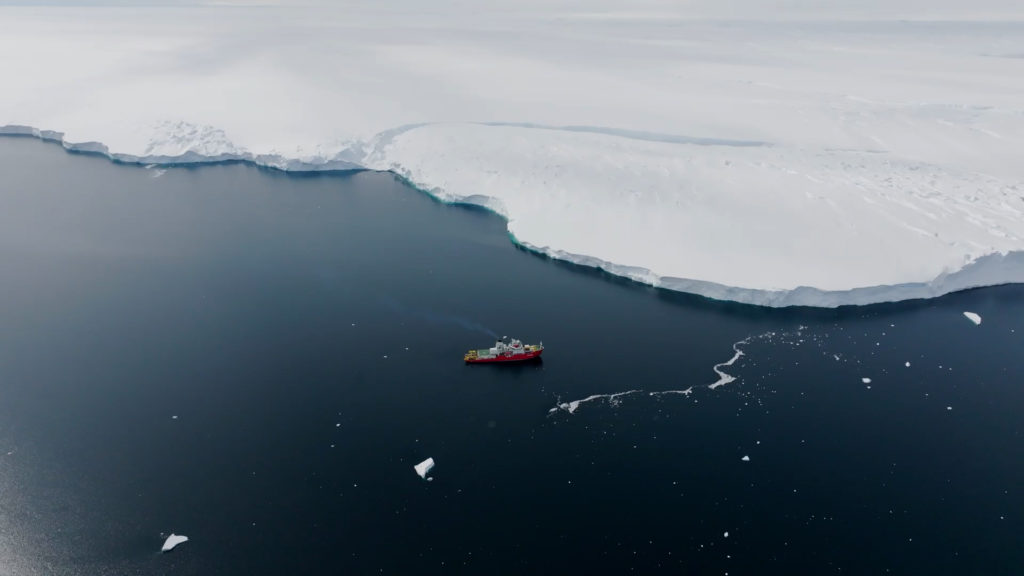
The primary focus of their research is to determine why Thwaites Glacier, located in Antarctica, is melting at an alarming rate. This massive glacier, the size of Florida, holds enough water to raise global sea levels by up to 10 feet. Warm, salty seawater flows beneath a layer of cold, fresh meltwater and attacks the glacier from below, accelerating its melt. However, researchers require more sustained data to make concrete conclusions.
Holland's team recently embarked on a mission to the Thwaites Glacier, aiming to deploy robotic moorings that could provide crucial data about the feasibility of an underwater barrier, known as a "sea curtain," which could potentially slow down the melting process. The moorings are designed to continuously climb and descend on the rims of an underwater canyon that funnels warm water towards the glacier.
If successful, this barrier could potentially block the warm water and prevent further melting. However, critics remain skeptical about the feasibility of such underwater barriers.
Written by urgent.news from PBS NewsHour's reporting — not their text. Machine-written — may contain errors; check the original before relying on it.
This story
This is one outlet's version. Read the fullest account.