Scientists explore large-scale geoengineering to slow glacier melt
At a time when the impact of climate change is undeniable, some researchers suggest we need to start work on far more ambitious approaches for tackling these problems. These proposals are often referred to as geoengineering. Science correspondent Miles O'Brien looks at one such concept to deal with the melting of glaciers and sea ice. It's for our series, Tipping Point.
Climate change has become undeniable, prompting researchers to explore more ambitious solutions to address the issue. One such concept, referred to as geoengineering, is being investigated to combat the melting of glaciers and sea ice. Science correspondent Miles O'Brien examines one specific idea in his series, Tipping Point. The goal is to improve predictions on how much and how quickly glaciers will contribute to sea level rise.
David Holland, a mathematician and climate researcher at New York University, studies the Jakobshavn Glacier in Greenland, one of the fastest-moving glaciers on Earth. This glacier flows at a rate of about 150 feet per day, causing more water to be lost than gained. This situation is analogous to a dwindling bank account.
Holland is accompanied by his wife, Denise, who plays a crucial role in ensuring the smooth operation of their scientific encampment. For the past 20 years, they have conducted research in Greenland, sleeping on the ground in tents. This time, they aim to gather synchronous data from various sources, including radar, seismic sensors, drones, weather stations, and satellites.
Their research focuses on understanding the rapid retreat of the glacier by collecting data from these different sources. The ultimate objective is to enhance predictions on how much and how soon glaciers will add to sea level rise.
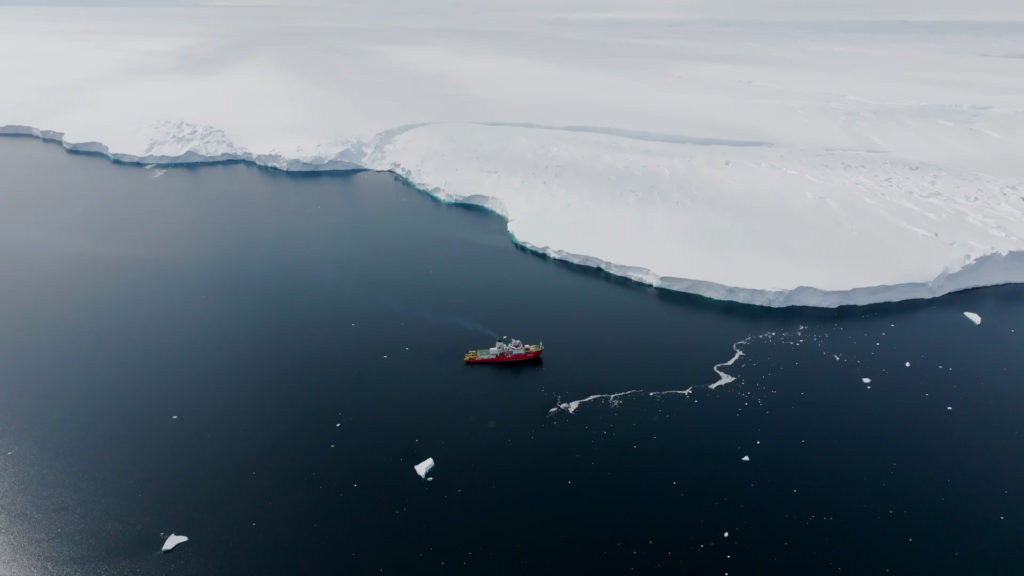
Earlier this year, Holland embarked on a voyage to Antarctica to study the Thwaites Glacier, which is as large as Florida. This glacier stores enough water to potentially raise global sea levels by up to 10 feet and is melting at an alarming rate, losing approximately 300 feet of thickness every year. The primary concern is why this is happening.
Warm, salty, and dense seawater flows beneath a layer of cold, fresh meltwater, attacking the glacier from below and accelerating its melting process. However, researchers need more data to provide a more comprehensive explanation. During their expedition, they hoped to deploy a sophisticated temperature sensor into the sea beneath the glacier. Unfortunately, the sensors became stuck in the super cold glacier ice, leading to a setback in their research.
Undeterred, Holland continued with another mission: deploying a pair of robotic moorings designed to continuously climb and descend on the rims of an underwater canyon. These moorings are intended to provide initial data on the feasibility of a controversial idea: constructing an underwater barrier, known as a sea curtain, to slow down the melting process.
Written by urgent.news from PBS NewsHour Science's reporting — not their text. Machine-written — may contain errors; check the original before relying on it.