A 3.5-Billion-Year-Old Rock in India May Preserve Carbon Left Behind by Some of Earth’s Earliest Microbes
Learn how zircon crystals and carbon chemistry helped researchers investigate a possible record of life from 3.5 billion years ago.
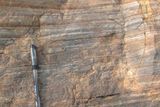
Striped rock from eastern India may hold carbon left by ancient microbes, according to new research. Dark, carbon-rich bands alternate with pale silica, preserving a timeline of the environment when the rock formed. The Bhitardari chert, a silica-rich rock, dates back 3.497 billion years, as determined by zircon crystals embedded within.
These crystals offer a window into the rock's formation, as they were trapped during volcanic activity. Carbon chemistry found in the rock points to ancient microbes, with carbon-12 being favored over carbon-13, a pattern often left behind by living organisms. While the rock itself doesn't contain recognizable cellular structures, the carbon balance suggests microbial life may have existed by 3.5 billion years ago.
Further evidence comes from Raman spectroscopy, which shows the carbon in the original layers retains a kerogen-like structure, distinct from the crystalline graphite found in surrounding quartz. This combination of evidence supports the hypothesis that microbes capable of processing carbon lived in volcanic, iron-rich seas during the early stages of Earth's history.
Written by urgent.news from Discover Magazine's reporting — not their text. Machine-written — may contain errors; check the original before relying on it.