Raumfahrt: Was kann Europas Starlink Iris2?
Supersicher, schnell, multi-orbital: Die Satellitenkonstellation der EU ist ein technisch ambitioniertes Vorhaben. Die wichtigen Fragen und Antworten zum europäischen Internet aus dem All.
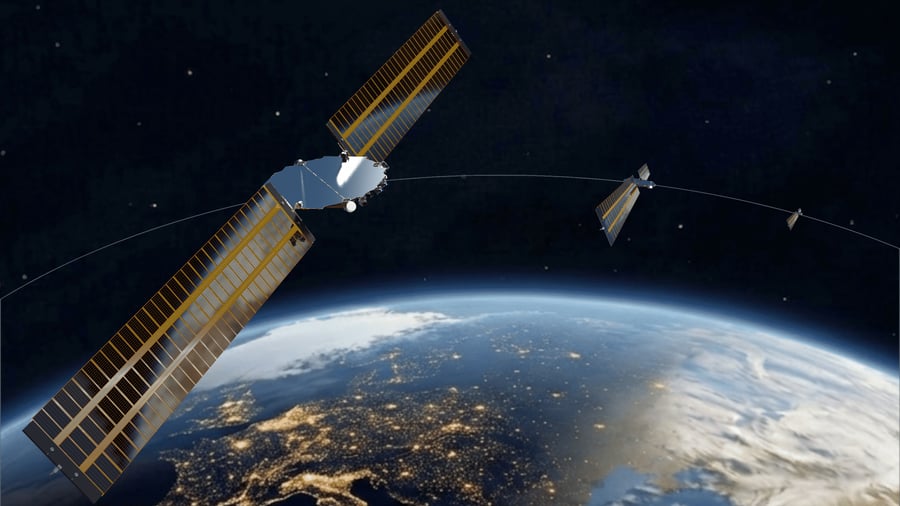
For over two decades, SpaceX has been working on the idea of providing internet from space. The advantage lies in the fact that satellites can establish a rapid connection anywhere on Earth. Processing signals is made possible with a short delay when satellites are positioned in a low Earth orbit. While this may sound simple, the technology behind it is enormously challenging.
Satellites whiz around the Earth at speeds exceeding 28,000 kilometers per hour, are expensive, and need to be replaced every five to seven years. Early providers like Iridium or Globalstar went bankrupt. However, SpaceX founder Elon Musk successfully completed the ambitious project, with the Starlink satellite network now being the most financially significant pillar of the aerospace and AI company, generating 4.3 billion dollars in quarterly revenue.
The success can be attributed to SpaceX's high technical expertise and efficient rockets capable of placing satellites in orbit at relatively low costs. Now, the EU aims to build an alternative with Iris2, which stands for "Infrastructure for Resilience, Interconnectivity, and Security through Satellites" – high two. The chances for a European Starlink, when it will arrive, and what it can offer are the main questions and answers.
Written by urgent.news from Handelsblatt's reporting — not their text. Machine-written — may contain errors; check the original before relying on it.
This story
This is one outlet's version. Read the fullest account.
- Space: What can Europe's Starlink Iris2 do? handelsblatt.com