30 lions and tigers leave cramped Argentine zoo cages for sanctuaries
Thirty lions and tigers from Argentina’s shuttered Lujan Zoo have begun a major relocation to wildlife sanctuaries in South Africa and the US. Led by Four Paws, the rescue involves moving 30 big cats that spent years in cramped cages and suffered health problems. The animals will now travel to Lionsrock in South Africa and The Wild Animal Sanctuary in Colorado.
Thirty lions and tigers that once resided in cramped cages at an Argentine zoo will soon find new homes at wildlife sanctuaries in South Africa and the United States. This relocation is part of a significant rescue operation led by animal welfare organization Four Paws, recognized as one of the largest relocations of captive big cats globally.
The big cats are being rescued from the former Lujan Zoo, situated approximately 70 kilometers northwest of Buenos Aires, which closed in 2020 due to safety and welfare concerns. The fate of the animals at the zoo had been uncertain since its closure.
Four Paws first arrived at the site in 2023, when 112 big cats were still present. By the time they were able to take over the site two years later, the number had dwindled to 62. The 30 animals being moved will be distributed between two sanctuaries: nine tigers and six lions will move to Lionsrock, a Four Paws sanctuary in South Africa, which boasts natural enclosures covering 60 hectares.
The remaining eight tigers and seven lions will be relocated to The Wild Animal Sanctuary in Colorado, a refuge situated on grasslands northeast of Denver, providing expansive habitats for rescued lions, tigers, and other animals.
The journeys of the relocated animals will be a multi-stage process. Those heading to Colorado will embark on a flight through Chile, while those destined for South Africa will travel to Johannesburg through either Frankfurt or Amsterdam, followed by a four-hour road journey to Lionsrock. Preparations for the transfer have been extensive.
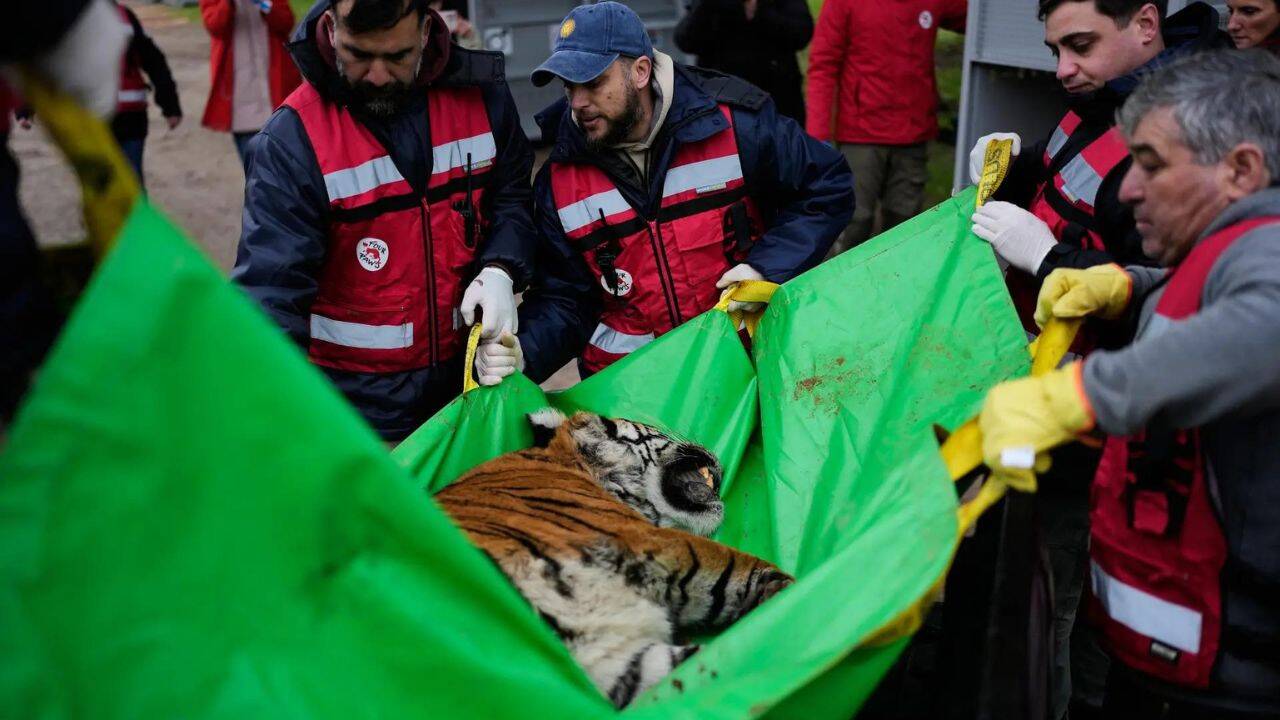
Four Paws handlers trained many of the lions and tigers to voluntarily enter transport crates, allowing some animals to be moved without force. However, not all animals could be managed in the same manner; some required sedation for safe transfer, such as two tigers that were carried by hand in canvas slings for relocation.
Upon arrival at their new homes, the transfer operation revealed that some of the animals had severe health issues, including obesity, muscle loss, dental and kidney disease, and injuries that had not healed properly. Four Paws' programme director, Luciana D’Abramo, emphasized the overcrowding and poor conditions the animals endured, stating, "That alone shows the level of overcrowding and the conditions in which these animals have endured."
Since taking over the site in 2025, Four Paws has identified that more than 20 lions and tigers remain at the former zoo. The organization continues to seek long-term homes for these remaining animals.
Written by urgent.news from Times of India's reporting — not their text. Machine-written — may contain errors; check the original before relying on it.