Wrapping Dollars in Aluminum Foil: What It Protects Against and What It Does Not
Wrapping dollars in aluminum foil has become a widely shared home-storage tip for people who keep physical cash outside the banking system. Articles published in 2026 recommend the method mainly as a barrier against moisture, stains, dust and other environmental damage. The idea is simple: place flat bills in a bundle, cover them with foil […]
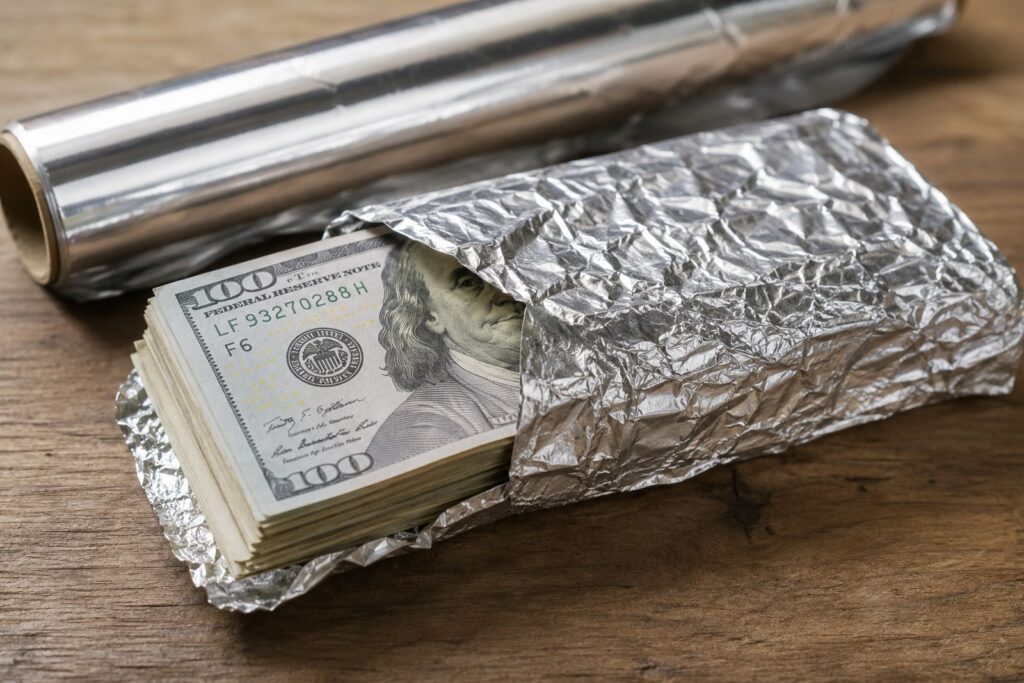
U.S. dollar bills typically last about 24 years, according to Federal Reserve data, but this lifespan varies with usage and storage. Wrapping money in aluminum foil is a common home storage tip aimed at protecting against moisture, stains, dust, and other environmental damage. The process involves bundling flat bills, covering them with foil, and placing the bundle in an airtight container or bag.
While aluminum foil does create a barrier that can help isolate cash from its surroundings, it does not make money fireproof or theft-proof. The real effectiveness of this method depends on the storage environment and container used. For long-term storage, factors like humidity, heat, sunlight, and potential damage from pests are more critical than the foil itself.
Aluminum foil serves as a low-cost environmental barrier, reducing exposure to moisture and dust but not removing humidity if it is trapped. Other hazards such as heat, sunlight, folding, and pressure can still damage cash stored at home. Additionally, pests and chemicals can also pose risks. It's important to note that aluminum foil does not offer protection against fire, flooding, or theft.
While it might reduce radio-frequency interference from contactless payment cards, it is not a substitute for proper card security practices. For substantial amounts of money, a properly rated fire-resistant safe is a more appropriate solution. Overall, the role of aluminum foil in cash storage is limited; it is a helpful but not comprehensive protection measure.
Written by urgent.news from Colombia One's reporting — not their text. Machine-written — may contain errors; check the original before relying on it.